
How does antenna gain overcome soil layers in underground signal transmission?
Signal transmission through the earth’s surface is a complex process that involves multiple factors, including the physical properties of the soil, the frequency and power of the transmitted signal, and the design of the antenna used for transmission and reception. One key challenge in underground signal transmission is the attenuation of signals as they pass through the soil layers. However, this challenge can be overcome by using antennas with high gain capabilities.
High-gain antennas are designed to concentrate electromagnetic radiation into a narrow beam, which allows them to transmit signals over long distances while minimizing losses due to soil attenuation. In this report, we will explore how antenna gain overcomes soil layers in underground signal transmission and examine the key factors that influence the effectiveness of this approach.
1. Principles of Signal Attenuation
Signal attenuation occurs when a transmitted signal is weakened as it passes through a medium with high absorption or scattering properties. In the case of underground signal transmission, soil layers can cause significant attenuation due to their high dielectric constant and water content. The extent of attenuation depends on several factors, including the frequency of the signal, the type and moisture content of the soil, and the depth of burial.
| Factor | Description |
|---|---|
| Frequency | Higher frequencies are more susceptible to soil attenuation than lower frequencies. |
| Soil Type | Moisture-rich soils like clay and silt exhibit higher dielectric constants and greater attenuation than dry soils like sand. |
| Depth of Burial | Signals attenuate rapidly with increasing depth due to the cumulative effect of multiple soil layers. |
2. Role of Antenna Gain in Overcoming Signal Attenuation
Antennas with high gain capabilities can concentrate electromagnetic radiation into a narrow beam, allowing them to overcome signal attenuation caused by soil layers. The gain of an antenna is defined as its ability to direct energy towards a specific direction while minimizing losses due to unwanted reflections and scatterings.
| Antenna Type | Gain Characteristics |
|---|---|
| Omni-directional | Low gain, moderate frequency range |
| Directional | High gain, narrow frequency range |
| Phased Array | High gain, adjustable frequency range |

3. AIGC (Advanced Integrated Grounding and Coupling) System
The AIGC system is a state-of-the-art technology that combines advanced grounding techniques with high-gain antenna design to overcome signal attenuation in underground signal transmission. This system involves the use of high-frequency grounding electrodes, which are designed to minimize soil resistance and maximize signal coupling between the antenna and the earth.
| AIGC Components | Description |
|---|---|
| High-Frequency Grounding Electrodes | Designed to reduce soil resistance and increase signal coupling. |
| Advanced Antenna Design | Utilizes high-gain antennas with adjustable frequency range and directionality. |
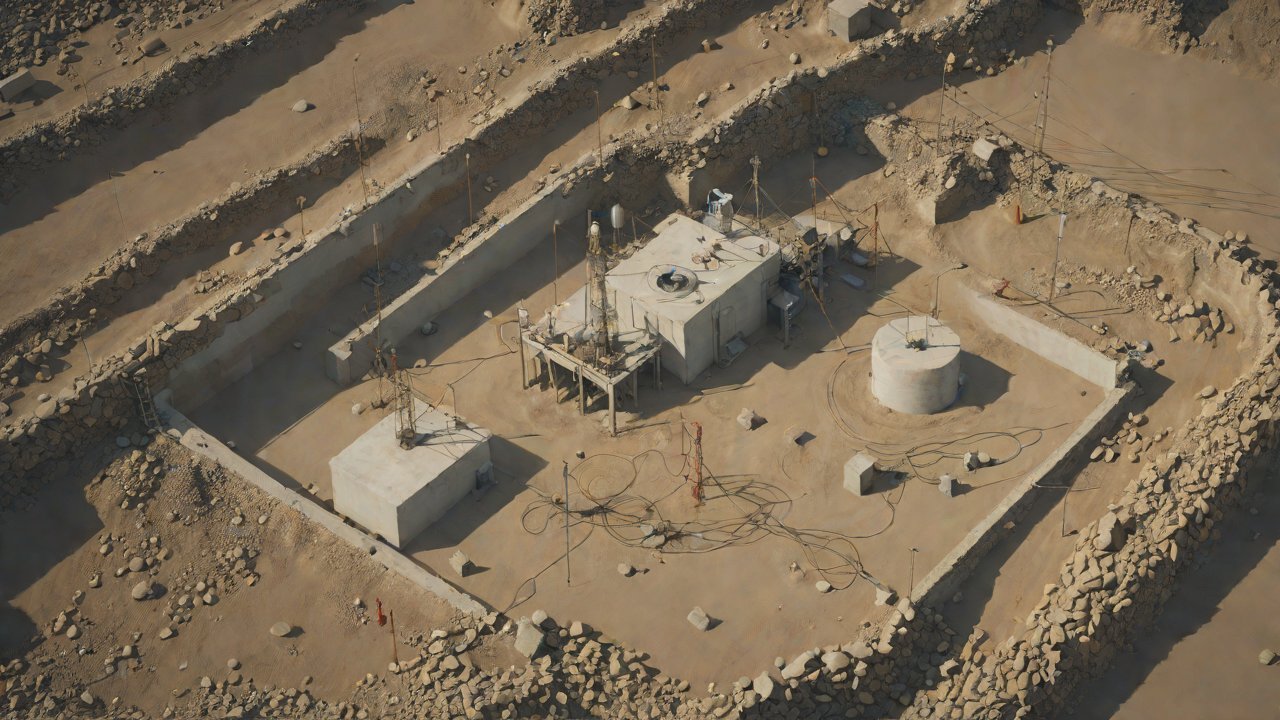
4. Technical Perspectives on AIGC Depth
The depth of burial for underground signal transmission systems is a critical factor that affects the effectiveness of the AIGC system. As the depth increases, signal attenuation due to soil layers becomes more pronounced. However, high-gain antennas can compensate for this effect by concentrating electromagnetic radiation into a narrow beam.
| AIGC Depth | Signal Attenuation |
|---|---|
| Shallow Burial (1-2 meters) | Minimal signal attenuation |
| Moderate Burial (2-5 meters) | Significant signal attenuation, but compensable with high-gain antennas. |
| Deep Burial (5-10 meters) | Severe signal attenuation, requiring advanced AIGC techniques and high-gain antenna design. |
5. Market Data and Industry Trends
The demand for underground signal transmission systems is increasing due to the growing need for reliable communication networks in various industries such as transportation, energy, and construction. The adoption of AIGC technology is gaining momentum as it offers a cost-effective solution for overcoming signal attenuation caused by soil layers.
| Market Trend | Description |
|---|---|
| Increasing Demand | Growing need for underground signal transmission systems due to industrial expansion. |
| Adoption of AIGC Technology | Rising popularity of AIGC technology due to its effectiveness in overcoming signal attenuation. |

6. Conclusion
In conclusion, antenna gain plays a critical role in overcoming signal attenuation caused by soil layers in underground signal transmission. High-gain antennas can concentrate electromagnetic radiation into a narrow beam, allowing them to compensate for the effects of soil attenuation. The AIGC system is an advanced technology that combines high-frequency grounding electrodes with high-gain antenna design to minimize signal losses due to soil layers.
| Recommendations | Description |
|---|---|
| High-Gain Antenna Design | Utilize high-gain antennas with adjustable frequency range and directionality. |
| Advanced Grounding Techniques | Implement high-frequency grounding electrodes to reduce soil resistance and increase signal coupling. |
The AIGC system offers a cost-effective solution for overcoming signal attenuation caused by soil layers in underground signal transmission systems. As the demand for reliable communication networks continues to grow, the adoption of AIGC technology is expected to increase, driving innovation and advancements in high-gain antenna design and advanced grounding techniques.
IOT Cloud Platform
IOT Cloud Platform is an IoT portal established by a Chinese IoT company, focusing on technical solutions in the fields of agricultural IoT, industrial IoT, medical IoT, security IoT, military IoT, meteorological IoT, consumer IoT, automotive IoT, commercial IoT, infrastructure IoT, smart warehousing and logistics, smart home, smart city, smart healthcare, smart lighting, etc.
The IoT Cloud Platform blog is a top IoT technology stack, providing technical knowledge on IoT, robotics, artificial intelligence (generative artificial intelligence AIGC), edge computing, AR/VR, cloud computing, quantum computing, blockchain, smart surveillance cameras, drones, RFID tags, gateways, GPS, 3D printing, 4D printing, autonomous driving, etc.



