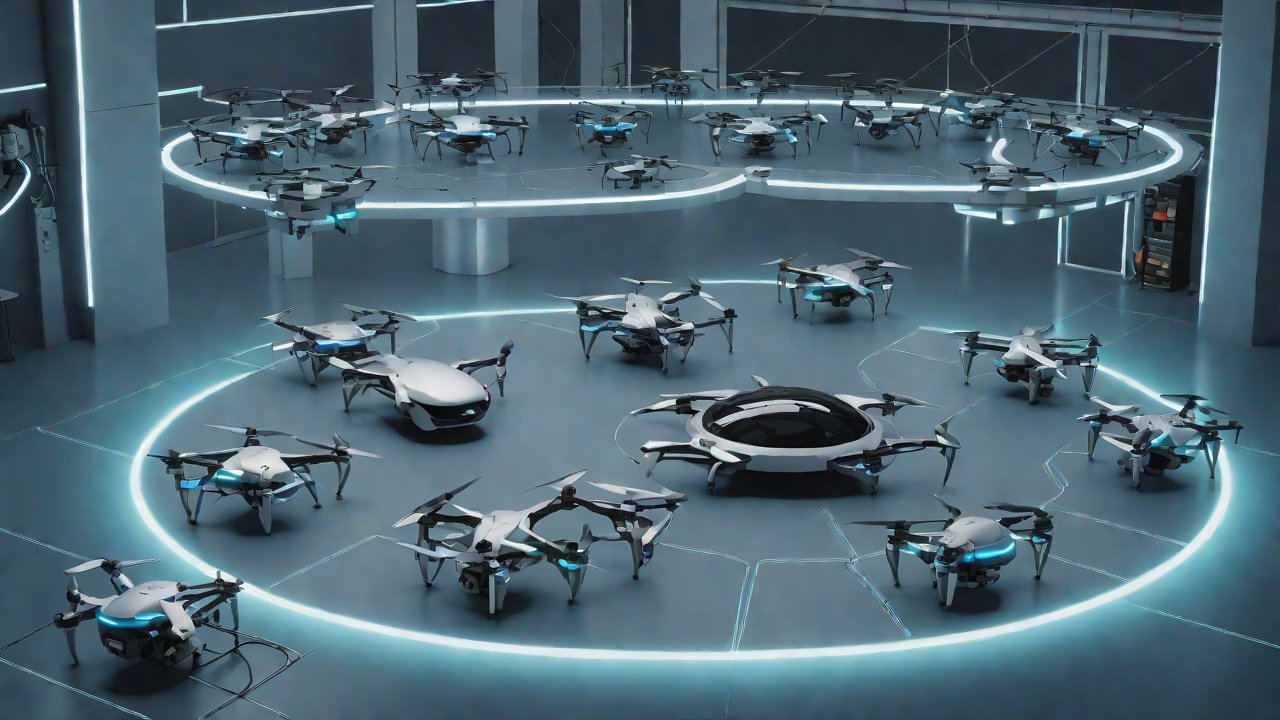
How does a “mothership”-style automated charging bay coordinate the energy replenishment of multiple drones?
In the realm of autonomous systems, the “mothership” concept has gained significant attention, particularly in the context of drone operations. A mothership-style automated charging bay is an innovative solution designed to replenish the energy of multiple drones simultaneously, ensuring prolonged and efficient mission execution. This cutting-edge technology leverages AI-driven coordination, advanced sensor systems, and sophisticated charging infrastructure to optimize energy transfer and minimize downtime.
1. System Architecture
The mothership-style automated charging bay consists of several key components:
- Central Control Unit (CCU): This is the brain of the operation, responsible for managing the charging process, monitoring drone status, and allocating energy resources.
- Sensor Array: Strategically placed sensors continuously monitor drone positions, energy levels, and charging progress, providing real-time data to the CCU.
- Charging Infrastructure: Modular charging stations, equipped with advanced power management systems, facilitate efficient energy transfer to drones.
- Drone Interface: Each drone is equipped with a unique identifier and communication module, enabling seamless interaction with the CCU and charging infrastructure.
Table 1: System Components
| Component | Description | Functionality |
|---|---|---|
| Central Control Unit (CCU) | AI-driven management system | Manages charging process, monitors drone status, and allocates energy resources |
| Sensor Array | Advanced sensors | Continuously monitor drone positions, energy levels, and charging progress |
| Charging Infrastructure | Modular charging stations | Facilitate efficient energy transfer to drones |
| Drone Interface | Unique identifier and communication module | Enables seamless interaction with CCU and charging infrastructure |
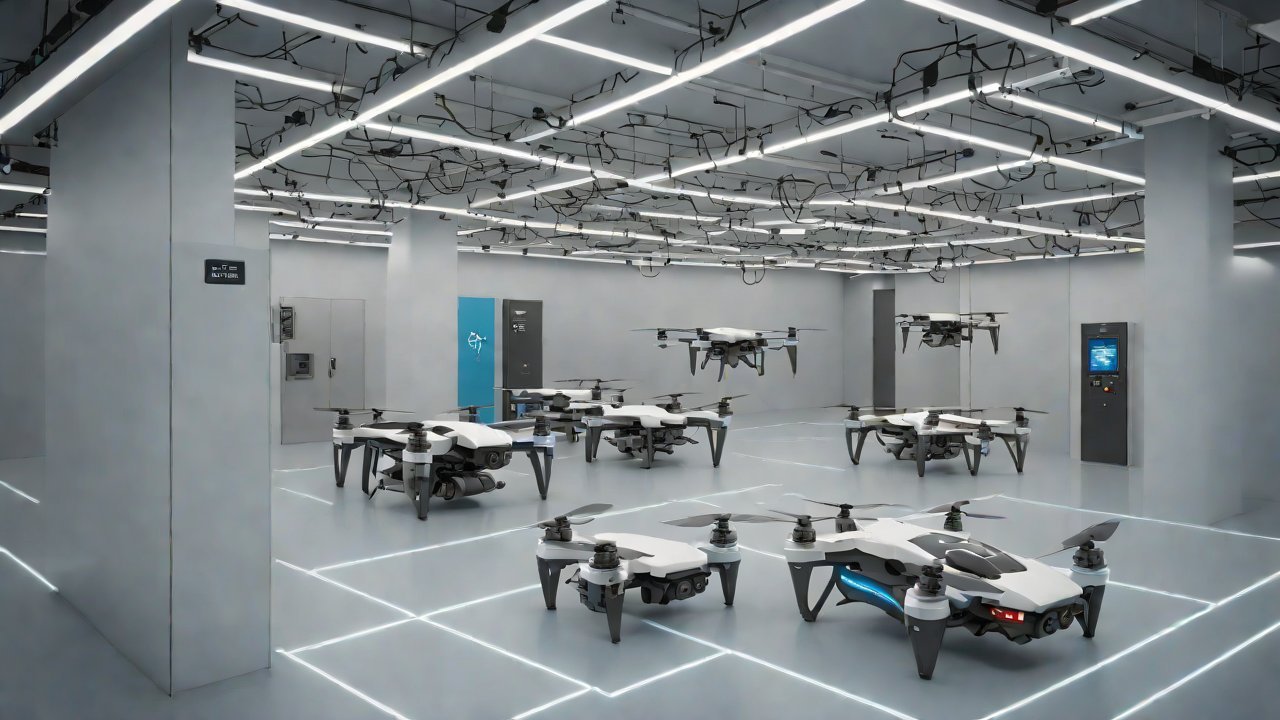
2. Energy Replenishment Process
The mothership-style automated charging bay employs a multi-stage energy replenishment process:
- Drone Arrival and Identification: Drones arrive at the charging bay and are identified by the CCU, which allocates a charging station and initiates the charging process.
- Energy Transfer: The charging station transfers energy to the drone, monitored by the sensor array and CCU.
- Charging Progress Monitoring: The CCU continuously monitors charging progress, adjusting energy transfer rates as needed to optimize efficiency.
- Drone Departure: Once fully charged, the drone departs the charging bay, ready for its next mission.
Table 2: Energy Replenishment Process
| Stage | Description | Functionality |
|---|---|---|
| Drone Arrival and Identification | CCU identifies drone and allocates charging station | Initiates charging process |
| Energy Transfer | Charging station transfers energy to drone | Monitored by sensor array and CCU |
| Charging Progress Monitoring | CCU continuously monitors charging progress | Adjusts energy transfer rates as needed |
| Drone Departure | Drone departs charging bay, fully charged | Ready for next mission |
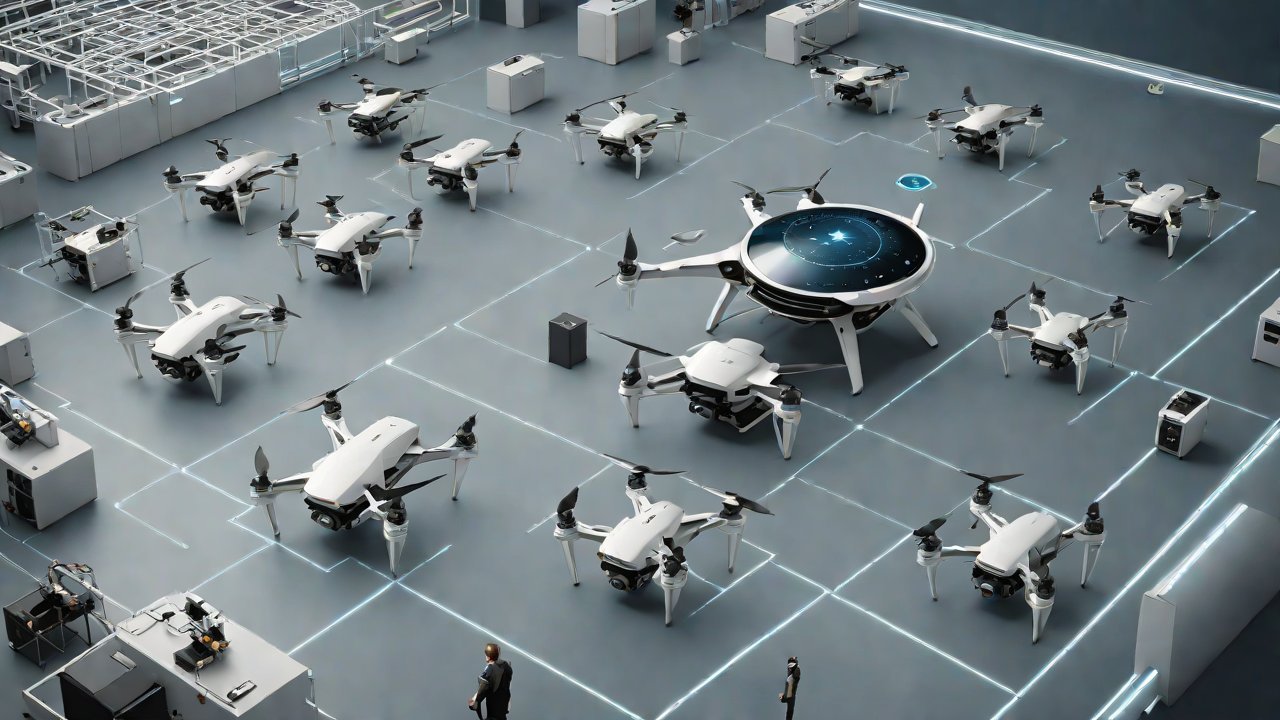
3. AI-Driven Coordination
The mothership-style automated charging bay relies on AI-driven coordination to optimize energy replenishment:
- Predictive Analytics: The CCU employs predictive analytics to forecast drone energy needs, ensuring timely charging and minimizing downtime.
- Real-Time Monitoring: Advanced sensors and AI algorithms enable real-time monitoring of drone status, energy levels, and charging progress.
- Optimized Energy Transfer: The CCU adjusts energy transfer rates to optimize efficiency, reducing energy waste and prolonging drone mission duration.
Table 3: AI-Driven Coordination
| Component | Description | Functionality |
|---|---|---|
| Predictive Analytics | Forecasts drone energy needs | Ensures timely charging and minimizes downtime |
| Real-Time Monitoring | Advanced sensors and AI algorithms | Continuously monitor drone status, energy levels, and charging progress |
| Optimized Energy Transfer | CCU adjusts energy transfer rates | Reduces energy waste and prolongs drone mission duration |
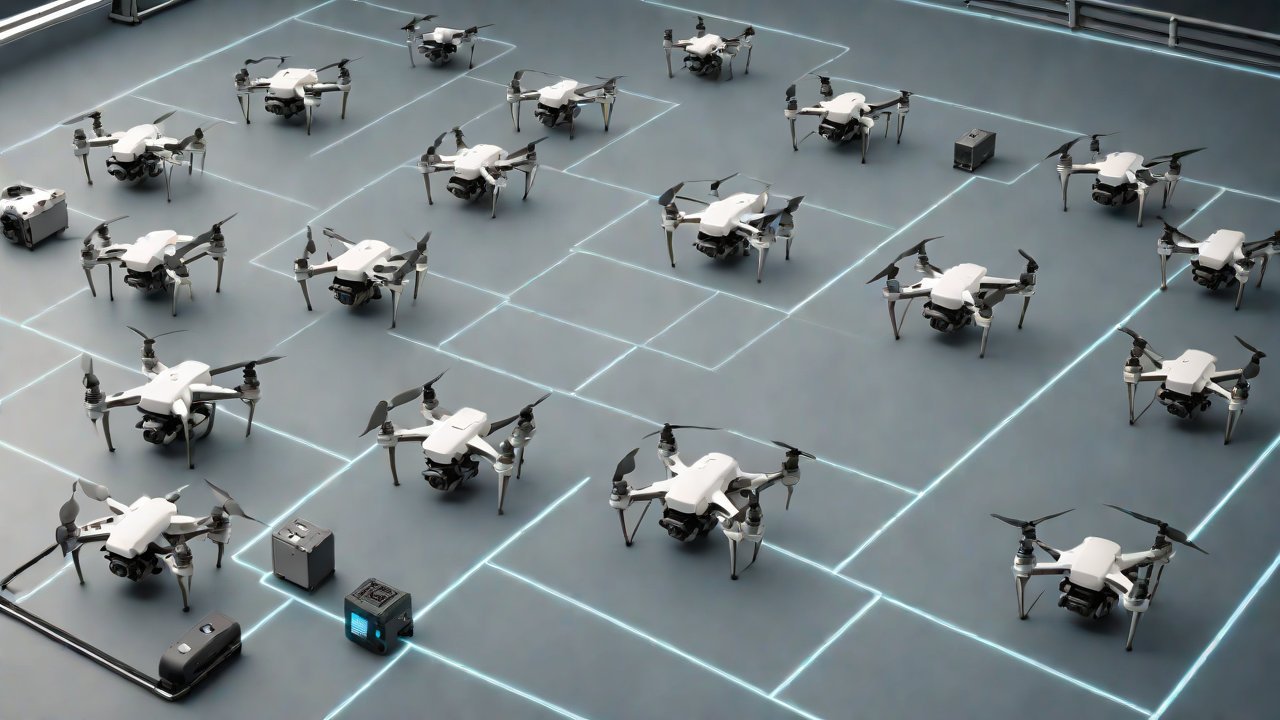
4. Market Trends and Applications
The mothership-style automated charging bay has far-reaching implications for various industries:
- Military and Defense: Enhanced drone endurance and mission flexibility for military operations.
- Aerial Surveillance: Prolonged drone surveillance capabilities for law enforcement and security agencies.
- Commercial Applications: Efficient drone deployment for delivery services, agriculture, and infrastructure inspection.
Table 4: Market Trends and Applications
| Industry | Description | Functionality |
|---|---|---|
| Military and Defense | Enhanced drone endurance and mission flexibility | Supports military operations |
| Aerial Surveillance | Prolonged drone surveillance capabilities | Supports law enforcement and security agencies |
| Commercial Applications | Efficient drone deployment | Supports delivery services, agriculture, and infrastructure inspection |
5. Conclusion
The mothership-style automated charging bay represents a significant breakthrough in autonomous systems, offering a scalable and efficient solution for drone energy replenishment. By leveraging AI-driven coordination, advanced sensor systems, and sophisticated charging infrastructure, this technology has the potential to revolutionize various industries and applications.
IOT Cloud Platform
IOT Cloud Platform is an IoT portal established by a Chinese IoT company, focusing on technical solutions in the fields of agricultural IoT, industrial IoT, medical IoT, security IoT, military IoT, meteorological IoT, consumer IoT, automotive IoT, commercial IoT, infrastructure IoT, smart warehousing and logistics, smart home, smart city, smart healthcare, smart lighting, etc.
The IoT Cloud Platform blog is a top IoT technology stack, providing technical knowledge on IoT, robotics, artificial intelligence (generative artificial intelligence AIGC), edge computing, AR/VR, cloud computing, quantum computing, blockchain, smart surveillance cameras, drones, RFID tags, gateways, GPS, 3D printing, 4D printing, autonomous driving, etc.



