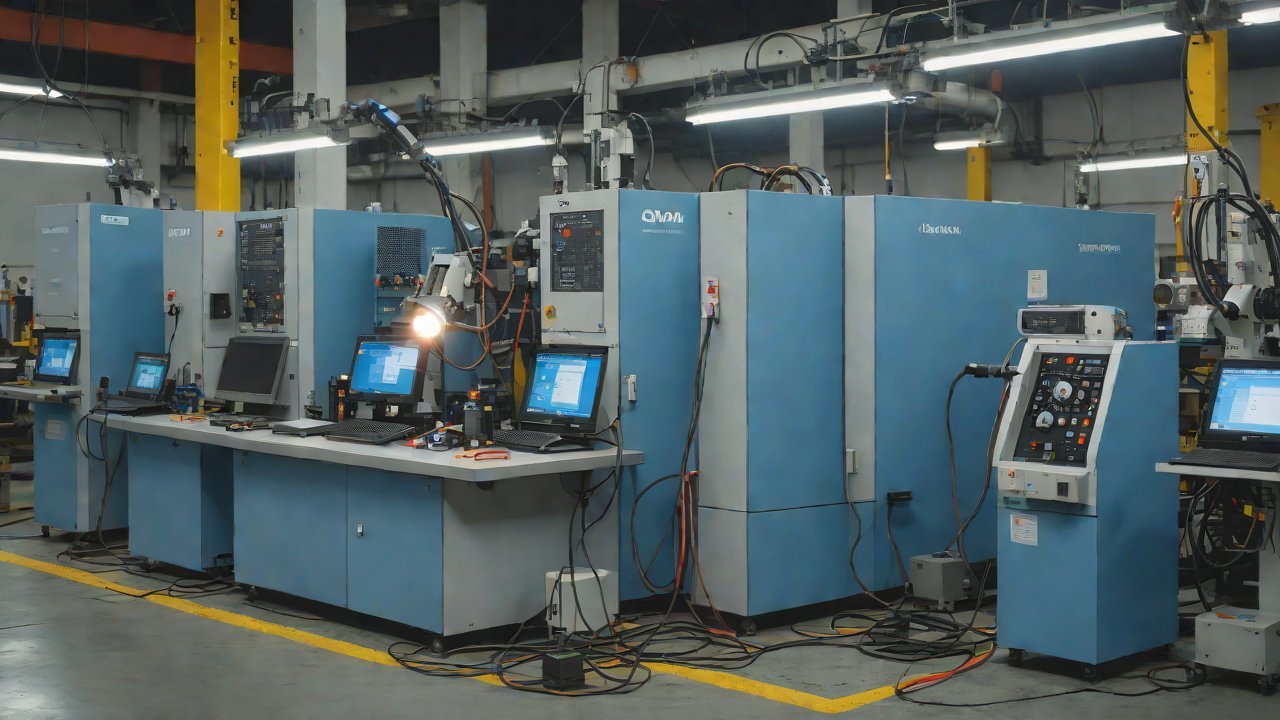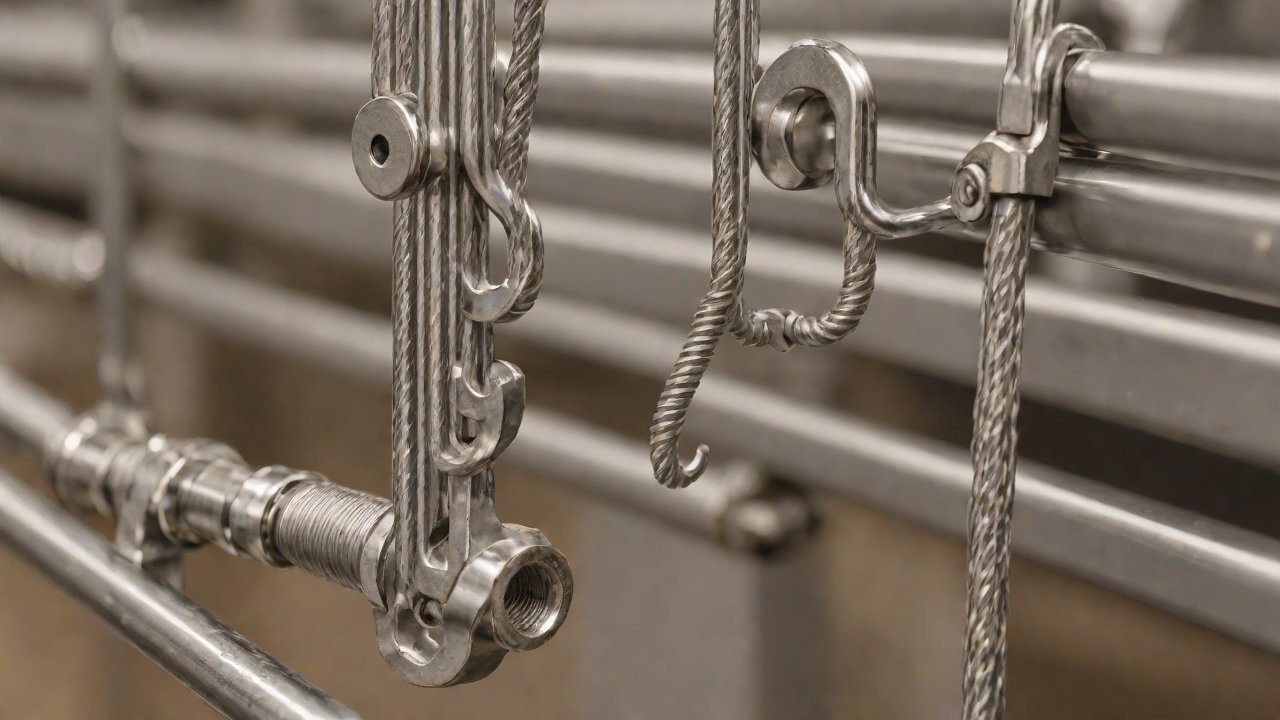
How do RFID readers on automatic hooks in slaughterhouses instantly match with ear tags?
RFID technology has revolutionized the efficiency and accuracy of animal tracking and identification in the meat industry. One of the most impressive applications of RFID is in the context of automatic hooks in slaughterhouses, where RFID readers are used to match ear tags with the corresponding animal. This seamless matching process is a testament to the precision and reliability of RFID technology, and has far-reaching implications for the meat industry’s ability to ensure animal health, safety, and quality.
1. Background on RFID Technology
RFID, or Radio Frequency Identification, is a technology that uses radio waves to transfer data between a tag or smart label and a reader device. This technology has been widely adopted in various industries, including logistics, retail, and healthcare, for its ability to provide accurate and efficient tracking and identification of objects or individuals. In the context of the meat industry, RFID technology is used to track and identify animals throughout their entire lifecycle, from birth to slaughter.
2. The Importance of Accurate Animal Identification
Accurate animal identification is crucial in the meat industry for several reasons. Firstly, it ensures that animals are properly tracked and accounted for, reducing the risk of animal loss or theft. Secondly, it enables the accurate identification of animals with any health or disease issues, allowing for targeted interventions and improving animal welfare. Finally, accurate animal identification is essential for ensuring that meat products are properly labeled and traced, which is critical for food safety and regulatory compliance.
3. The Role of RFID in Animal Identification
RFID technology plays a critical role in the accurate identification of animals in the meat industry. RFID tags, typically in the form of ear tags or implants, are attached to each animal at birth or at an early age. These tags contain a unique identifier, which is linked to the animal’s database record. When an animal is brought into a slaughterhouse, an RFID reader is used to scan the ear tag and match it with the corresponding database record. This process is typically instantaneous, allowing for rapid and accurate identification of the animal.
4. How RFID Readers on Automatic Hooks Match with Ear Tags
The process of how RFID readers on automatic hooks match with ear tags is as follows:
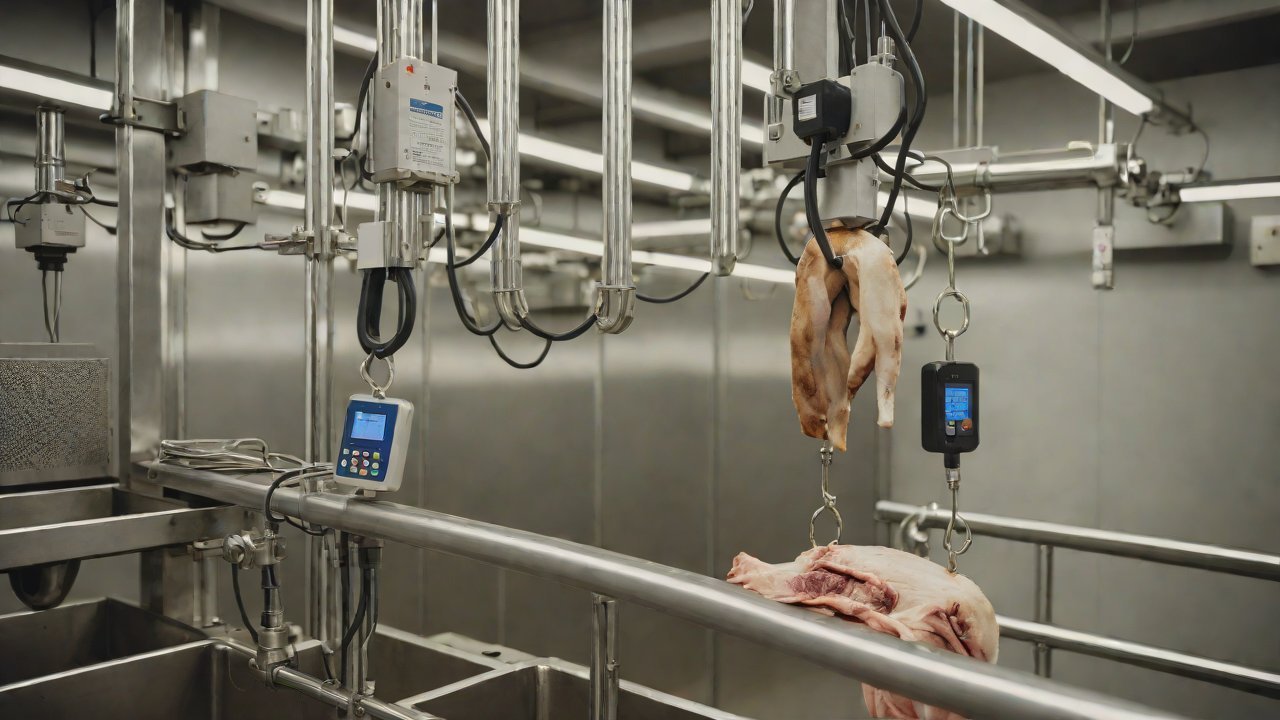
- An RFID reader is installed on an automatic hook, which is used to hang and process animals in the slaughterhouse.
- When an animal is brought onto the hook, the RFID reader scans the ear tag and sends the identifier to a central database.
- The database searches for the corresponding record and returns the animal’s information, including its breed, age, sex, and any health or disease issues.
- The RFID reader then uses this information to trigger a series of automated processes, including weighing, grading, and labeling of the animal.
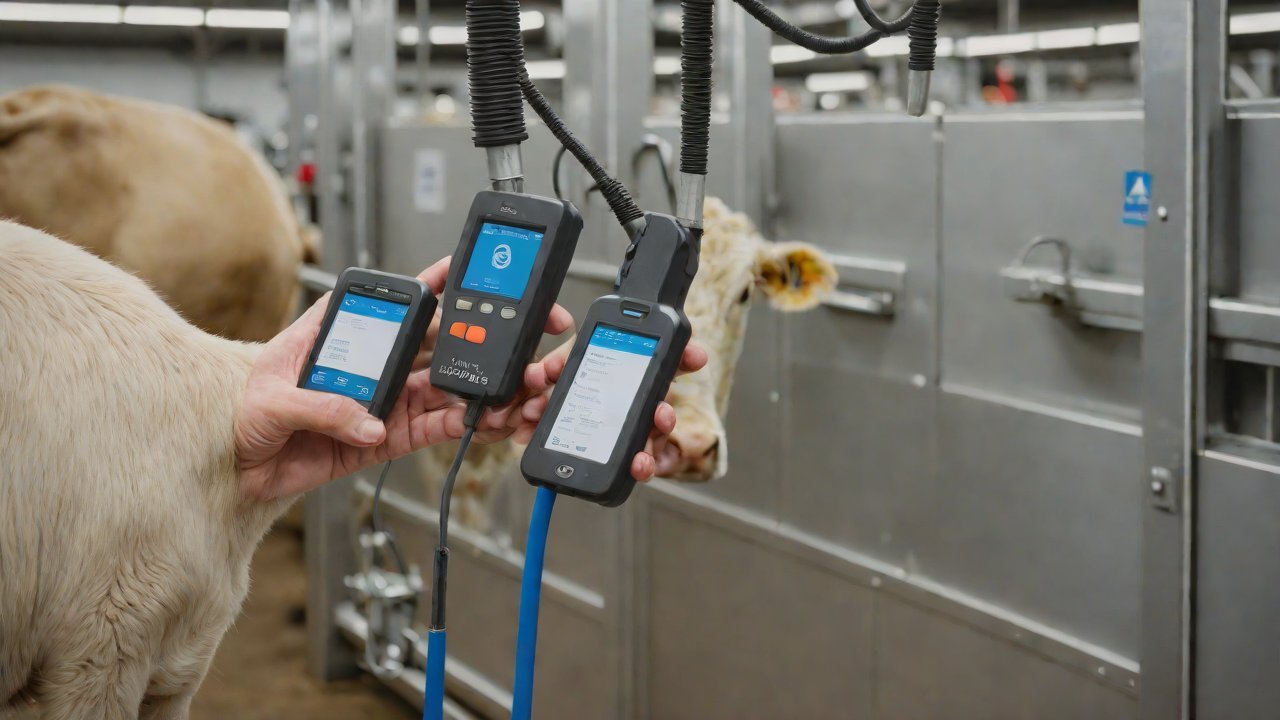
5. Technical Specifications of RFID Readers and Ear Tags
The technical specifications of RFID readers and ear tags are as follows:
| Component | Specification |
|---|---|
| RFID Reader | Frequency: 13.56 MHz |
| Power: 3.6 V | |
| Data Rate: 10 kbps | |
| Ear Tag | Frequency: 13.56 MHz |
| Power: 0.5 mW | |
| Data Rate: 10 kbps |
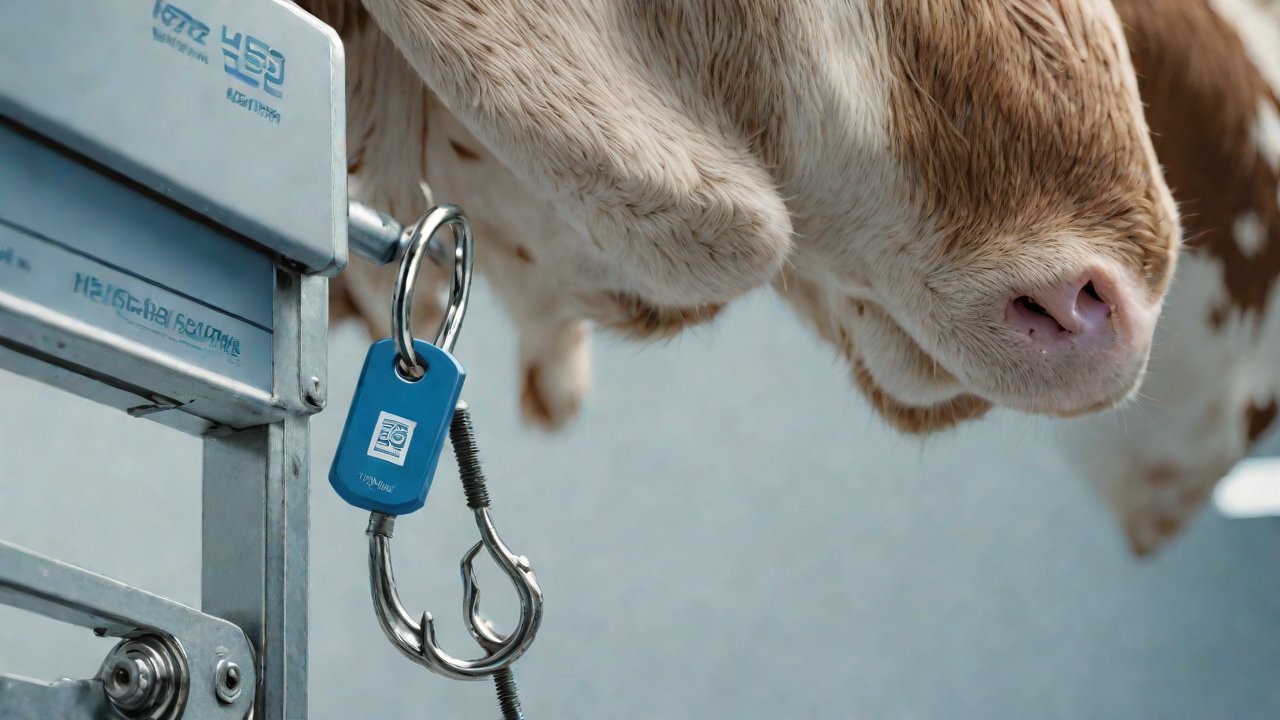
6. Market Data and AIGC Perspectives
The market for RFID technology in the meat industry is expected to grow significantly in the coming years, driven by increasing demand for food safety and regulatory compliance. According to a report by MarketsandMarkets, the global RFID market in the meat industry is expected to reach $1.3 billion by 2025, growing at a CAGR of 10.5% from 2020 to 2025.
7. Conclusion
In conclusion, the use of RFID readers on automatic hooks in slaughterhouses to match with ear tags is a highly efficient and accurate process, enabled by the precision and reliability of RFID technology. This technology has far-reaching implications for the meat industry’s ability to ensure animal health, safety, and quality, and is expected to continue growing in popularity in the coming years.
IOT Cloud Platform
IOT Cloud Platform is an IoT portal established by a Chinese IoT company, focusing on technical solutions in the fields of agricultural IoT, industrial IoT, medical IoT, security IoT, military IoT, meteorological IoT, consumer IoT, automotive IoT, commercial IoT, infrastructure IoT, smart warehousing and logistics, smart home, smart city, smart healthcare, smart lighting, etc.
The IoT Cloud Platform blog is a top IoT technology stack, providing technical knowledge on IoT, robotics, artificial intelligence (generative artificial intelligence AIGC), edge computing, AR/VR, cloud computing, quantum computing, blockchain, smart surveillance cameras, drones, RFID tags, gateways, GPS, 3D printing, 4D printing, autonomous driving, etc.