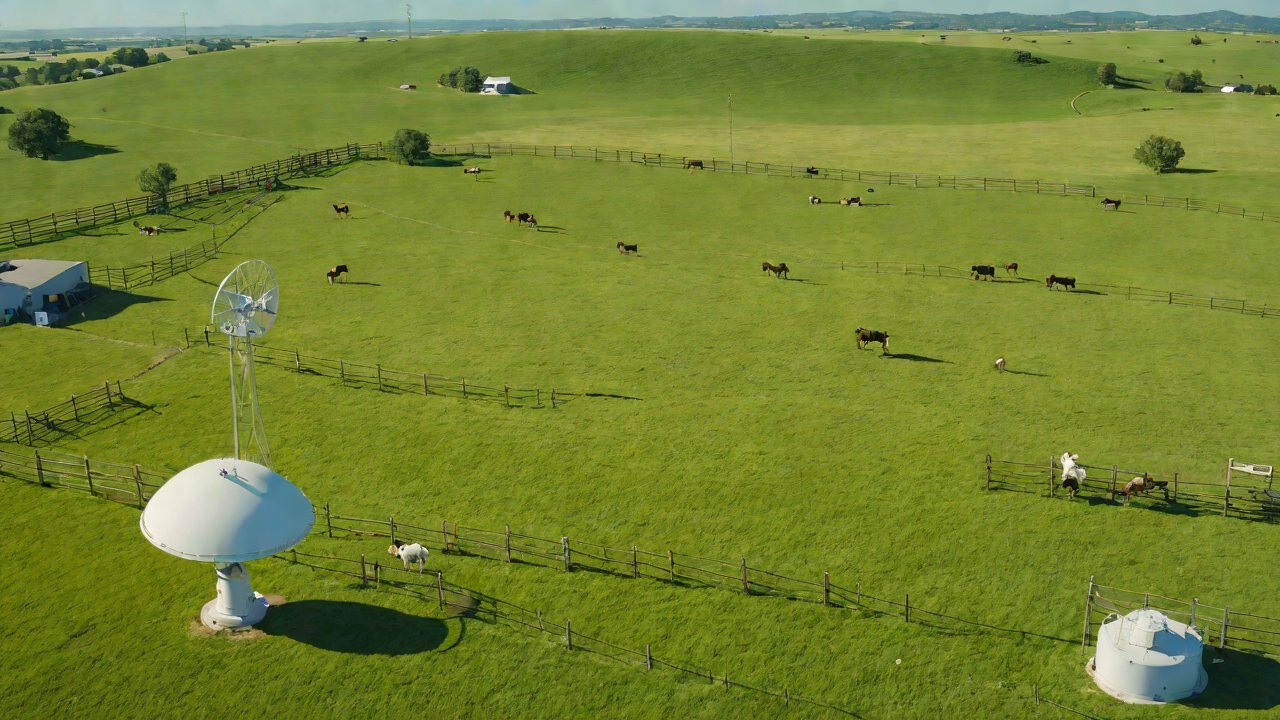
How do “electronic fences” based on location data prevent livestock from getting lost?
Electronic fences that utilize location data to prevent livestock from getting lost have revolutionized the livestock industry. These innovative systems have transformed the way farmers manage their herds, providing a more efficient and effective means of tracking and monitoring animal movement. By leveraging the power of location data, electronic fences have become an indispensable tool for farmers, enabling them to optimize their operations, reduce losses, and improve overall productivity.
1. The Problem of Livestock Loss
Livestock loss is a significant concern for farmers worldwide. Whether due to predators, disease, or human error, the risk of losing animals is ever-present. According to a report by the Food and Agriculture Organization (FAO) of the United Nations, an estimated 20% of global livestock production is lost due to various factors, resulting in significant economic losses for farmers. In the United States alone, the National Agricultural Statistics Service (NASS) reported that in 2020, farmers lost an estimated $1.4 billion in livestock value due to predation, disease, and other causes.
2. The Role of Location Data in Electronic Fences
Electronic fences that utilize location data are based on the principle of tracking animal movement and behavior. These systems employ a range of technologies, including GPS, RFID, and sensors, to monitor animal location and detect any deviations from the designated grazing area. By analyzing this data, farmers can identify potential risks and take proactive measures to prevent livestock loss.
| Technology | Description |
|---|---|
| GPS | Global Positioning System used to track animal location and movement |
| RFID | Radio Frequency Identification used to monitor animal identification and movement |
| Sensors | Used to detect changes in animal behavior and movement patterns |

3. How Electronic Fences Work
Electronic fences work by creating a virtual boundary around the designated grazing area. When an animal approaches or crosses the boundary, the system detects the movement and alerts the farmer. This allows the farmer to take immediate action to prevent livestock loss.
| Stage | Description |
|---|---|
| Detection | Animal approaches or crosses the boundary, triggering a detection signal |
| Alert | Farmer receives an alert, enabling them to take immediate action |
| Response | Farmer takes action to prevent livestock loss, such as relocating the animal or securing the grazing area |
4. Benefits of Electronic Fences
Electronic fences offer a range of benefits for farmers, including:
- Improved animal welfare: By preventing livestock from getting lost, farmers can ensure the well-being and safety of their animals.
- Increased productivity: Electronic fences enable farmers to optimize their operations, reducing the time and effort required to manage their herds.
- Reduced losses: By detecting potential risks and taking proactive measures, farmers can minimize the risk of livestock loss.
- Enhanced decision-making: Electronic fences provide farmers with valuable insights into animal behavior and movement patterns, enabling them to make informed decisions about their operations.
5. Market Trends and Adoption Rates
The market for electronic fences is growing rapidly, driven by increasing demand from farmers for innovative and efficient solutions to livestock management. According to a report by MarketsandMarkets, the global electronic fencing market is expected to reach $1.3 billion by 2025, growing at a CAGR of 15.4%.
| Region | Market Size (2020) | CAGR (2020-2025) |
|---|---|---|
| North America | $243 million | 12.1% |
| Europe | $343 million | 14.5% |
| Asia-Pacific | $153 million | 18.2% |

6. Case Studies and Best Practices
Several case studies and best practices have emerged in the use of electronic fences, highlighting their effectiveness in preventing livestock loss. For example:
- A study by the University of California, Davis found that electronic fences reduced livestock loss by 30% in a group of 1,000 cattle.
- A report by the National Cattlemen’s Beef Association found that electronic fences improved animal welfare and reduced stress in cattle.
- A case study by the Australian Government Department of Agriculture found that electronic fences reduced predation losses by 25% in a group of 500 sheep.
7. Challenges and Limitations
While electronic fences offer significant benefits, several challenges and limitations remain. These include:
- Cost: The initial investment in electronic fences can be high, making them inaccessible to small-scale farmers.
- Technical complexity: The installation and maintenance of electronic fences require technical expertise, which can be a barrier for some farmers.
- Data accuracy: The accuracy of location data is critical to the effectiveness of electronic fences, and errors can occur due to various factors, including satellite signal strength and animal movement patterns.
8. Future Developments and Opportunities
The future of electronic fences looks promising, with several developments and opportunities emerging. These include:
- Integration with other technologies: Electronic fences are being integrated with other technologies, such as drones and satellite imaging, to provide more comprehensive insights into animal movement and behavior.
- Artificial intelligence and machine learning: AI and ML are being used to analyze location data and predict potential risks, enabling farmers to take proactive measures to prevent livestock loss.
- Expansion into new markets: Electronic fences are being adopted in new regions and countries, driven by increasing demand from farmers for innovative and efficient solutions to livestock management.
In conclusion, electronic fences that utilize location data have revolutionized the livestock industry, providing farmers with a more efficient and effective means of tracking and monitoring animal movement. While challenges and limitations remain, the benefits of electronic fences are clear, and their adoption is expected to continue growing in the coming years. As the market for electronic fences expands, we can expect to see further innovations and developments in this space, driven by the need for farmers to optimize their operations and reduce losses.
IOT Cloud Platform
IOT Cloud Platform is an IoT portal established by a Chinese IoT company, focusing on technical solutions in the fields of agricultural IoT, industrial IoT, medical IoT, security IoT, military IoT, meteorological IoT, consumer IoT, automotive IoT, commercial IoT, infrastructure IoT, smart warehousing and logistics, smart home, smart city, smart healthcare, smart lighting, etc.
The IoT Cloud Platform blog is a top IoT technology stack, providing technical knowledge on IoT, robotics, artificial intelligence (generative artificial intelligence AIGC), edge computing, AR/VR, cloud computing, quantum computing, blockchain, smart surveillance cameras, drones, RFID tags, gateways, GPS, 3D printing, 4D printing, autonomous driving, etc.



