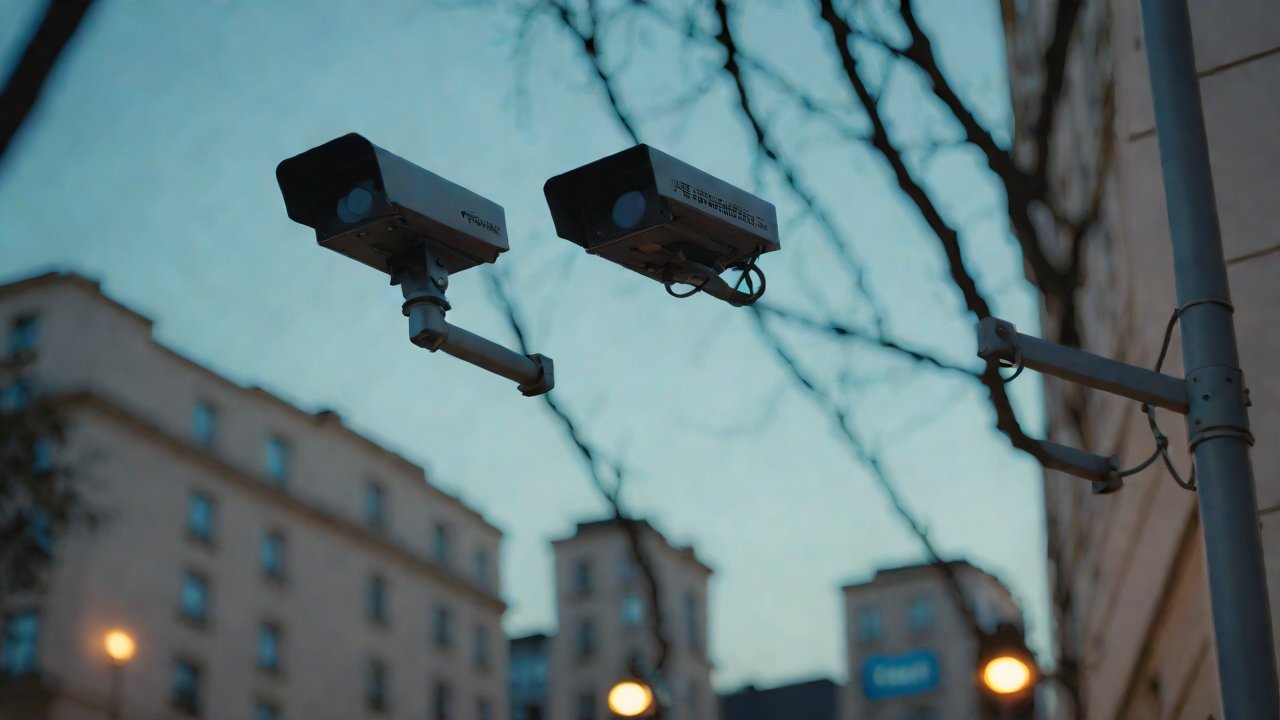
How can video surveillance achieve occlusion alarms and automatic lens coating detection?
Video surveillance has become an indispensable component in various sectors, including security, law enforcement, and commercial settings. One of its primary functions is to provide real-time monitoring and object detection capabilities. However, there are still areas where improvement is needed, particularly in terms of occlusion alarms and automatic lens coating detection.
Occlusion alarms refer to the ability of video surveillance systems to detect when an object or individual obstructs a camera’s view. This can be caused by various factors such as weather conditions, vandalism, or even accidental placement of objects near the camera. Automatic lens coating detection is another critical aspect that involves identifying and alerting system administrators when a camera’s lens becomes dirty or coated with substances like dust, water, or oil.
Achieving occlusion alarms and automatic lens coating detection requires advanced video analytics capabilities. This report aims to provide an in-depth examination of how these features can be implemented within video surveillance systems.
1. Occlusion Alarms: A Critical Component in Video Surveillance
Occlusion alarms are essential in maintaining the integrity and reliability of video surveillance systems. When a camera’s view is obstructed, it can lead to inaccurate or incomplete data collection, which may have severe consequences in critical situations such as crime investigations or disaster response.
1.1 Types of Occlusions
There are several types of occlusions that can affect a camera’s view:
| Type | Description |
|---|---|
| Physical obstruction | Objects blocking the camera’s view, e.g., trees, buildings, or people |
| Environmental factors | Weather conditions such as fog, snow, or intense sunlight |
| Vandalism | Intentional damage to the camera or its surroundings |

1.2 Challenges in Implementing Occlusion Alarms
Implementing occlusion alarms poses several challenges:
- Accurate detection: Differentiating between legitimate and illegitimate obstructions can be difficult.
- False positives: Incorrectly identifying occlusions can lead to unnecessary alerts and system downtime.
- Real-time processing: Processing video feeds in real-time while maintaining accuracy is a significant challenge.
2. Automatic Lens Coating Detection: Ensuring Camera Reliability
Automatic lens coating detection is crucial for ensuring the reliability and effectiveness of video surveillance systems. When a camera’s lens becomes dirty or coated, it can lead to reduced image quality and compromised system performance.
2.1 Types of Lens Coatings
There are several types of coatings that can affect a camera’s lens:
| Type | Description |
|---|---|
| Dust and dirt | Accumulation on the lens surface |
| Water spots | Mineral deposits from water or rain |
| Oil-based substances | Fingerprint smudges, cooking oil spills |

2.2 Challenges in Implementing Automatic Lens Coating Detection
Implementing automatic lens coating detection poses several challenges:
- Lens condition monitoring: Continuously monitoring the camera’s lens for signs of contamination.
- Real-time processing: Processing video feeds in real-time while maintaining accuracy is a significant challenge.
- False positives: Incorrectly identifying lens coatings can lead to unnecessary maintenance and system downtime.
3. Implementing Occlusion Alarms and Automatic Lens Coating Detection
To achieve occlusion alarms and automatic lens coating detection, the following strategies can be employed:
3.1 Advanced Video Analytics
Utilize advanced video analytics capabilities such as:
- Object detection: Identifying objects within the camera’s view.
- Motion tracking: Monitoring movement within the camera’s field of view.
3.2 Machine Learning Algorithms
Apply machine learning algorithms to improve accuracy and reduce false positives:
- Deep learning: Utilize deep learning techniques for more accurate object detection and motion tracking.
- Anomaly detection: Identify abnormal behavior or patterns in video feeds.

4. Market Trends and AIGC Perspectives
The market for video surveillance systems with advanced analytics capabilities is growing rapidly:
| Year | Market Size (USD Billion) |
|---|---|
| 2020 | 26.8 |
| 2025 | 43.1 |
4.1 AIGC Technical Perspectives
AIGC perspectives highlight the importance of integrating advanced analytics capabilities within video surveillance systems:
- Improved accuracy: Enhanced object detection and motion tracking reduce false positives.
- Increased efficiency: Automated lens coating detection streamlines maintenance processes.
5. Conclusion
Implementing occlusion alarms and automatic lens coating detection is crucial for maintaining the integrity and reliability of video surveillance systems. By leveraging advanced video analytics capabilities, machine learning algorithms, and AIGC perspectives, system administrators can ensure accurate object detection, motion tracking, and lens condition monitoring.
IOT Cloud Platform
IOT Cloud Platform is an IoT portal established by a Chinese IoT company, focusing on technical solutions in the fields of agricultural IoT, industrial IoT, medical IoT, security IoT, military IoT, meteorological IoT, consumer IoT, automotive IoT, commercial IoT, infrastructure IoT, smart warehousing and logistics, smart home, smart city, smart healthcare, smart lighting, etc.
The IoT Cloud Platform blog is a top IoT technology stack, providing technical knowledge on IoT, robotics, artificial intelligence (generative artificial intelligence AIGC), edge computing, AR/VR, cloud computing, quantum computing, blockchain, smart surveillance cameras, drones, RFID tags, gateways, GPS, 3D printing, 4D printing, autonomous driving, etc.