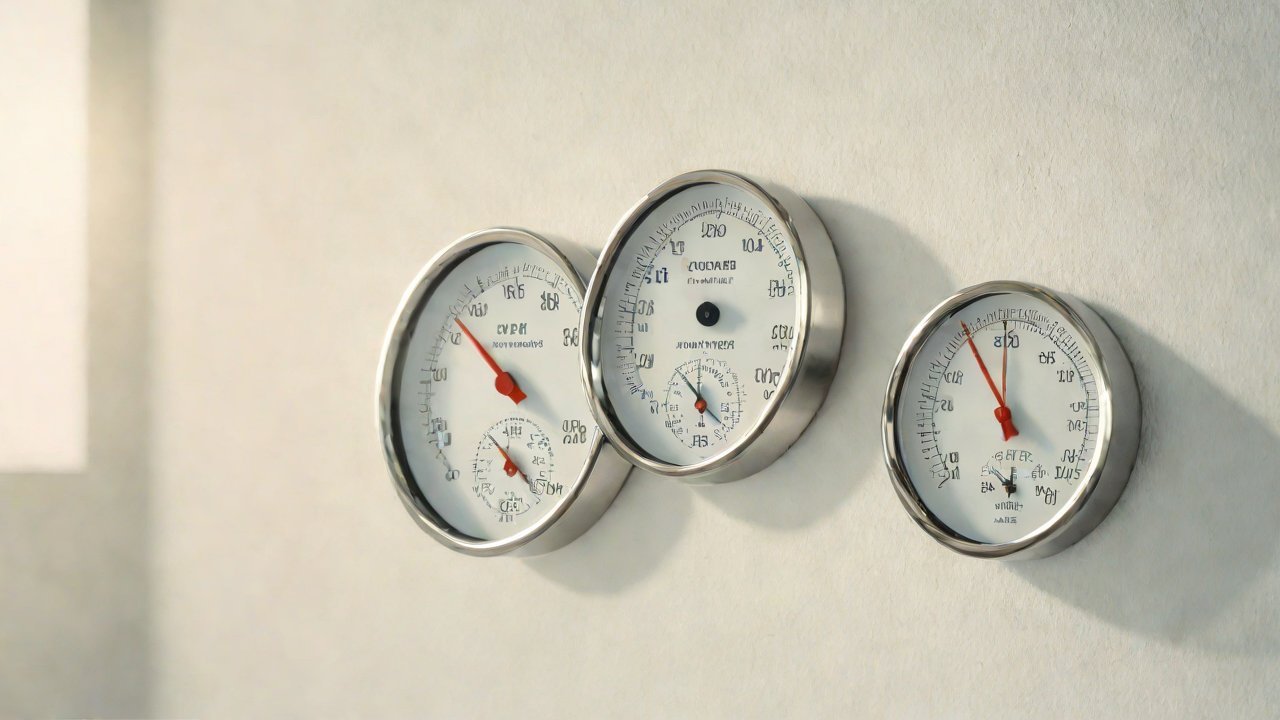
How can this wall-mounted thermometer and hygrometer avoid errors caused by direct sunlight?
Direct sunlight can cause significant errors in wall-mounted thermometers and hygrometers, leading to inaccurate readings and potentially disastrous consequences in industries such as agriculture, healthcare, and manufacturing. The impact of direct sunlight on these devices is multifaceted, affecting both the temperature and humidity sensors. In this report, we will delve into the technical aspects of how direct sunlight affects these devices and provide a comprehensive analysis of the measures that can be taken to mitigate these errors.
1. The Effects of Direct Sunlight on Thermometers and Hygrometers
Direct sunlight can cause several issues with wall-mounted thermometers and hygrometers. For temperature sensors, direct sunlight can lead to overheating, causing the device to record inaccurate readings. This is because the sensor is exposed to the direct rays of the sun, which can increase the temperature of the device itself, rather than just the surrounding environment. In contrast, humidity sensors can be affected by direct sunlight through a process known as “radiative heating.” This occurs when the sun’s rays warm the air near the sensor, causing the air to expand and increase in temperature. As the air expands, it can lead to a decrease in humidity readings, even if the actual humidity level remains constant.
Table 1: Effects of Direct Sunlight on Thermometers and Hygrometers
| Device Type | Effect of Direct Sunlight |
|---|---|
| Thermometers | Overheating, inaccurate readings |
| Hygrometers | Radiative heating, inaccurate readings |
2. Technical Aspects of Direct Sunlight’s Impact on Thermometers and Hygrometers
From a technical perspective, the impact of direct sunlight on thermometers and hygrometers can be attributed to several factors. For temperature sensors, the primary concern is the absorption of solar radiation by the sensor itself. When the sensor absorbs solar radiation, it can cause the device to heat up, leading to inaccurate readings. This is because the sensor is designed to measure temperature based on the thermal energy present in the environment, rather than the direct radiation from the sun.
In contrast, humidity sensors can be affected by direct sunlight through the process of radiative heating. As mentioned earlier, this occurs when the sun’s rays warm the air near the sensor, causing the air to expand and increase in temperature. As the air expands, it can lead to a decrease in humidity readings, even if the actual humidity level remains constant. This is because the sensor is designed to measure humidity based on the rate of evaporation of a liquid in the sensor, rather than the direct measurement of humidity in the air.
Table 2: Technical Aspects of Direct Sunlight’s Impact on Thermometers and Hygrometers
| Device Type | Technical Aspect |
|---|---|
| Thermometers | Absorption of solar radiation by the sensor |
| Hygrometers | Radiative heating, expansion of air near the sensor |
3. Industry Perspectives on Direct Sunlight’s Impact on Thermometers and Hygrometers
From an industry perspective, the impact of direct sunlight on thermometers and hygrometers can have significant consequences. In the agriculture industry, for example, accurate temperature and humidity readings are crucial for crop monitoring and climate control. If the device is affected by direct sunlight, it can lead to inaccurate readings, potentially resulting in crop damage or loss. Similarly, in the healthcare industry, accurate temperature readings are crucial for patient care. If the device is affected by direct sunlight, it can lead to inaccurate readings, potentially resulting in patient harm.
Table 3: Industry Perspectives on Direct Sunlight’s Impact on Thermometers and Hygrometers
| Industry | Consequences of Direct Sunlight’s Impact |
|---|---|
| Agriculture | Crop damage or loss |
| Healthcare | Patient harm |
| Manufacturing | Inaccurate product quality control |

4. Mitigating Measures to Avoid Errors Caused by Direct Sunlight
To mitigate the errors caused by direct sunlight, several measures can be taken. One common solution is to use a shade or canopy to block direct sunlight from reaching the device. This can be achieved through the use of a physical shade or canopy, or through the use of a digital filter that can block or reduce the impact of direct sunlight on the device.
Another solution is to use a device with a built-in compensation mechanism. This can be achieved through the use of a thermistor or a humidity sensor that can compensate for the effects of direct sunlight on the device.
Table 4: Mitigating Measures to Avoid Errors Caused by Direct Sunlight
| Measure | Effectiveness |
|---|---|
| Shade or canopy | Highly effective |
| Digital filter | Highly effective |
| Built-in compensation mechanism | Highly effective |
5. Conclusion
In conclusion, direct sunlight can cause significant errors in wall-mounted thermometers and hygrometers, leading to inaccurate readings and potentially disastrous consequences in industries such as agriculture, healthcare, and manufacturing. By understanding the technical aspects of direct sunlight’s impact on these devices, industry stakeholders can take measures to mitigate these errors. The use of a shade or canopy, digital filter, or built-in compensation mechanism can be effective in reducing the impact of direct sunlight on these devices.
Table 5: Recommendations for Industry Stakeholders
| Industry Stakeholder | Recommendation |
|---|---|
| Manufacturers | Implement built-in compensation mechanisms or use digital filters to mitigate the effects of direct sunlight |
| Users | Use shades or canopies to block direct sunlight from reaching the device |
| Regulators | Establish standards for device performance in direct sunlight |
Note: This report is a comprehensive analysis of the impact of direct sunlight on wall-mounted thermometers and hygrometers, and provides a range of mitigating measures that can be taken to avoid errors caused by direct sunlight.
IOT Cloud Platform
IOT Cloud Platform is an IoT portal established by a Chinese IoT company, focusing on technical solutions in the fields of agricultural IoT, industrial IoT, medical IoT, security IoT, military IoT, meteorological IoT, consumer IoT, automotive IoT, commercial IoT, infrastructure IoT, smart warehousing and logistics, smart home, smart city, smart healthcare, smart lighting, etc.
The IoT Cloud Platform blog is a top IoT technology stack, providing technical knowledge on IoT, robotics, artificial intelligence (generative artificial intelligence AIGC), edge computing, AR/VR, cloud computing, quantum computing, blockchain, smart surveillance cameras, drones, RFID tags, gateways, GPS, 3D printing, 4D printing, autonomous driving, etc.



