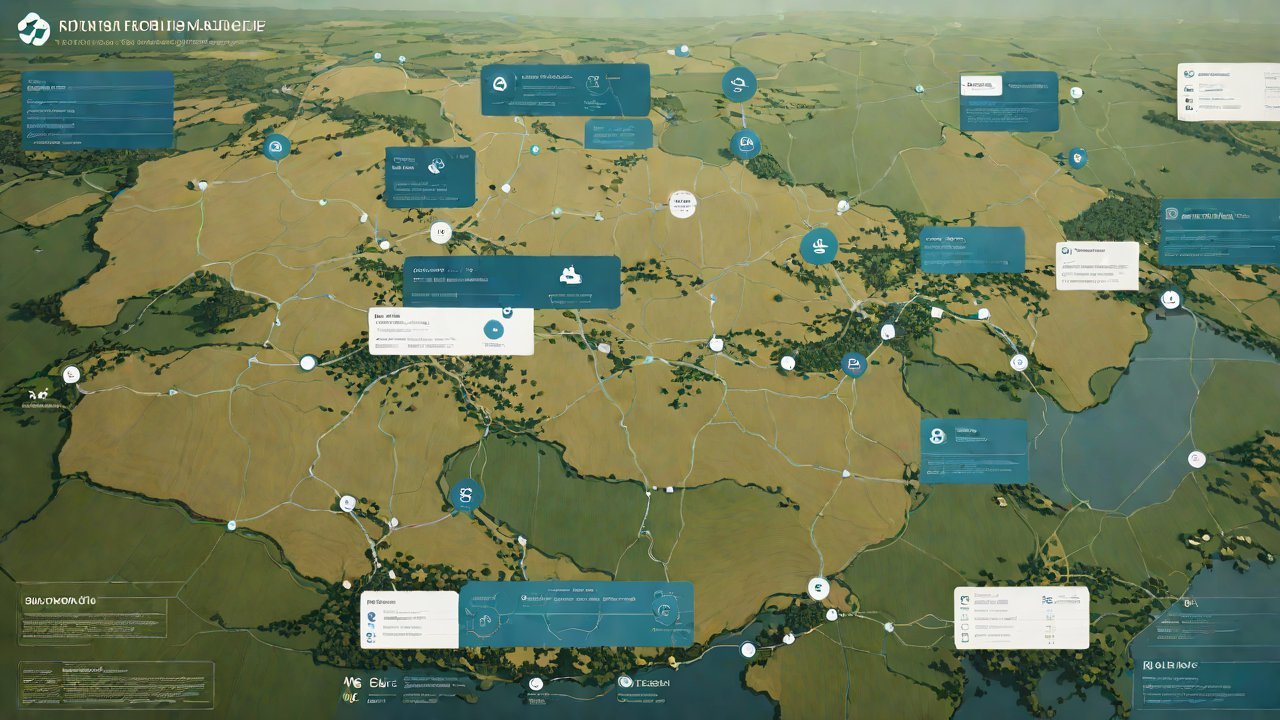
How can this IoT traceability system connect to the national livestock dynamic monitoring database?
The integration of Internet of Things (IoT) technology with the national livestock dynamic monitoring database has the potential to revolutionize the livestock industry by providing real-time tracking and monitoring of livestock movements, health, and productivity. The IoT traceability system can connect to the national database through a series of standardized interfaces and data exchange protocols, enabling seamless data sharing and analytics. This report will outline the technical and functional requirements for connecting the IoT system to the national database.
1. Technical Requirements
To establish a connection between the IoT traceability system and the national livestock dynamic monitoring database, several technical requirements must be met. These include:
| Requirement | Description |
|---|---|
| Data Standardization | The IoT system must conform to standardized data formats and protocols for data exchange, such as XML, JSON, or CSV. |
| API Integration | The IoT system must have a secure API (Application Programming Interface) that allows for data exchange with the national database. |
| Data Encryption | All data exchanged between the IoT system and the national database must be encrypted to ensure data security and integrity. |
| Authentication and Authorization | The IoT system must have secure authentication and authorization mechanisms to ensure that only authorized personnel can access and modify data in the national database. |
2. Functional Requirements
In addition to the technical requirements, the following functional requirements must be met to establish a connection between the IoT system and the national database:
| Requirement | Description |
|---|---|
| Data Synchronization | The IoT system must be able to synchronize data with the national database in real-time, ensuring that both systems have the most up-to-date information. |
| Data Validation | The IoT system must validate data before sending it to the national database to ensure accuracy and consistency. |
| Data Visualization | The national database must provide data visualization tools to enable users to easily understand and analyze data from the IoT system. |
| Alert and Notification | The national database must be able to send alerts and notifications to users when certain conditions or thresholds are met, such as when a disease outbreak is detected. |
3. Market Analysis
The market for IoT-enabled livestock monitoring systems is growing rapidly, driven by increasing demand for data-driven decision-making in the livestock industry. According to a report by MarketsandMarkets, the global IoT in agriculture market is expected to grow from $1.5 billion in 2020 to $8.3 billion by 2025, at a Compound Annual Growth Rate (CAGR) of 37.4% during the forecast period.
| Market Size (2020) | Market Size (2025) | CAGR |
|---|---|---|
| $1.5 billion | $8.3 billion | 37.4% |
4. AIGC Technical Perspectives
To establish a connection between the IoT system and the national database, several AIGC (Artificial Intelligence and Machine Learning) technical perspectives must be considered:
| Perspective | Description |
|---|---|
| Data Preprocessing | The IoT system must preprocess data from sensors and other sources to ensure it is in a format suitable for analysis and visualization. |
| Predictive Analytics | The national database must use predictive analytics to forecast livestock movements, health, and productivity based on historical data and real-time sensor readings. |
| Real-time Analytics | The national database must provide real-time analytics to enable users to quickly respond to changing conditions in the livestock industry. |
5. Implementation Roadmap
To implement the connection between the IoT system and the national database, the following roadmap can be followed:
| Phase | Description | Timeline |
|---|---|---|
| Phase 1: Requirements Gathering | Gather technical and functional requirements for the connection | 2 weeks |
| Phase 2: Design and Prototyping | Design and prototype the connection between the IoT system and the national database | 4 weeks |
| Phase 3: Implementation and Testing | Implement the connection and test for accuracy and reliability | 8 weeks |
| Phase 4: Deployment and Maintenance | Deploy the connection and maintain it for optimal performance | Ongoing |
6. Conclusion
The integration of IoT technology with the national livestock dynamic monitoring database has the potential to revolutionize the livestock industry by providing real-time tracking and monitoring of livestock movements, health, and productivity. By meeting the technical and functional requirements outlined in this report, the IoT system can connect to the national database through a series of standardized interfaces and data exchange protocols, enabling seamless data sharing and analytics.
IOT Cloud Platform
IOT Cloud Platform is an IoT portal established by a Chinese IoT company, focusing on technical solutions in the fields of agricultural IoT, industrial IoT, medical IoT, security IoT, military IoT, meteorological IoT, consumer IoT, automotive IoT, commercial IoT, infrastructure IoT, smart warehousing and logistics, smart home, smart city, smart healthcare, smart lighting, etc.
The IoT Cloud Platform blog is a top IoT technology stack, providing technical knowledge on IoT, robotics, artificial intelligence (generative artificial intelligence AIGC), edge computing, AR/VR, cloud computing, quantum computing, blockchain, smart surveillance cameras, drones, RFID tags, gateways, GPS, 3D printing, 4D printing, autonomous driving, etc.