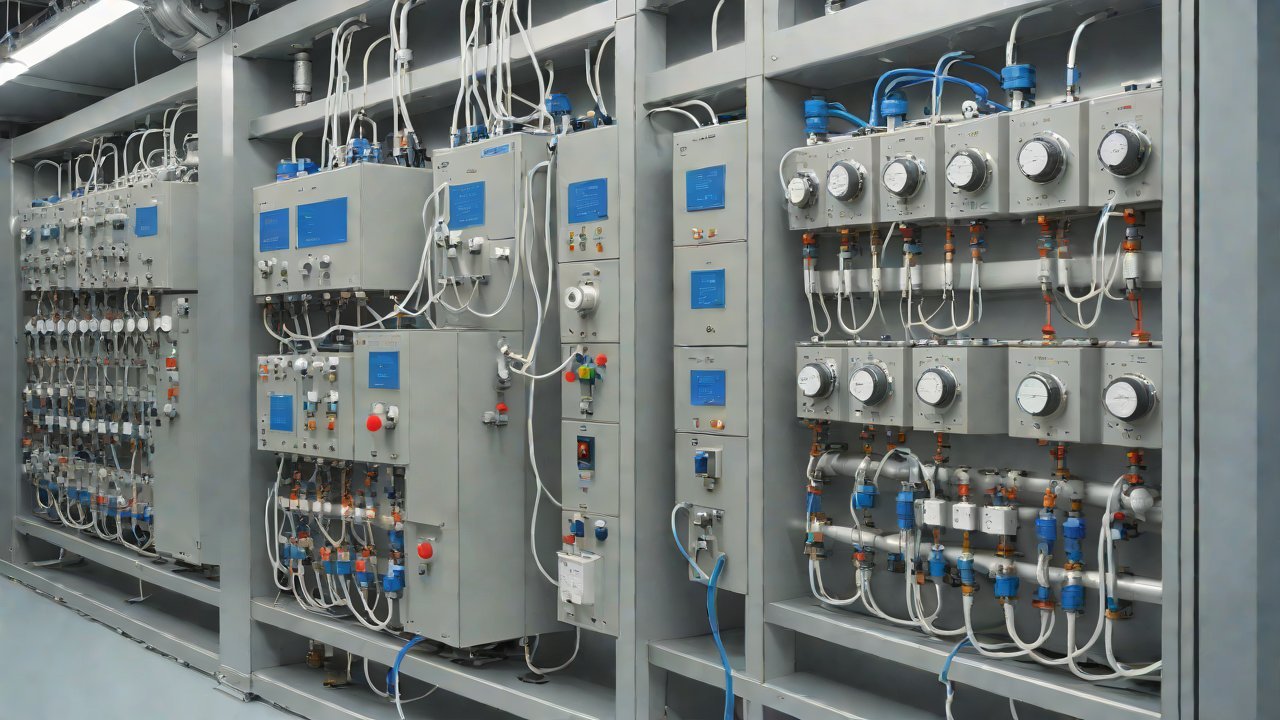
How can this electromagnetic valve array support precise, independent liquid supply to multiple areas?
Electromagnetic valve arrays have gained significant traction in various industries, including chemical processing, pharmaceuticals, and aerospace, due to their ability to provide precise control over fluid flow. The array’s design, comprising multiple valves that can be actuated independently, enables the simultaneous supply of liquids to multiple areas with a high degree of accuracy. This report delves into the intricacies of electromagnetic valve arrays, exploring their technical capabilities, market applications, and potential limitations.
1. Technical Overview of Electromagnetic Valve Arrays
Electromagnetic valve arrays consist of a series of valves, each equipped with a solenoid coil, a valve body, and a piston or diaphragm. When an electric current is applied to the solenoid coil, it generates a magnetic field that actuates the valve, allowing fluid to flow through. The array’s design allows for individual valve control, enabling precise regulation of fluid flow to each area.
The key components of an electromagnetic valve array include:
| Component | Description |
|---|---|
| Solenoid Coil | Generates magnetic field when electric current is applied |
| Valve Body | Houses the piston or diaphragm and controls fluid flow |
| Piston or Diaphragm | Actuated by magnetic field to open or close valve |
2. Precise Control and Independent Supply
The electromagnetic valve array’s ability to provide precise control over fluid flow is attributed to its design and technical capabilities. Each valve can be actuated independently, allowing for simultaneous supply of liquids to multiple areas. This is particularly useful in applications where multiple fluids need to be processed or supplied to different areas of a system.
The precision of the electromagnetic valve array is influenced by several factors, including:
| Factor | Description |
|---|---|
| Solenoid Coil Design | Affects the magnetic field strength and actuation speed |
| Valve Body Material | Influences the valve’s durability and resistance to corrosion |
| Piston or Diaphragm Design | Affects the valve’s responsiveness and accuracy |

3. Market Applications and Requirements
Electromagnetic valve arrays are used in various industries, including:
| Industry | Application |
|---|---|
| Chemical Processing | Supplying precise amounts of chemicals for manufacturing |
| Pharmaceuticals | Regulating fluid flow for batch processing and filling |
| Aerospace | Supplying precise amounts of fuels and lubricants |

The market requirements for electromagnetic valve arrays include:
| Requirement | Description |
|---|---|
| Precision | Ability to provide precise control over fluid flow |
| Independence | Capability to supply multiple areas simultaneously |
| Reliability | Ability to operate in harsh environments and withstand corrosion |
4. AIGC Technical Perspectives
Advanced Industrial and Graphical Computing (AIGC) has significantly impacted the design and development of electromagnetic valve arrays. AIGC techniques, such as finite element analysis and computational fluid dynamics, have enabled the creation of more accurate models and simulations, allowing for:
| AIGC Technique | Description |
|---|---|
| Finite Element Analysis | Enables precise modeling of valve behavior and fluid flow |
| Computational Fluid Dynamics | Simulates fluid flow and pressure drop in complex systems |

5. Potential Limitations and Challenges
While electromagnetic valve arrays offer precise control and independent supply, there are potential limitations and challenges to consider:
| Challenge | Description |
|---|---|
| Power Consumption | High power requirements for multiple solenoid coils |
| Complexity | Increased complexity in design and control systems |
| Maintenance | Potential for increased maintenance requirements due to multiple components |
6. Conclusion
Electromagnetic valve arrays offer precise control and independent supply capabilities, making them an attractive solution for various industries. However, potential limitations and challenges must be considered when designing and implementing these systems. AIGC techniques have significantly impacted the development of electromagnetic valve arrays, enabling more accurate models and simulations. As the demand for precise control and independent supply continues to grow, the electromagnetic valve array is likely to remain a vital component in various industrial applications.
IOT Cloud Platform
IOT Cloud Platform is an IoT portal established by a Chinese IoT company, focusing on technical solutions in the fields of agricultural IoT, industrial IoT, medical IoT, security IoT, military IoT, meteorological IoT, consumer IoT, automotive IoT, commercial IoT, infrastructure IoT, smart warehousing and logistics, smart home, smart city, smart healthcare, smart lighting, etc.
The IoT Cloud Platform blog is a top IoT technology stack, providing technical knowledge on IoT, robotics, artificial intelligence (generative artificial intelligence AIGC), edge computing, AR/VR, cloud computing, quantum computing, blockchain, smart surveillance cameras, drones, RFID tags, gateways, GPS, 3D printing, 4D printing, autonomous driving, etc.



