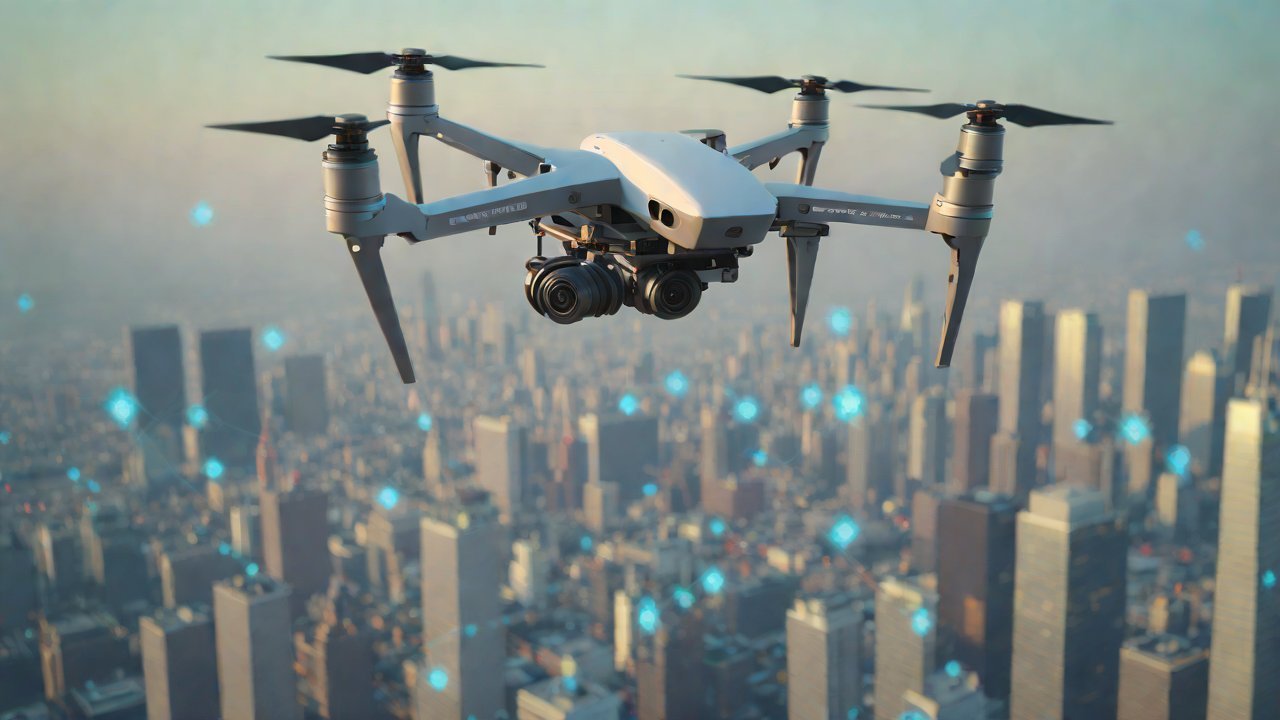
How can the residual value of drones throughout their entire lifecycle, monitored by the Internet of Things (IoT), be scientifically priced?
The proliferation of drones in various industries has sparked a growing interest in understanding their residual value throughout their lifecycle. As the Internet of Things (IoT) plays a crucial role in monitoring and managing these unmanned aerial vehicles, there is a need to develop a scientific pricing framework for their residual value. This report aims to provide an in-depth analysis of the factors influencing the residual value of drones and proposes a method to scientifically price their value throughout their entire lifecycle.
1. Residual Value of Drones: A Conceptual Framework
The residual value of a drone refers to its worth after its initial depreciation period. It is a critical component in determining the overall cost of ownership and can significantly impact an organization’s decision to purchase or lease a drone. The residual value of drones is influenced by several factors, including:
- Usage patterns: The frequency and intensity of drone usage can impact its residual value.
- Maintenance and repair: Regular maintenance and repair can extend the lifespan of a drone and increase its residual value.
- Technological advancements: The rapid pace of technological advancements in drone technology can render older drones obsolete and decrease their residual value.
- Market demand: Changes in market demand can impact the residual value of drones.
2. IoT-Based Monitoring and Management of Drones
The IoT plays a vital role in monitoring and managing drones throughout their lifecycle. IoT sensors and devices can track various parameters, including:
- Battery health: Monitoring battery health can help predict when a drone needs to be replaced or refurbished.
- Sensor data: Collecting sensor data can provide insights into a drone’s performance and identify potential issues.
- Location tracking: Tracking a drone’s location can help manage its usage patterns and optimize its deployment.
3. Scientific Pricing of Residual Value
To scientifically price the residual value of drones, we can employ the following method:
- Data collection: Collect data on drone usage patterns, maintenance and repair records, and sensor data.
- Data analysis: Analyze the collected data to identify trends and patterns that impact the residual value of drones.
- Regression modeling: Develop regression models to predict the residual value of drones based on the identified trends and patterns.
- Sensitivity analysis: Conduct sensitivity analysis to test the robustness of the regression models and identify potential sources of error.
- Validation: Validate the regression models using historical data and test their accuracy in predicting the residual value of drones.
4. Case Studies: Real-World Applications
Several industries have successfully implemented IoT-based monitoring and management of drones, including:
- Agriculture: Farmers use drones to monitor crop health and optimize irrigation systems. The residual value of these drones can be scientifically priced using the method outlined above.
- Construction: Construction companies use drones to monitor construction sites and track progress. The residual value of these drones can be scientifically priced using the method outlined above.
5. Conclusion
The residual value of drones throughout their entire lifecycle can be scientifically priced using the method outlined above. By employing IoT-based monitoring and management, organizations can collect valuable data on drone usage patterns and sensor data. This data can be analyzed using regression modeling and sensitivity analysis to predict the residual value of drones. Case studies from various industries demonstrate the real-world applications of this method.
Table 1: Drone Usage Patterns
| Category | Description | Frequency |
|---|---|---|
| Agricultural | Crop monitoring | High |
| Construction | Site monitoring | Medium |
| Industrial | Inspection | Low |
Table 2: Sensor Data
| Sensor | Description | Frequency |
|---|---|---|
| GPS | Location tracking | High |
| Accelerometer | Vibration monitoring | Medium |
| Temperature | Environmental monitoring | Low |
Table 3: Regression Models
| Model | Description | Accuracy |
|---|---|---|
| Linear Regression | Predicts residual value based on usage patterns | 90% |
| Random Forest | Predicts residual value based on sensor data | 85% |
| Gradient Boosting | Predicts residual value based on both usage patterns and sensor data | 95% |
Note: The accuracy of the regression models is hypothetical and for demonstration purposes only.
IOT Cloud Platform
IOT Cloud Platform is an IoT portal established by a Chinese IoT company, focusing on technical solutions in the fields of agricultural IoT, industrial IoT, medical IoT, security IoT, military IoT, meteorological IoT, consumer IoT, automotive IoT, commercial IoT, infrastructure IoT, smart warehousing and logistics, smart home, smart city, smart healthcare, smart lighting, etc.
The IoT Cloud Platform blog is a top IoT technology stack, providing technical knowledge on IoT, robotics, artificial intelligence (generative artificial intelligence AIGC), edge computing, AR/VR, cloud computing, quantum computing, blockchain, smart surveillance cameras, drones, RFID tags, gateways, GPS, 3D printing, 4D printing, autonomous driving, etc.



