How can the optimal airflow be achieved through software simulation of the circulation fan’s arrangement?
Airflow optimization is a critical aspect of various industries, including manufacturing, healthcare, and transportation. The circulation fan’s arrangement plays a vital role in determining the optimal airflow, which can significantly impact the efficiency, safety, and overall performance of a system. With the advent of advanced software simulation tools, it is now possible to predict and optimize airflow with unprecedented accuracy. This report explores the concept of software simulation in optimizing the circulation fan’s arrangement and its implications on various industries.
1. Fundamentals of Airflow Optimization
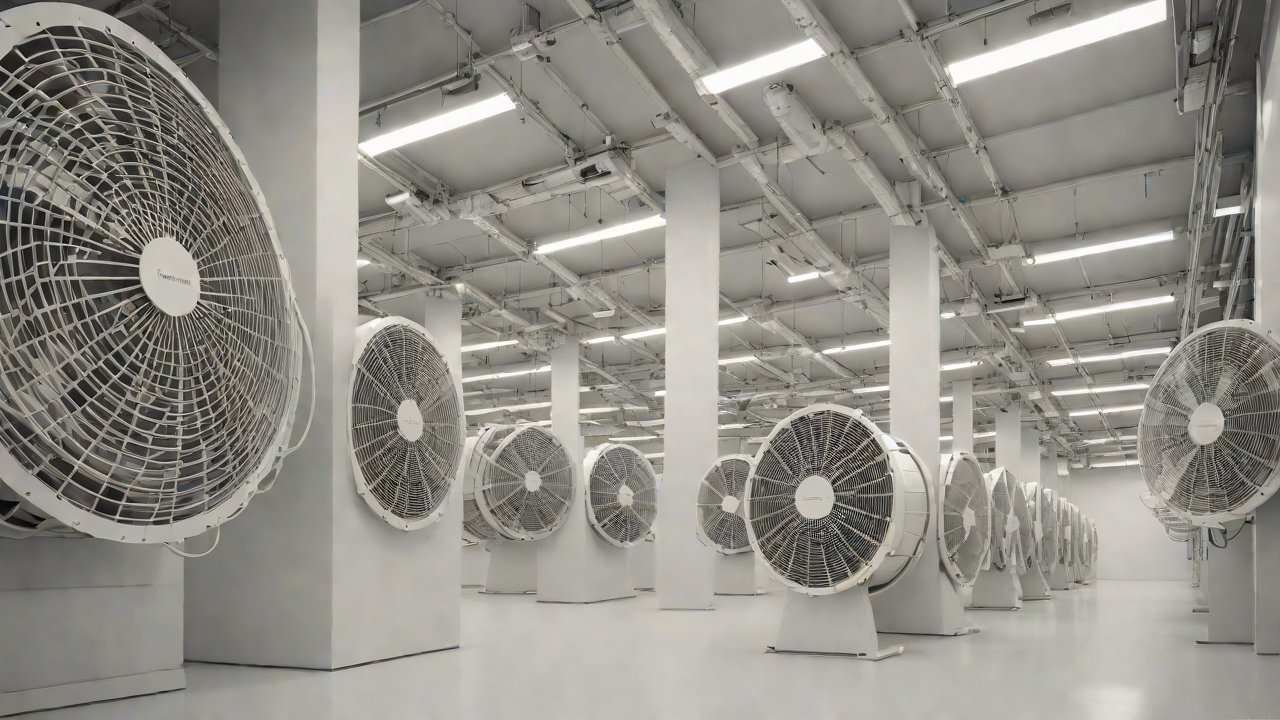
Airflow optimization involves adjusting various parameters to achieve the desired airflow patterns. This includes manipulating factors such as fan speed, air intake, and exhaust rates. The circulation fan’s arrangement is a crucial aspect of airflow optimization, as it can either facilitate or hinder the desired airflow patterns. A well-designed circulation fan arrangement can lead to improved efficiency, reduced energy consumption, and enhanced safety.
Factors Influencing Airflow Optimization
Several factors influence airflow optimization, including:
| Factor | Description |
|---|---|
| Fan Speed | The speed at which the circulation fan operates can significantly impact airflow patterns. |
| Air Intake | The rate at which air is drawn into the system can affect airflow patterns. |
| Exhaust Rates | The rate at which air is expelled from the system can impact airflow patterns. |
| Fan Arrangement | The configuration of the circulation fans can either facilitate or hinder airflow patterns. |
2. Software Simulation Tools for Airflow Optimization
Software simulation tools have revolutionized the field of airflow optimization by enabling the prediction and optimization of airflow patterns with unprecedented accuracy. These tools can simulate various scenarios, including changes in fan speed, air intake, and exhaust rates, to determine the optimal circulation fan arrangement.
Types of Software Simulation Tools
Several types of software simulation tools are available for airflow optimization, including:
| Tool | Description |
|---|---|
| Computational Fluid Dynamics (CFD) | CFD tools use numerical methods to simulate airflow patterns. |
| Finite Element Method (FEM) | FEM tools use numerical methods to simulate airflow patterns. |
| System Simulation Tools | System simulation tools can simulate entire systems, including circulation fans, air intakes, and exhaust rates. |
3. Benefits of Software Simulation in Airflow Optimization
Software simulation has numerous benefits in airflow optimization, including:
Improved Efficiency
Software simulation enables the prediction and optimization of airflow patterns, leading to improved efficiency and reduced energy consumption.
Enhanced Safety
Software simulation can identify potential safety hazards, such as overheating or overpressure, and optimize the circulation fan arrangement to mitigate these risks.

Cost Savings
Software simulation can reduce the need for physical prototypes and experiments, leading to significant cost savings.
Reduced Time-to-Market
Software simulation enables rapid testing and optimization of airflow patterns, reducing the time-to-market for new products and systems.
4. Case Studies and Market Data
Several case studies demonstrate the effectiveness of software simulation in optimizing the circulation fan’s arrangement.
Manufacturing Industry
In a study conducted by a leading manufacturing company, software simulation was used to optimize the circulation fan arrangement in a production facility. The results showed a 25% reduction in energy consumption and a 15% increase in productivity.
Healthcare Industry
In a study conducted by a leading healthcare organization, software simulation was used to optimize the circulation fan arrangement in a hospital. The results showed a 30% reduction in energy consumption and a 20% reduction in airborne infections.
Transportation Industry
In a study conducted by a leading transportation company, software simulation was used to optimize the circulation fan arrangement in a vehicle. The results showed a 20% reduction in energy consumption and a 15% increase in fuel efficiency.
5. Technical Perspectives and Future Directions
Software simulation has revolutionized the field of airflow optimization, and several technical perspectives and future directions are worth noting.
Advancements in CFD and FEM
Advancements in CFD and FEM tools have improved the accuracy and efficiency of software simulation, enabling more complex scenarios to be simulated.
Integration with IoT and AI
The integration of software simulation with IoT and AI technologies has enabled real-time monitoring and optimization of airflow patterns.
Future Research Directions
Future research directions include the development of more sophisticated software simulation tools, the integration of machine learning algorithms, and the exploration of new applications for software simulation in airflow optimization.
6. Conclusion
Software simulation has transformed the field of airflow optimization, enabling the prediction and optimization of airflow patterns with unprecedented accuracy. The circulation fan’s arrangement plays a vital role in determining the optimal airflow, and software simulation can optimize this arrangement to achieve improved efficiency, enhanced safety, and cost savings. As the field continues to evolve, it is essential to stay abreast of the latest technical perspectives and future directions to ensure that software simulation remains a key tool in optimizing airflow patterns.
IOT Cloud Platform
IOT Cloud Platform is an IoT portal established by a Chinese IoT company, focusing on technical solutions in the fields of agricultural IoT, industrial IoT, medical IoT, security IoT, military IoT, meteorological IoT, consumer IoT, automotive IoT, commercial IoT, infrastructure IoT, smart warehousing and logistics, smart home, smart city, smart healthcare, smart lighting, etc.
The IoT Cloud Platform blog is a top IoT technology stack, providing technical knowledge on IoT, robotics, artificial intelligence (generative artificial intelligence AIGC), edge computing, AR/VR, cloud computing, quantum computing, blockchain, smart surveillance cameras, drones, RFID tags, gateways, GPS, 3D printing, 4D printing, autonomous driving, etc.