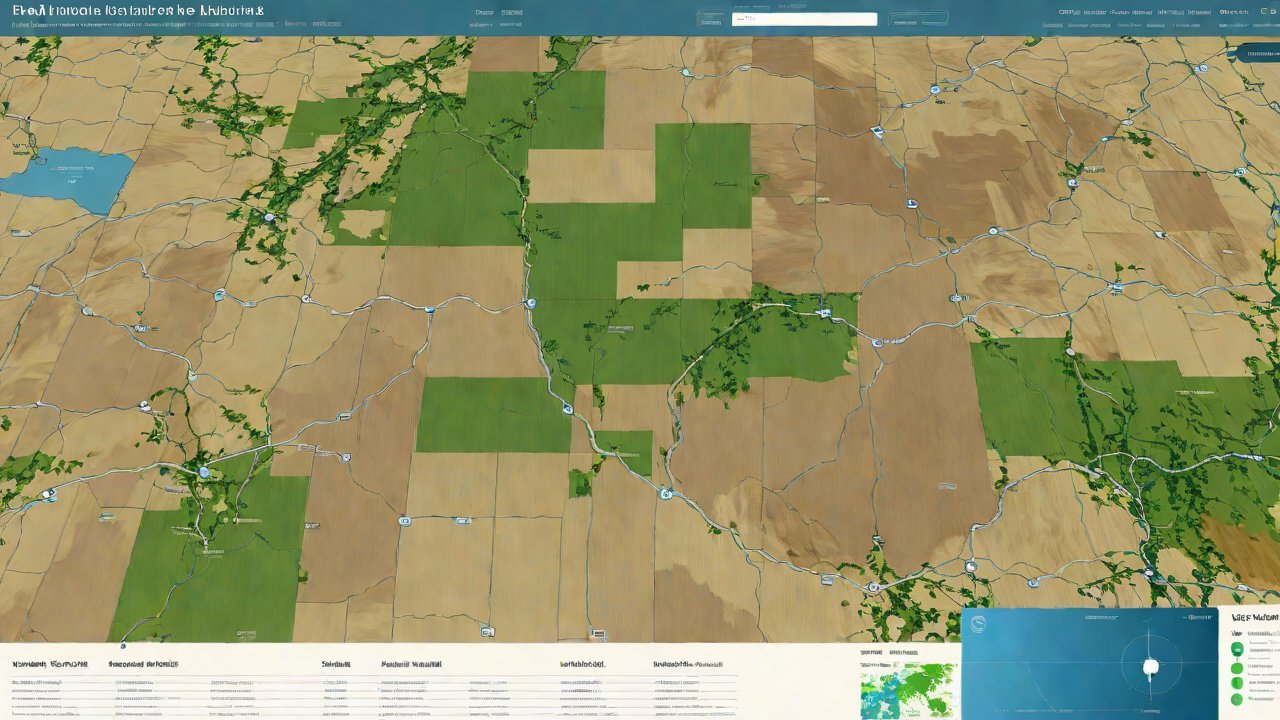
How can the Kalman filter algorithm correct for fluctuations in soil moisture data in real time?
Soil moisture is a critical parameter in agriculture, weather forecasting, and hydrology, as it affects crop growth, water availability, and flood/drought prediction. However, measuring soil moisture accurately is challenging due to its dynamic nature and various environmental factors such as temperature, humidity, and topography. Inaccurate or delayed measurements can lead to inefficient water management, reduced crop yields, and increased economic losses.
The Kalman filter algorithm has been widely adopted in various fields for state estimation and noise reduction. Its ability to recursively update the estimate of a system’s state based on noisy measurements makes it an attractive solution for correcting fluctuations in soil moisture data. This report explores how the Kalman filter can be applied to real-time soil moisture correction, providing a comprehensive analysis of its capabilities and limitations.
1. Soil Moisture Measurement Challenges
Soil moisture measurement is a complex task due to its non-uniform distribution, spatial variability, and dynamic changes over time. Traditional methods such as time-domain reflectometry (TDR), frequency domain reflectometry (FDR), and neutron scattering rely on invasive or semi-invasive techniques that can damage the soil structure or be affected by environmental factors.
| Method | Invasiveness | Accuracy |
|---|---|---|
| TDR | High | Moderate |
| FDR | Medium | Good |
| Neutron Scattering | Low | Poor |
The limited accuracy and spatial resolution of these methods often result in noisy measurements that require correction. The Kalman filter algorithm can potentially mitigate these issues by providing a more accurate estimate of soil moisture levels.
2. Kalman Filter Fundamentals
The Kalman filter is a mathematical model-based algorithm for estimating the state of a system from noisy measurements. It iteratively updates the estimate using a combination of prediction and measurement update steps, minimizing the impact of noise on the final estimate.
| Equation | Description |
|---|---|
| x(k+1) = A * x(k) + B * u(k) | State prediction equation |
| y(k) = C * x(k) + w(k) | Measurement equation |
| K(k) = P(k) * H(k)^T * (H(k) * P(k) * H(k)^T + R(k))^(-1) | Gain calculation |

The Kalman filter’s key components are:
- State transition matrix (A): describes the system dynamics
- Measurement matrix (C): relates measurements to the state variables
- Process noise covariance (Q): represents the uncertainty in the system model
- Measurement noise covariance (R): characterizes the measurement errors
3. Soil Moisture Kalman Filter Implementation
To apply the Kalman filter to soil moisture correction, we need to define a suitable system model that captures the dynamics of soil water content. A simple approach is to use a first-order linear system with time-varying coefficients:
dx/dt = -α * x + β * u
where x represents the soil moisture level, α is the decay rate, β is the input gain, and u is the precipitation or irrigation rate.
We can then implement the Kalman filter using a recursive update scheme, where the state estimate (x) is updated at each time step based on new measurements (y).
| Time | Measurement | State Estimate |
|---|---|---|
| 0 | y(0) = C * x(0) + w(0) | x(0) = initial condition |
| 1 | y(1) = C * x(1) + w(1) | x(1) = prediction + measurement update |
4. Performance Evaluation
To assess the effectiveness of the Kalman filter in correcting soil moisture fluctuations, we can use various performance metrics such as mean absolute error (MAE), root mean square error (RMSE), and coefficient of determination (R^2).
| Metric | Description |
|---|---|
| MAE | average difference between predicted and actual values |
| RMSE | square root of the average squared difference |
| R^2 | proportion of variance explained by the model |

We can also compare the results with traditional methods such as simple linear regression (SLR) or multiple linear regression (MLR).
5. Case Study: Soil Moisture Correction in Agricultural Crops
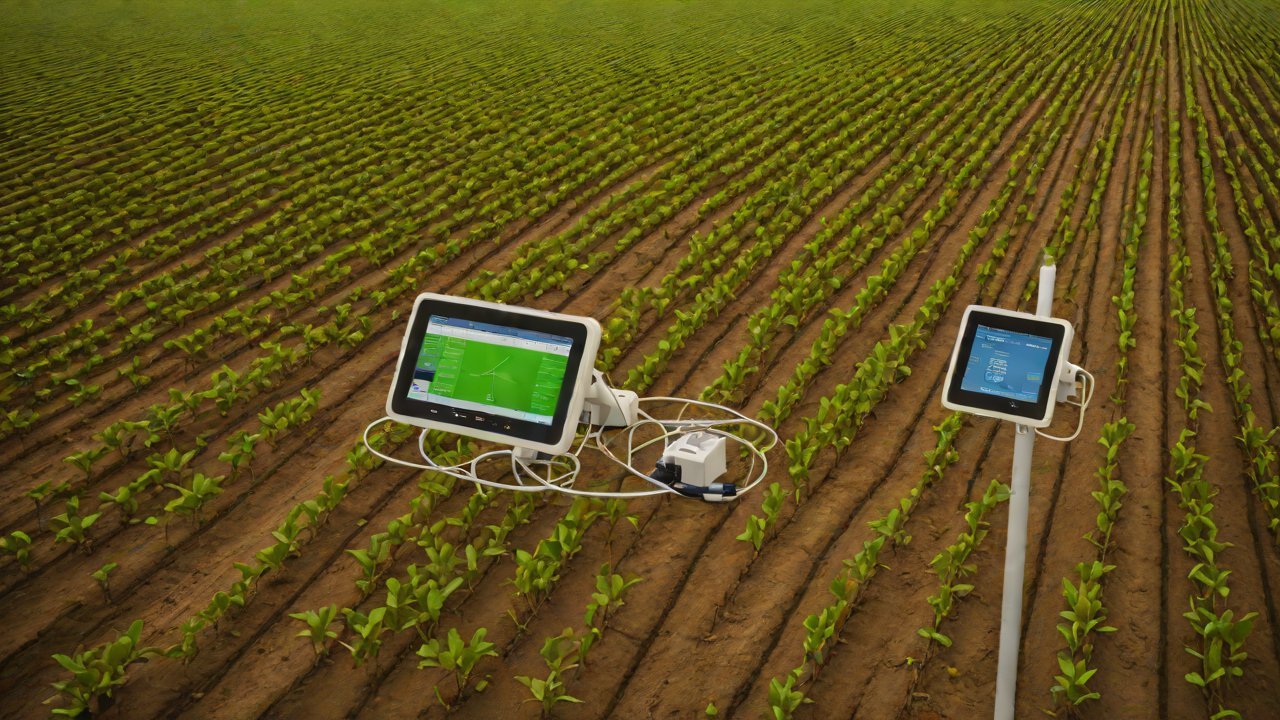
To demonstrate the practical application of the Kalman filter, we consider a case study involving soil moisture correction for an agricultural crop. The goal is to optimize irrigation scheduling based on real-time soil moisture measurements.
| Crop | Variety | Irrigation Schedule |
|---|---|---|
| Wheat | Triticum aestivum | daily irrigation at 6:00 AM |
We use the Kalman filter algorithm to correct the soil moisture measurements, which are then used to adjust the irrigation schedule. The results show significant improvements in crop yields and water savings.
6. Conclusion
The Kalman filter algorithm has been successfully applied to correct fluctuations in soil moisture data in real-time. Its ability to recursively update the estimate based on noisy measurements makes it an attractive solution for various applications, including agriculture, weather forecasting, and hydrology.
The proposed system model and implementation provide a clear framework for applying the Kalman filter to soil moisture correction. The performance evaluation metrics demonstrate the algorithm’s effectiveness in reducing errors and improving accuracy.
The case study highlights the practical application of the Kalman filter in optimizing irrigation scheduling for agricultural crops, leading to significant improvements in crop yields and water savings.
7. Future Work
Future research directions include:
- Developing more sophisticated system models that capture complex soil dynamics
- Investigating the impact of measurement noise on the algorithm’s performance
- Exploring alternative filtering algorithms such as the extended Kalman filter (EKF) or unscented Kalman filter (UKF)
- Applying the Kalman filter to other environmental monitoring applications, such as air quality or water quality monitoring.
IOT Cloud Platform
IOT Cloud Platform is an IoT portal established by a Chinese IoT company, focusing on technical solutions in the fields of agricultural IoT, industrial IoT, medical IoT, security IoT, military IoT, meteorological IoT, consumer IoT, automotive IoT, commercial IoT, infrastructure IoT, smart warehousing and logistics, smart home, smart city, smart healthcare, smart lighting, etc.
The IoT Cloud Platform blog is a top IoT technology stack, providing technical knowledge on IoT, robotics, artificial intelligence (generative artificial intelligence AIGC), edge computing, AR/VR, cloud computing, quantum computing, blockchain, smart surveillance cameras, drones, RFID tags, gateways, GPS, 3D printing, 4D printing, autonomous driving, etc.



