How Can the Internet of Things Transform Farmers’ “Experience” into Reproducible Code?
The world of agriculture is on the cusp of a revolution, driven by the convergence of cutting-edge technologies such as the Internet of Things (IoT), Artificial Intelligence (AI), and Machine Learning (ML). The potential for these innovations to transform the way farmers work, from planting to harvesting, is vast. However, amidst this promise lies a significant challenge: translating the intricacies of farming into reproducible code. Farmers’ experiences, shaped by years of hands-on expertise and environmental nuances, are often impossible to replicate through traditional methods. This report delves into the realm of IoT and its potential to bridge this gap.
1. The Challenge of Replicating Farming Experiences
Farming is an art that requires a deep understanding of soil conditions, weather patterns, crop cycles, and pest management. Farmers develop their expertise over years of practical experience, adapting their techniques based on the specific needs of their land. This experiential knowledge, though invaluable, presents a significant challenge when attempting to replicate it through code.
- Complexity of Farming: The complexity of farming involves not just technical aspects but also environmental and social factors.
| Factor | Description |
|---|---|
| Soil Quality | Variations in soil composition affect water retention, nutrient availability, and root growth. |
| Weather Patterns | Extreme weather conditions can impact crop health, yield, and timing of planting and harvesting. |
| Crop Cycles | Different crops have unique growing requirements, including temperature, sunlight, and water needs. |
2. The Role of IoT in Capturing Farming Experiences
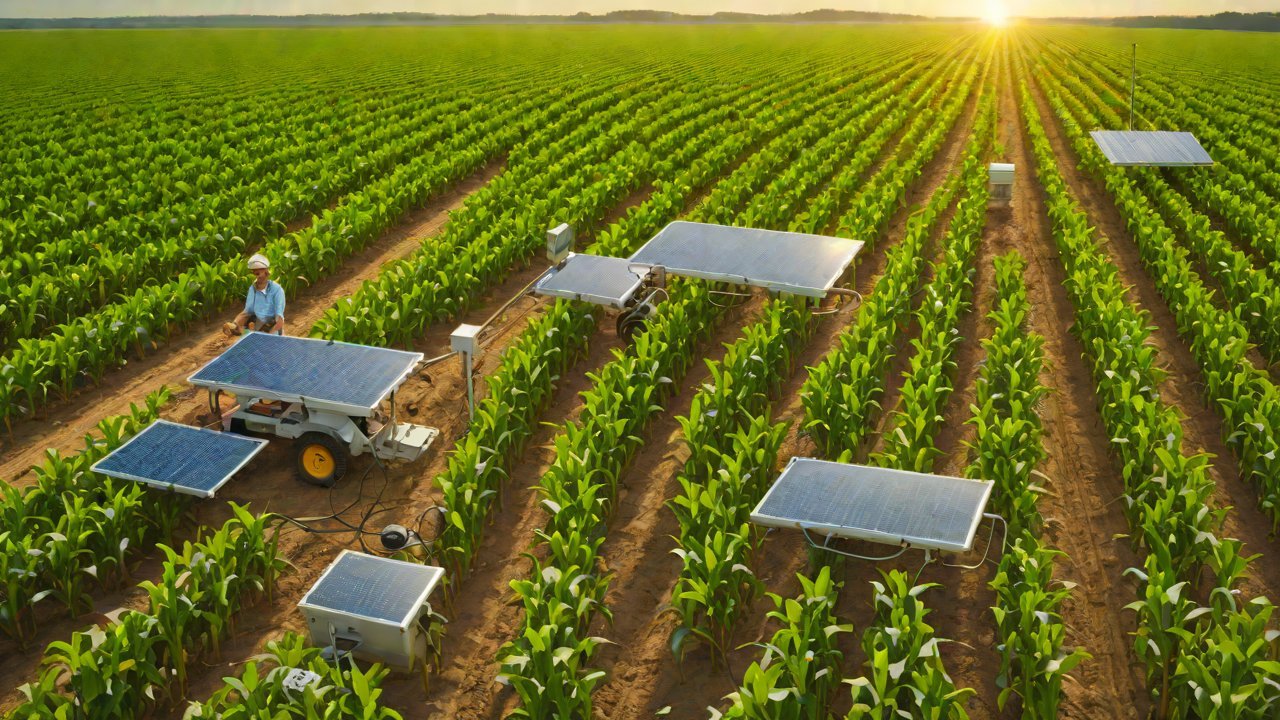
The Internet of Things (IoT) offers a potential solution to this challenge by providing real-time data from various sources across the farm. This data can capture the nuances of farming experiences, allowing for the creation of more accurate and adaptable code.
- Data Sources: IoT sensors can monitor soil moisture, temperature, light exposure, and other environmental factors.
| Sensor Type | Description |
|---|---|
| Soil Moisture Sensor | Measures soil water content to optimize irrigation. |
| Weather Station | Provides real-time data on precipitation, temperature, wind speed, and direction. |
3. Leveraging AI and ML for Reproducibility
Artificial Intelligence (AI) and Machine Learning (ML) can be used to analyze the vast amounts of data collected by IoT sensors. These technologies enable farmers to identify patterns in their experiences, which can then be translated into code.
- Pattern Recognition: AI and ML algorithms can recognize trends in data that may not be immediately apparent.
| Algorithm Type | Description |
|---|---|
| Supervised Learning | Trains on labeled data to predict outcomes based on specific inputs. |
| Unsupervised Learning | Identifies patterns without prior knowledge of the desired outcome, useful for clustering or dimensionality reduction. |
4. Case Studies: Successful Applications of IoT and AI in Agriculture
Several successful projects have demonstrated the potential of IoT and AI in agriculture.
- Precision Farming: Companies like John Deere and Trimble are integrating precision farming techniques into their products.
| Company | Description |
|---|---|
| John Deere | Offers a suite of precision agriculture tools, including guidance systems and crop monitoring. |
| Trimble | Provides software for precision farming, including field mapping and data analytics. |
5. Challenges and Future Directions
While the potential of IoT and AI in transforming farmers’ experiences is significant, several challenges must be addressed.
- Data Security: Ensuring the privacy and security of sensitive farm data.
| Threat | Description |
|---|---|
| Data Tampering | Unauthorized access or modification of data could compromise decision-making. |
6. Conclusion
The Internet of Things has the potential to revolutionize farming by capturing and replicating the nuances of farmers’ experiences through reproducible code. By integrating IoT, AI, and ML technologies, we can unlock the full potential of precision agriculture, leading to improved yields, reduced waste, and enhanced sustainability.
Recommendations
- Invest in IoT Infrastructure: Governments and companies should invest in widespread adoption of IoT sensors across farms.
| Recommendation | Description |
|---|---|
| Public Funding | Governments could provide incentives for farmers to adopt IoT technology. |
- Collaborate on AI/ML Development: Encourage partnerships between tech companies and agricultural experts to develop tailored solutions.
The convergence of IoT, AI, and ML has the potential to transform agriculture in profound ways. By addressing the challenges posed by translating farming experiences into reproducible code, we can unlock a future where food production is more efficient, sustainable, and resilient.
IOT Cloud Platform
IOT Cloud Platform is an IoT portal established by a Chinese IoT company, focusing on technical solutions in the fields of agricultural IoT, industrial IoT, medical IoT, security IoT, military IoT, meteorological IoT, consumer IoT, automotive IoT, commercial IoT, infrastructure IoT, smart warehousing and logistics, smart home, smart city, smart healthcare, smart lighting, etc.
The IoT Cloud Platform blog is a top IoT technology stack, providing technical knowledge on IoT, robotics, artificial intelligence (generative artificial intelligence AIGC), edge computing, AR/VR, cloud computing, quantum computing, blockchain, smart surveillance cameras, drones, RFID tags, gateways, GPS, 3D printing, 4D printing, autonomous driving, etc.



