
How can signal transmission in terraced fields overcome the blockage of electromagnetic waves by mountains?
In the vast expanse of rural landscapes, where agriculture has been a cornerstone of human civilization for millennia, the challenge of maintaining efficient communication networks is becoming increasingly pressing. As the world grapples with the imperatives of sustainable development and technological advancement, traditional terraced fields in mountainous regions pose a unique problem: how can signal transmission overcome the blockage of electromagnetic waves by these natural barriers? This question cuts to the heart of not just communication infrastructure but also agricultural productivity and economic viability. The solution lies at the intersection of cutting-edge technology and innovative design.
1. Understanding Signal Transmission in Terraced Fields
Basic Principles of Electromagnetic Waves
Electromagnetic waves are a fundamental aspect of modern communication, used in various forms such as radio waves for mobile phones, microwaves for satellite communications, and infrared for remote controls. These waves have distinct properties that determine their interaction with the environment:
| Property | Description |
|---|---|
| Frequency | The number of oscillations per second (measured in Hz) |
| Wavelength | The distance between two consecutive peaks or troughs (measured in meters) |
| Speed | Approximately 299,792 kilometers per second in a vacuum |
Signal Attenuation by Mountains
Mountains are significant obstacles to signal transmission due to their height and density. As electromagnetic waves travel over long distances, they encounter various types of terrain that can either enhance or attenuate the signal:
- Reflection: Waves bounce back from surfaces with high reflectivity (e.g., water, snow), causing interference.
- Diffraction: Waves bend around obstacles, but this effect is minimal for mountainous terrain due to its size relative to wavelength.
- Absorption: Signals are absorbed by materials with high dielectric constants (e.g., vegetation, buildings).
2. Challenges in Terraced Fields
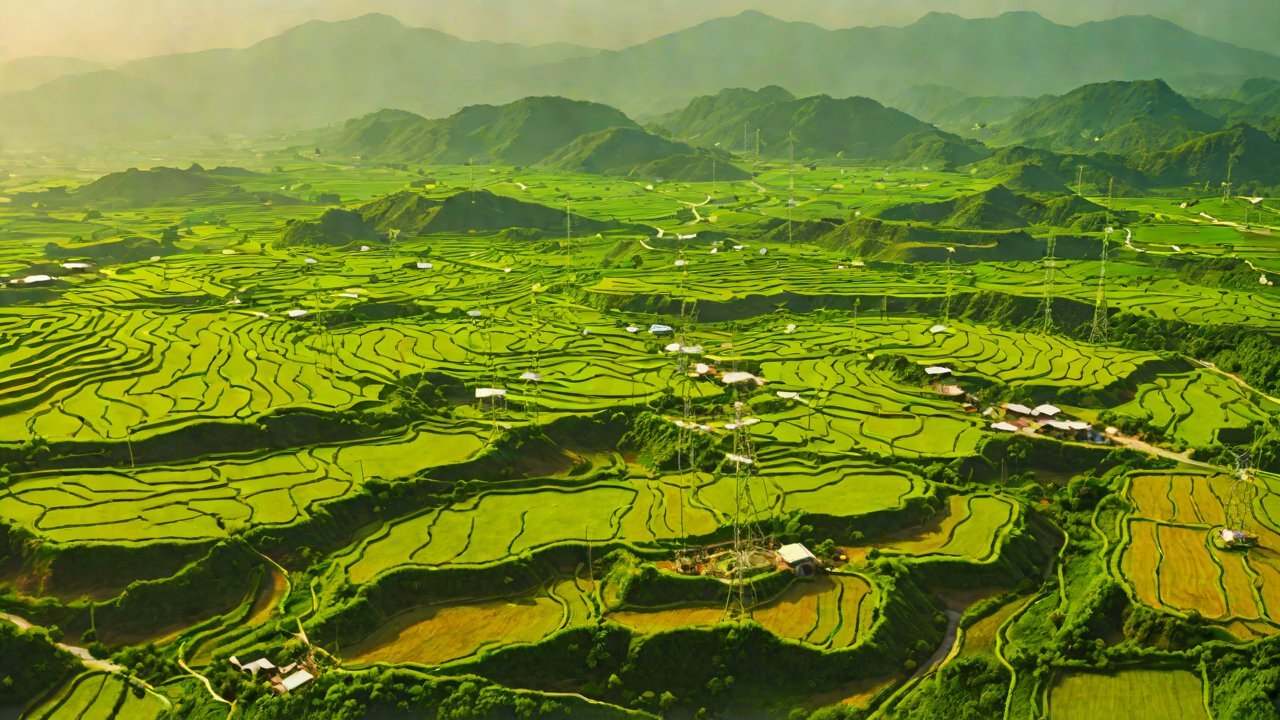
Terraced fields, a hallmark of agricultural resilience in mountainous regions, present unique challenges:
Topography
The varied terrain and steep slopes of terraced fields significantly impact signal transmission. Hills and valleys create shadows that block or weaken signals.
Vegetation
Dense vegetation within and around terraced areas can absorb electromagnetic waves, further complicating signal transmission.
3. Technological Solutions
Overcoming the challenges posed by mountains and terraced fields requires innovative solutions grounded in cutting-edge technology:
Low-Power Wide-Area Networks (LPWANs)
LPWAN technologies such as LoRaWAN and Sigfox offer low-power, low-bandwidth communication suitable for IoT applications in rural areas. They can penetrate through dense vegetation and are energy-efficient.
| Technology | Description |
|---|---|
| LoRaWAN | Uses spread spectrum technology with chirp spread spectrum (CSS) to achieve long-range communication |
| Sigfox | Utilizes a proprietary protocol for low-power, low-bandwidth connectivity |
Satellite Communications
Satellites can provide coverage in areas where traditional terrestrial networks are unavailable. They offer high-speed data transfer and can be used for both voice and data services.
| Service Type | Description |
|---|---|
| Voice | Supports real-time communication, ideal for emergency services or remote communities |
| Data | Suitable for transferring large amounts of data, such as in agriculture for precision farming |
Antenna Design
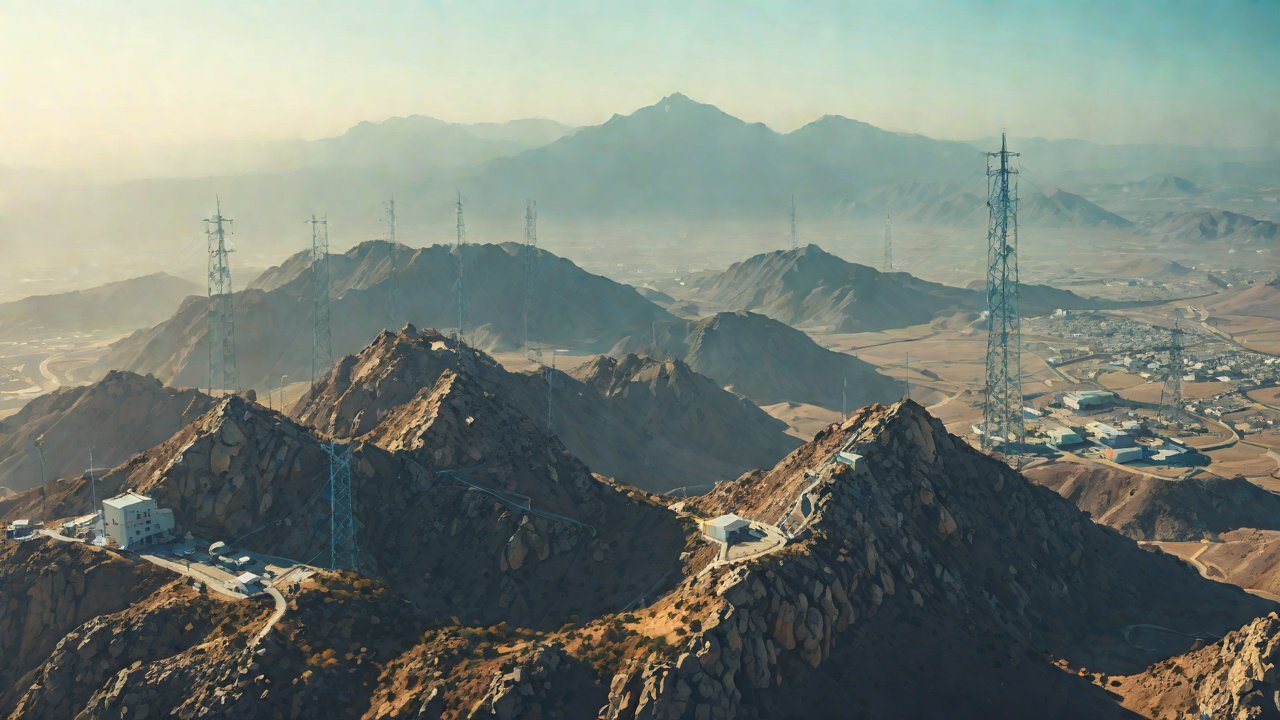
Customized antenna designs can improve signal reception and transmission efficiency. These may include:
- High-Gain Antennas: For areas where a stronger signal is required.
- Directional Antennas: To focus the signal towards specific locations.
4. AIGC Perspectives: Market Trends and Future Directions
Emerging Technologies
The integration of Artificial Intelligence (AI) and the Internet of Things (IoT) in agricultural practices, known as Precision Agriculture, offers new opportunities for optimizing crop yields while reducing environmental impact.
| Technology | Description |
|---|---|
| AI | Analyzes data from various sources to provide insights on crop health, soil quality, and weather patterns |
| IoT | Enables real-time monitoring of agricultural equipment, water usage, and soil conditions through sensors and networks |

Investment in Rural Infrastructure
Investment in rural infrastructure is crucial for bridging the digital divide. Governments and private companies can collaborate to deploy communication networks that cater specifically to the needs of terraced fields.
| Sector | Description |
|---|---|
| Government | Can provide subsidies or tax incentives for companies investing in rural infrastructure |
| Private Sector | May lead initiatives focusing on sustainable agriculture, precision farming, and digital literacy |
5. Conclusion
The challenge of signal transmission in terraced fields is a complex one, requiring not just technological innovation but also an understanding of the specific needs and constraints of these regions. By embracing cutting-edge technologies such as LPWANs, satellite communications, and AI-driven precision agriculture, we can create sustainable solutions that enhance both agricultural productivity and communication infrastructure. The future of rural development lies in harnessing technology to overcome natural barriers and ensure equal access to information and resources for all communities.
IOT Cloud Platform
IOT Cloud Platform is an IoT portal established by a Chinese IoT company, focusing on technical solutions in the fields of agricultural IoT, industrial IoT, medical IoT, security IoT, military IoT, meteorological IoT, consumer IoT, automotive IoT, commercial IoT, infrastructure IoT, smart warehousing and logistics, smart home, smart city, smart healthcare, smart lighting, etc.
The IoT Cloud Platform blog is a top IoT technology stack, providing technical knowledge on IoT, robotics, artificial intelligence (generative artificial intelligence AIGC), edge computing, AR/VR, cloud computing, quantum computing, blockchain, smart surveillance cameras, drones, RFID tags, gateways, GPS, 3D printing, 4D printing, autonomous driving, etc.



