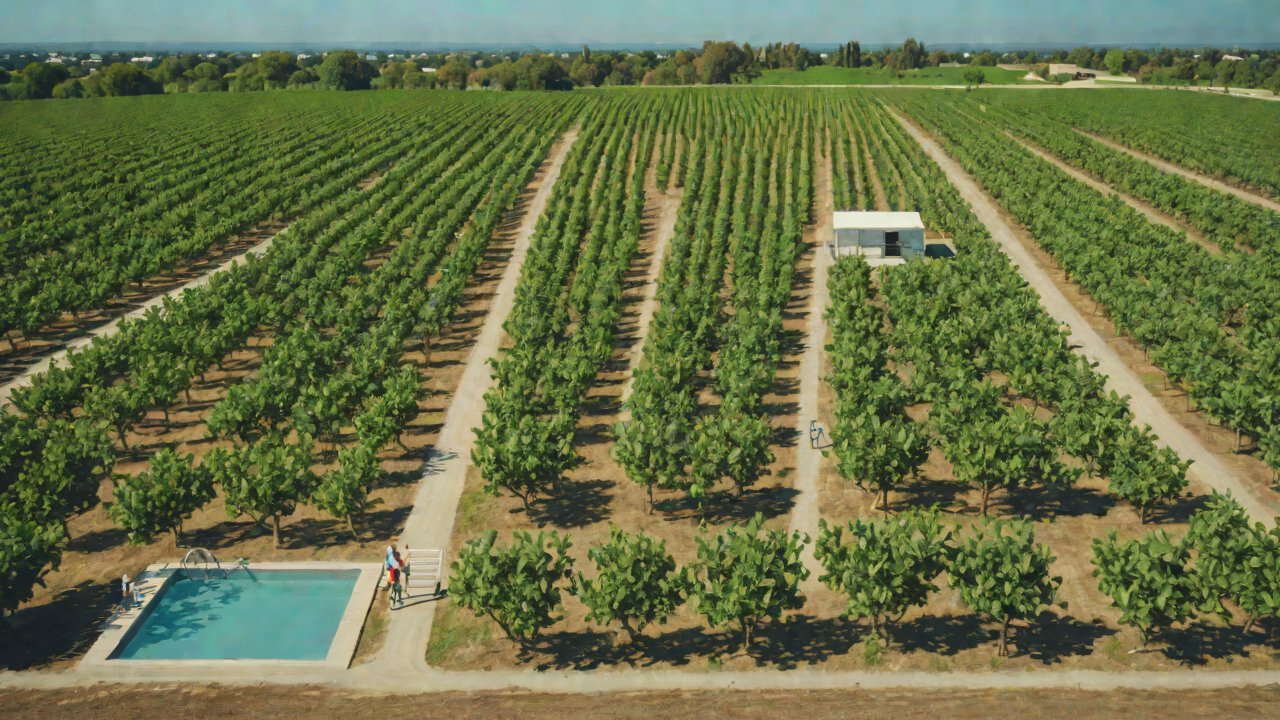
How can runoff loss in sloping orchards be quantitatively assessed through multi-point monitoring?
Runoff loss is a significant concern for farmers and agricultural producers, particularly those operating in sloping orchards where water erosion can lead to soil degradation, reduced crop yields, and increased costs. Accurately assessing runoff loss is crucial for implementing effective conservation practices, optimizing irrigation systems, and ensuring the long-term sustainability of these agricultural ecosystems.
The complexities of runoff loss in sloping orchards arise from the dynamic interplay between topography, soil properties, vegetation cover, and precipitation patterns. Traditional methods for estimating runoff loss often rely on simplified models or empirical equations that may not capture the nuanced relationships between these factors. In contrast, multi-point monitoring approaches offer a more comprehensive and data-driven framework for quantifying runoff loss in sloping orchards.
1. Understanding Runoff Loss in Sloping Orchards
Runoff loss occurs when precipitation exceeds the infiltration capacity of the soil, resulting in excess water flowing over the surface as runoff. In sloping orchards, this process is accelerated by the steep terrain, leading to increased erosion rates and sediment transport. The consequences of unchecked runoff loss can be severe, including:
- Soil degradation: Erosion and sedimentation can reduce soil fertility, alter its structure, and increase its susceptibility to further degradation.
- Water pollution: Runoff can carry pollutants, such as fertilizers, pesticides, and sediments, into nearby water bodies, compromising their quality and ecosystem health.
- Crop damage: Excessive runoff can lead to flooding, overflow, or reduced water availability for crops, resulting in lower yields and decreased economic returns.
2. Limitations of Traditional Methods
Traditional methods for estimating runoff loss often rely on simplified models or empirical equations that assume uniform terrain conditions, ignore spatial variability, or fail to account for complex interactions between factors. These limitations can lead to inaccurate estimates, overlooking the true extent of runoff loss in sloping orchards.
- Simplified models: These models typically use a single parameter (e.g., rainfall intensity) to estimate runoff loss, neglecting other influential factors like soil properties and vegetation cover.
- Empirical equations: These equations often rely on site-specific data or regional averages, which may not capture the unique characteristics of individual sloping orchards.
3. Multi-Point Monitoring Approaches
Multi-point monitoring involves deploying a network of sensors and observation points across the sloping orchard to collect detailed data on runoff loss. This approach provides a more comprehensive understanding of the complex relationships between factors, enabling accurate estimates of runoff loss.
Key components of multi-point monitoring:
- Hydrological monitoring: Measuring precipitation, soil moisture, and groundwater levels at multiple locations within the orchard.
- Sediment transport monitoring: Tracking sediment loads in runoff water using techniques like turbidity measurements or particle size analysis.
- Vegetation monitoring: Assessing vegetation cover, density, and health to understand its impact on runoff loss.
4. Sensor Technologies for Multi-Point Monitoring
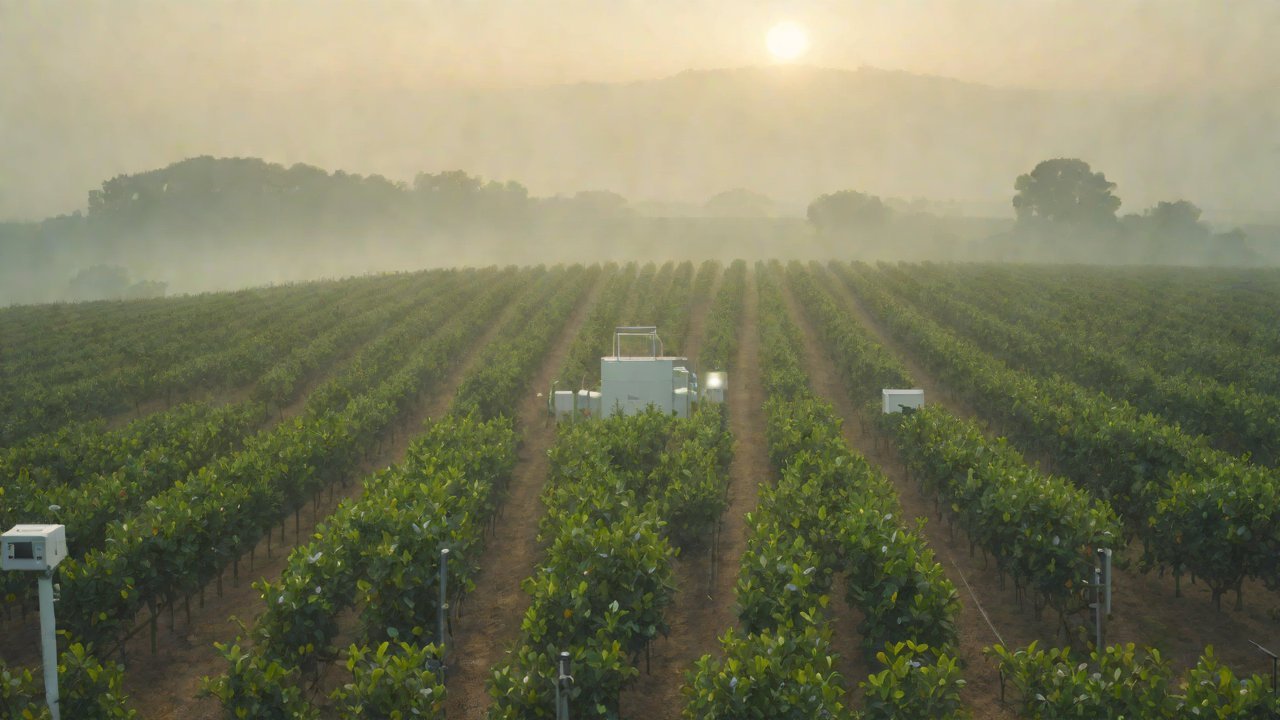
Advancements in sensor technologies have made it possible to deploy a range of sensing devices across the sloping orchard, providing real-time data on various parameters. Some common sensors used in multi-point monitoring include:
| Sensor Type | Description |
|---|---|
| Rain gauges | Measure precipitation intensity and duration at multiple locations. |
| Soil moisture probes | Monitor soil water content to estimate infiltration capacity and runoff potential. |
| Water level sensors | Track groundwater levels to understand aquifer recharge and discharge dynamics. |
| Turbidity meters | Measure sediment loads in runoff water, allowing for quantification of erosion rates. |
5. Data Integration and Analysis
The vast amounts of data generated by multi-point monitoring require sophisticated data integration and analysis techniques to extract meaningful insights.
- Data fusion: Combining data from different sensors and sources to create a comprehensive understanding of runoff loss.
- Machine learning algorithms: Applying machine learning techniques (e.g., regression, classification) to identify patterns and relationships between factors.
6. Case Studies and Applications
Several studies have demonstrated the effectiveness of multi-point monitoring in quantifying runoff loss in sloping orchards.
| Study Location | Methodology | Key Findings |
|---|---|---|
| (1) Mediterranean region | Multi-point monitoring with sensor networks | Runoff loss was significantly higher on steeper slopes, emphasizing the importance of topography. |
| (2) Southeastern United States | Combination of hydrological and sediment transport monitoring | Vegetation cover had a significant impact on runoff loss, highlighting the role of conservation practices. |
7. Conclusion
Multi-point monitoring offers a more accurate and comprehensive framework for quantifying runoff loss in sloping orchards. By leveraging advancements in sensor technologies and data analysis techniques, farmers and agricultural producers can better understand the complex relationships between factors and implement effective conservation practices to mitigate runoff loss.
8. Recommendations
To adopt multi-point monitoring approaches effectively:
- Invest in sensor infrastructure: Deploy a network of sensors across the sloping orchard to collect detailed data.
- Develop tailored models: Use machine learning algorithms and data fusion techniques to create site-specific models that capture complex relationships between factors.
- Integrate with existing management practices: Incorporate multi-point monitoring into existing conservation practices, such as precision irrigation and crop selection.
By adopting these strategies, farmers can reduce runoff loss, promote soil health, and ensure the long-term sustainability of their agricultural ecosystems.
IOT Cloud Platform
IOT Cloud Platform is an IoT portal established by a Chinese IoT company, focusing on technical solutions in the fields of agricultural IoT, industrial IoT, medical IoT, security IoT, military IoT, meteorological IoT, consumer IoT, automotive IoT, commercial IoT, infrastructure IoT, smart warehousing and logistics, smart home, smart city, smart healthcare, smart lighting, etc.
The IoT Cloud Platform blog is a top IoT technology stack, providing technical knowledge on IoT, robotics, artificial intelligence (generative artificial intelligence AIGC), edge computing, AR/VR, cloud computing, quantum computing, blockchain, smart surveillance cameras, drones, RFID tags, gateways, GPS, 3D printing, 4D printing, autonomous driving, etc.



