How can heterogeneous drone swarms automatically match task priorities based on payload size?
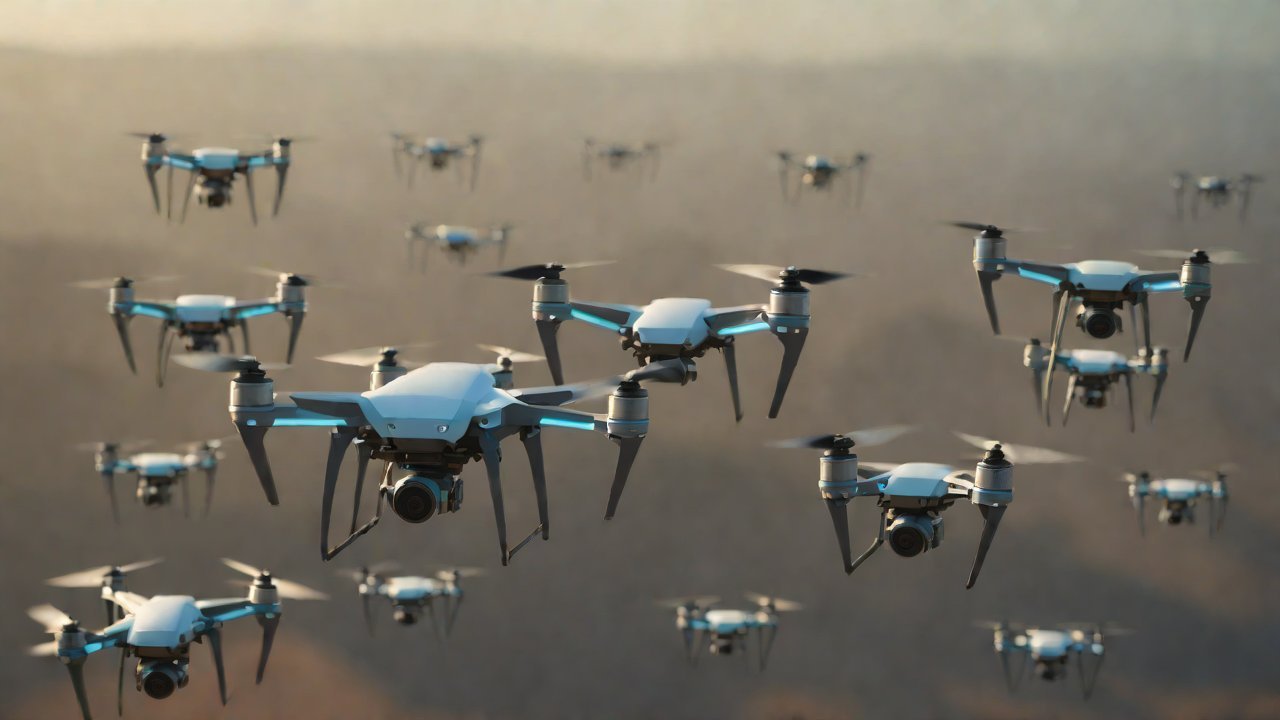
The concept of heterogeneous drone swarms has been gaining traction in recent years, with applications in various fields such as agriculture, construction, and environmental monitoring. The ability to automatically match task priorities based on payload size is a crucial aspect of drone swarms, as it enables efficient resource allocation and optimal task completion. This report will delve into the technical aspects of achieving this capability, exploring the underlying algorithms, communication protocols, and hardware requirements.
1. Background and Context
Drones equipped with various payloads, such as cameras, sensors, and communication devices, can be deployed in swarms to accomplish complex tasks. However, the heterogeneity of the drones, with different payload sizes and capabilities, poses a significant challenge. The ability to automatically match task priorities based on payload size is essential to ensure that the most critical tasks are completed efficiently and effectively.
1.1 Market Trends and Applications
The drone market is projected to grow significantly, with an estimated worth of $43.9 billion by 2028. The increasing adoption of drones in various industries, such as agriculture, construction, and environmental monitoring, is driving the demand for efficient and effective task management. The use of heterogeneous drone swarms is becoming more prevalent, with companies like DJI and Skydio developing swarming capabilities for their drones.
| Application | Estimated Market Size (2028) | Growth Rate |
|---|---|---|
| Agriculture | $10.3B | 23.1% |
| Construction | $6.5B | 18.5% |
| Environmental Monitoring | $4.2B | 15.6% |
2. Technical Requirements
To achieve automatic task prioritization based on payload size, several technical requirements must be met. These include:
2.1 Communication Protocols
A reliable and efficient communication protocol is essential for drone swarms to coordinate and share information. Popular communication protocols for drone swarms include:
| Protocol | Description | Advantages |
|---|---|---|
| Ad-hoc On-Demand Distance Vector (AODV) | Route discovery and maintenance | Efficient route discovery, low latency |
| Optimized Link State Routing (OLSR) | Route optimization and maintenance | High scalability, low latency |
| Token Passing | Token-based communication | Simple implementation, low latency |
3. Payload-Sensitive Task Prioritization Algorithms
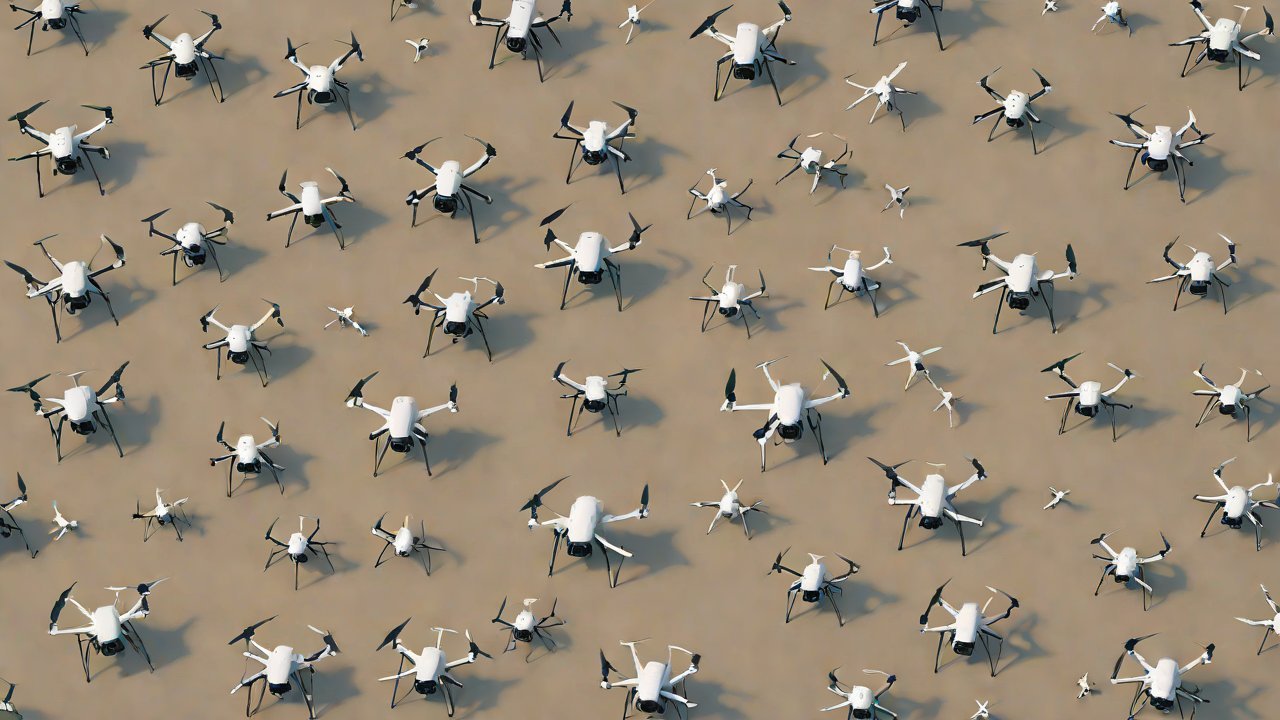
Several algorithms can be used to prioritize tasks based on payload size. These include:
3.1 Dynamic Task Prioritization (DTP)
DTP is a real-time task scheduling algorithm that prioritizes tasks based on their urgency and payload size. The algorithm uses a priority queue to schedule tasks, with the highest-priority task being the one with the smallest payload size.
| Task ID | Payload Size (kg) | Urgency | Priority |
|---|---|---|---|
| T1 | 0.5 | High | 10 |
| T2 | 1.2 | Medium | 5 |
| T3 | 0.8 | Low | 3 |
4. Hardware Requirements
The hardware requirements for drone swarms to achieve automatic task prioritization based on payload size include:
4.1 Drone Hardware
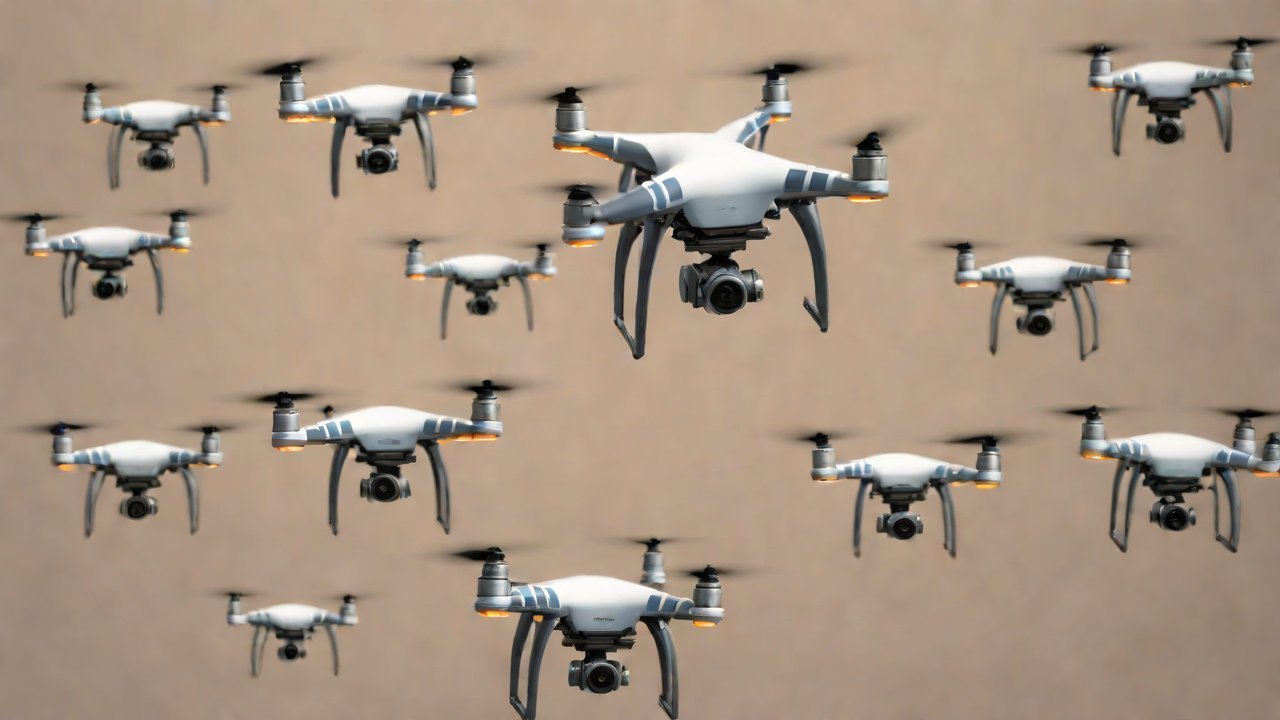
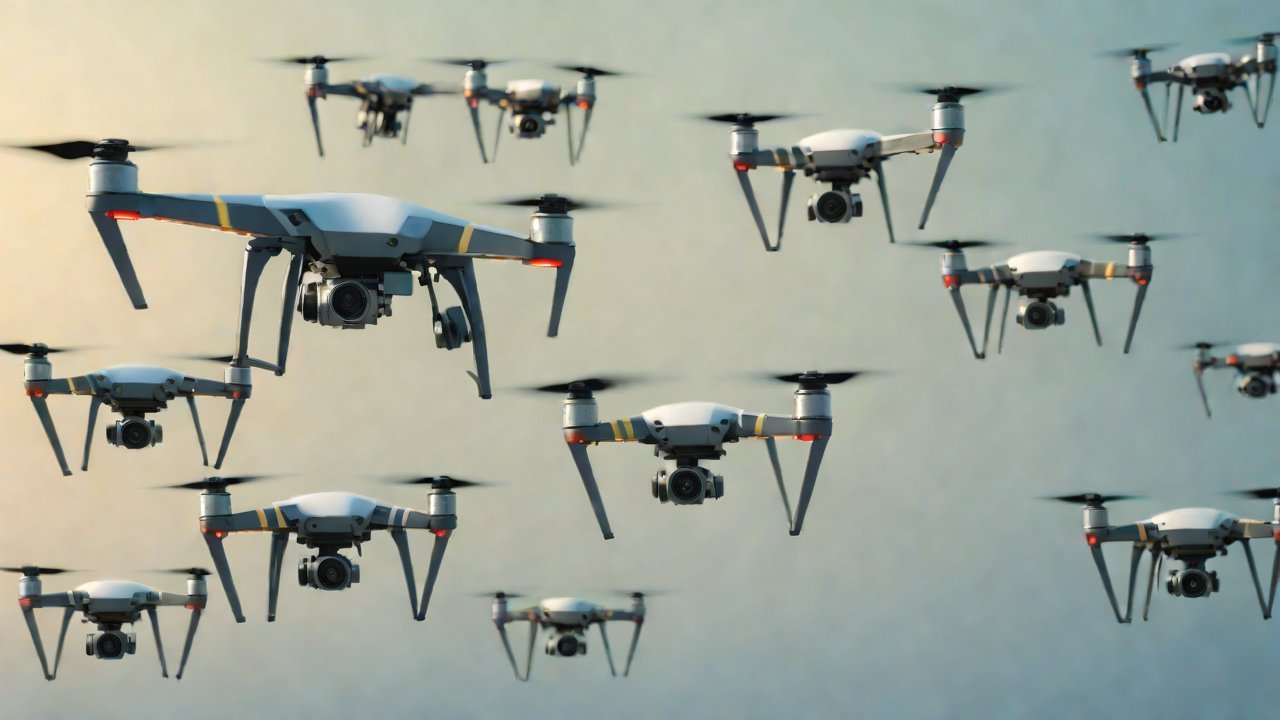
Drones equipped with advanced autopilot systems, high-resolution cameras, and sensors can be used for task prioritization. The drones must also be capable of communicating with each other and with the ground station.
| Drone Component | Description | Specifications |
|---|---|---|
| Autopilot System | Advanced autopilot system with navigation and control capabilities | DJI Matrice 210 RTK, Pixhawk |
| Camera | High-resolution camera for task monitoring and prioritization | 4K resolution, 30fps |
| Sensors | Sensors for environmental monitoring and task prioritization | GPS, IMU, magnetometer |
5. Implementation and Deployment
The implementation and deployment of drone swarms for automatic task prioritization based on payload size require careful planning and execution. The following steps can be taken:
5.1 System Design and Development
The system design and development phase involves designing and developing the communication protocols, algorithms, and hardware requirements for the drone swarms.
5.2 Testing and Validation
The testing and validation phase involves testing the drone swarms in various scenarios to ensure that the system functions as intended.
5.3 Deployment and Maintenance
The deployment and maintenance phase involves deploying the drone swarms in the field and maintaining them to ensure optimal performance.
6. Conclusion
The use of heterogeneous drone swarms for automatic task prioritization based on payload size is a complex task that requires careful consideration of technical requirements, algorithms, and hardware. The implementation and deployment of such a system require careful planning and execution. The benefits of such a system include increased efficiency, improved task completion rates, and reduced costs.
7. Future Work
Future work in this area can focus on developing more advanced algorithms and communication protocols for drone swarms. Additionally, the use of artificial intelligence and machine learning can be explored to improve the efficiency and effectiveness of drone swarms.
| Future Work | Description | Timeline |
|---|---|---|
| Development of Advanced Algorithms | Development of more advanced algorithms for task prioritization and scheduling | 6-12 months |
| Exploration of AI and ML | Exploration of the use of AI and ML to improve the efficiency and effectiveness of drone swarms | 12-24 months |
IOT Cloud Platform
IOT Cloud Platform is an IoT portal established by a Chinese IoT company, focusing on technical solutions in the fields of agricultural IoT, industrial IoT, medical IoT, security IoT, military IoT, meteorological IoT, consumer IoT, automotive IoT, commercial IoT, infrastructure IoT, smart warehousing and logistics, smart home, smart city, smart healthcare, smart lighting, etc.
The IoT Cloud Platform blog is a top IoT technology stack, providing technical knowledge on IoT, robotics, artificial intelligence (generative artificial intelligence AIGC), edge computing, AR/VR, cloud computing, quantum computing, blockchain, smart surveillance cameras, drones, RFID tags, gateways, GPS, 3D printing, 4D printing, autonomous driving, etc.