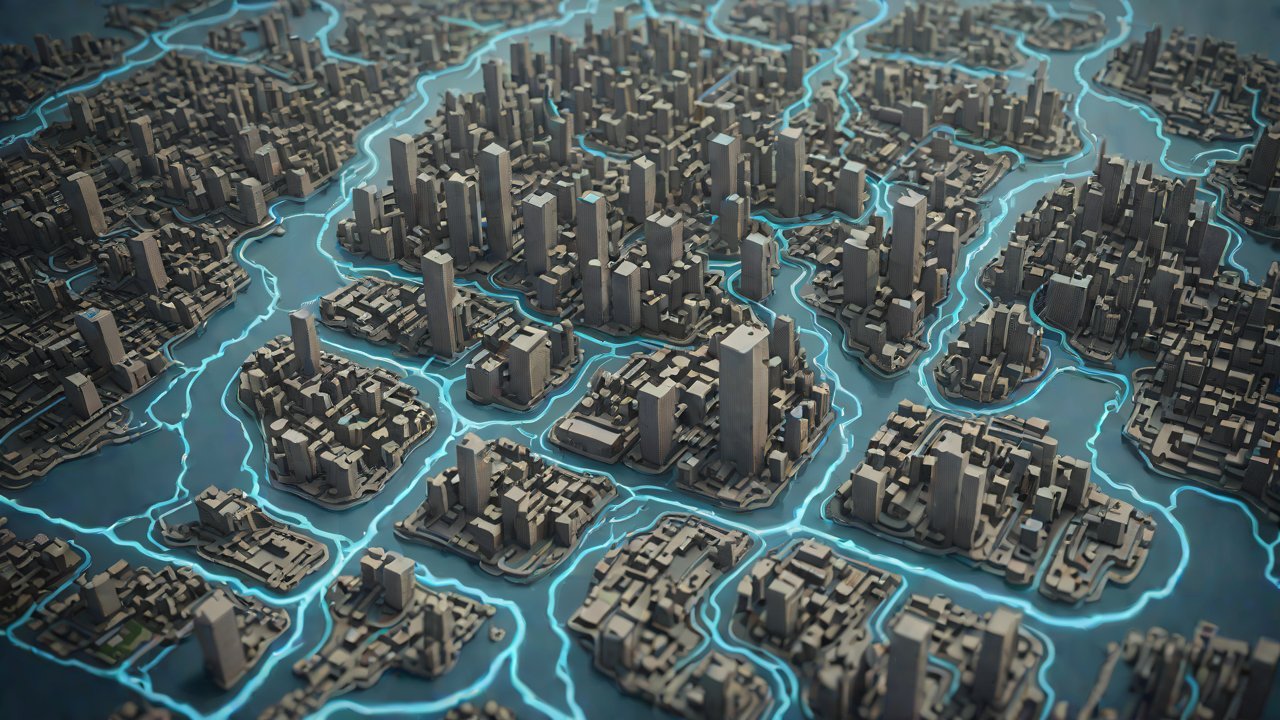
How can digital twin technology render a real-time 3D map of underground moisture?
Digital twins have revolutionized the way industries approach complex systems and infrastructure by creating virtual replicas that mirror their physical counterparts in real-time. This technology has far-reaching applications across various sectors, from manufacturing to healthcare. However, one area where digital twins can make a significant impact is in monitoring underground moisture levels, a critical concern for urban planning, construction, and agriculture.
1. The Importance of Monitoring Underground Moisture
Underground moisture can have devastating effects on infrastructure such as buildings, roads, and bridges. Water seepage into foundations can cause structural damage, leading to costly repairs or even collapse. Moreover, excessive moisture in soil can destabilize slopes, posing a significant risk to lives and properties.
Digital twin technology, when applied to monitoring underground moisture, can provide real-time insights into the water content of the subsoil. This information is invaluable for urban planners, construction companies, and farmers who need to make informed decisions about land use, infrastructure development, and crop management.
2. Current Methods of Monitoring Underground Moisture
Traditional methods of monitoring underground moisture involve installing sensors at various depths in the soil. These sensors can be expensive and require regular maintenance to ensure accuracy. Moreover, they may not provide real-time data, which is crucial for timely decision-making.
Some common methods used today include:
| Method | Description |
|---|---|
| Tensiometers | Measure the water potential of the soil using a probe that extends into the ground. |
| Time Domain Reflectometry (TDR) | Uses electromagnetic signals to measure the dielectric properties of the soil, which are indicative of moisture levels. |
| Ground-Penetrating Radar (GPR) | Sends radar pulses into the ground and measures the reflections to create an image of subsurface features. |

3. Digital Twin Technology: A Game-Changer in Monitoring Underground Moisture
Digital twin technology offers a more efficient, cost-effective, and accurate way to monitor underground moisture levels. By creating a virtual replica of the soil’s water content, digital twins can provide real-time data on moisture levels at various depths.
To achieve this, digital twin technology uses advanced algorithms that integrate data from various sources, including:
| Data Source | Description |
|---|---|
| Sensor Networks | Real-time data from sensors installed in the soil. |
| Satellite Imagery | High-resolution images of the land surface, which can be used to infer moisture levels. |
| Weather Forecasting Models | Predictions of precipitation and temperature patterns that can affect underground moisture levels. |
4. Creating a Digital Twin for Underground Moisture Monitoring
Creating a digital twin for underground moisture monitoring involves several steps:
- Data Collection: Gathering data from various sources, including sensor networks, satellite imagery, and weather forecasting models.
- Data Integration: Combining the collected data into a single, unified dataset that can be used to create the digital twin.
- Model Development: Using advanced algorithms to develop a model of the underground moisture levels based on the integrated data.
- Simulation and Validation: Testing the accuracy of the digital twin using real-world data and making adjustments as necessary.
5. Real-Time 3D Mapping of Underground Moisture
Once the digital twin is developed, it can be used to create a real-time 3D map of underground moisture levels. This map can provide detailed information on:
| Feature | Description |
|---|---|
| Water Content | The percentage of water present in the soil at various depths. |
| Soil Type | The type of soil and its properties, which affect moisture levels. |
| Subsurface Features | Underground structures such as pipes, tunnels, or caverns that can impact moisture levels. |
6. Applications of Digital Twin Technology in Monitoring Underground Moisture
The applications of digital twin technology in monitoring underground moisture are vast:
- Urban Planning: Informing decisions on land use and infrastructure development to minimize the risk of water-related damage.
- Construction: Enabling builders to identify areas with high moisture levels, reducing the likelihood of structural damage.
- Agriculture: Helping farmers optimize crop management by understanding soil moisture levels at various depths.
7. Market Trends and Future Outlook
The market for digital twin technology in monitoring underground moisture is growing rapidly, driven by increasing demand from industries such as construction, agriculture, and urban planning.
| Market Trend | Description |
|---|---|
| Increasing Adoption | Growing acceptance of digital twin technology among industries. |
| Advancements in AI | Improved machine learning algorithms enhancing the accuracy of digital twins. |
| Integration with IoT | Combining digital twins with Internet of Things (IoT) devices for real-time data collection. |
8. Conclusion
Digital twin technology has the potential to revolutionize the way we monitor underground moisture levels, providing real-time insights that can inform critical decisions across various industries. By leveraging advanced algorithms and integrating data from multiple sources, digital twins can create accurate 3D maps of subsurface water content, reducing the risk of water-related damage and promoting sustainable development.
IOT Cloud Platform
IOT Cloud Platform is an IoT portal established by a Chinese IoT company, focusing on technical solutions in the fields of agricultural IoT, industrial IoT, medical IoT, security IoT, military IoT, meteorological IoT, consumer IoT, automotive IoT, commercial IoT, infrastructure IoT, smart warehousing and logistics, smart home, smart city, smart healthcare, smart lighting, etc.
The IoT Cloud Platform blog is a top IoT technology stack, providing technical knowledge on IoT, robotics, artificial intelligence (generative artificial intelligence AIGC), edge computing, AR/VR, cloud computing, quantum computing, blockchain, smart surveillance cameras, drones, RFID tags, gateways, GPS, 3D printing, 4D printing, autonomous driving, etc.



