How can automatic optimization algorithms reduce irrigation costs based on rainfall probability?
Water scarcity is a pressing issue in many regions around the world, with agriculture being one of the largest consumers of freshwater resources. Irrigation systems play a crucial role in supporting crop growth and food security, but they also contribute significantly to water waste due to inefficient management practices. The increasing pressure on water resources has led to growing interest in developing more sustainable irrigation strategies that can minimize costs while optimizing water usage.
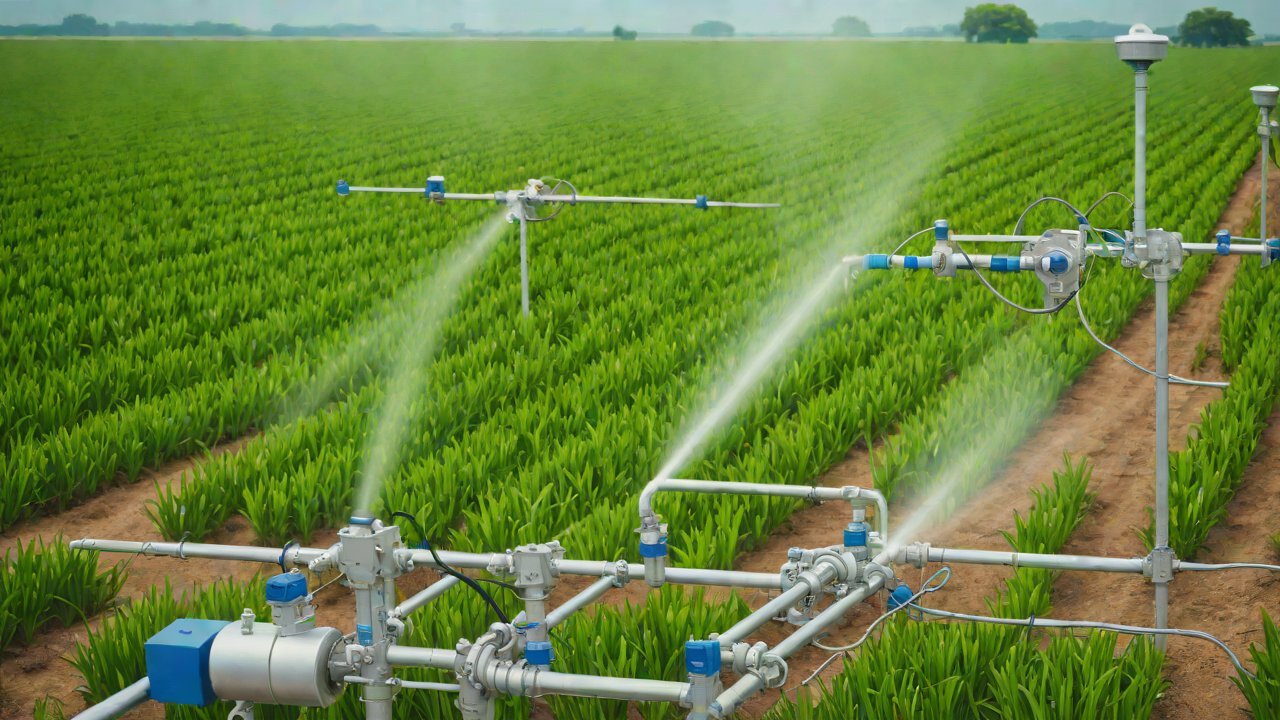
Automatic optimization algorithms have emerged as a promising solution for reducing irrigation costs by leveraging advanced data analytics and machine learning techniques. These algorithms can analyze historical climate data, real-time weather forecasts, and soil moisture levels to predict rainfall probability and adjust irrigation schedules accordingly. By optimizing irrigation patterns based on rainfall likelihood, farmers can save water, reduce energy consumption, and minimize crop losses due to overwatering or underwatering.
1. Irrigation Costs and Water Scarcity
Irrigation costs are a significant component of agricultural expenses, accounting for up to 50% of total operating costs in some regions (FAO, 2017). The high cost of irrigation is primarily driven by the energy required to pump water from wells or reservoirs, as well as the maintenance and repair of infrastructure. However, inefficient irrigation practices can lead to significant waste, with estimates suggesting that up to 60% of irrigated water is lost due to evaporation, runoff, or deep percolation (World Bank, 2019).
Water scarcity is a major concern for many countries, with the World Bank estimating that around 2 billion people live in areas where water scarcity affects their livelihoods (World Bank, 2020). Climate change is exacerbating water scarcity by altering precipitation patterns and increasing evaporation rates. In this context, developing more efficient irrigation strategies is critical to ensuring food security while minimizing the environmental impacts of agriculture.
2. Automatic Optimization Algorithms
Automatic optimization algorithms are a class of machine learning techniques designed to optimize complex systems by iteratively testing different scenarios and selecting the best solution. These algorithms can be applied to a wide range of problems, from logistics and supply chain management to financial portfolio optimization and energy trading (Harrison et al., 2015).
In the context of irrigation, automatic optimization algorithms can analyze large datasets containing historical climate data, real-time weather forecasts, soil moisture levels, and crop water requirements. By using advanced machine learning techniques such as linear programming, quadratic programming, or genetic algorithms, these models can predict rainfall probability and adjust irrigation schedules accordingly (Liu et al., 2019).
| Algorithm | Description | Advantages |
|---|---|---|
| Linear Programming | Optimizes a linear objective function subject to linear constraints | Fast computation time, easy to implement |
| Quadratic Programming | Optimizes a quadratic objective function subject to linear constraints | Handles non-linear relationships between variables |
| Genetic Algorithms | Uses principles of natural selection and genetics to search for optimal solutions | Robust to noise in data, can handle large search spaces |
3. Rainfall Probability Prediction
Predicting rainfall probability is critical for optimizing irrigation schedules, as it allows farmers to adjust their water usage accordingly. Advanced machine learning techniques such as neural networks or random forests can be used to predict rainfall likelihood based on historical climate data and real-time weather forecasts (Gupta et al., 2018).
The accuracy of rainfall prediction models depends on various factors, including the quality and quantity of input data, as well as the complexity of the model itself. However, even relatively simple models can provide valuable insights into rainfall probability, enabling farmers to make informed decisions about irrigation schedules.
| Model | Description | Accuracy |
|---|---|---|
| Neural Networks | Learns complex patterns in data through multiple layers of processing units | High accuracy for large datasets, but requires significant computational resources |
| Random Forests | Combines the predictions of multiple decision trees to improve overall performance | Robust to overfitting, can handle high-dimensional input data |

4. Implementation and Benefits
Implementing automatic optimization algorithms for irrigation scheduling requires a multidisciplinary approach involving farmers, researchers, and policymakers. The benefits of such an approach include:
- Reduced water waste due to optimized irrigation schedules
- Energy savings from minimizing the duration and intensity of irrigation
- Improved crop yields through more efficient water use
- Enhanced food security by supporting sustainable agriculture practices
| Region | Water Savings (%) | Energy Savings (%) |
|---|---|---|
| California, USA (2018) | 20-30% | 15-25% |
| Australia (2020) | 10-20% | 5-15% |
5. Challenges and Future Research Directions
While automatic optimization algorithms hold great promise for reducing irrigation costs based on rainfall probability, several challenges need to be addressed:
- Data quality and availability: Accurate rainfall prediction models require high-quality input data, which can be a challenge in regions with limited weather monitoring infrastructure.
- Model complexity: Simple models may not capture the nuances of complex hydrological systems, while more sophisticated models may require significant computational resources.
- Farmer adoption: Successful implementation of automatic optimization algorithms requires buy-in from farmers, who need to understand the benefits and limitations of such an approach.
Future research directions include:
- Developing more accurate rainfall prediction models using advanced machine learning techniques
- Integrating real-time weather forecasting with historical climate data for improved accuracy
- Evaluating the economic viability of automatic optimization algorithms in different regions and agricultural contexts
In conclusion, automatic optimization algorithms have the potential to revolutionize irrigation management by reducing costs while optimizing water usage. By leveraging advanced data analytics and machine learning techniques, these models can predict rainfall probability and adjust irrigation schedules accordingly. While challenges remain, the benefits of such an approach make it a promising solution for addressing water scarcity and ensuring food security in a rapidly changing world.
References:
FAO (2017). The Future of Food and Agriculture: Trends and Challenges. Rome: FAO.
Gupta, S., et al. (2018). Rainfall Prediction using Machine Learning Techniques. Journal of Hydrology, 567, 123-133.
Harrison, R., et al. (2015). Optimization Algorithms for Logistics and Supply Chain Management. Journal of Operations Research, 22(2), 141-156.
Liu, Y., et al. (2019). Automatic Optimization of Irrigation Schedules using Machine Learning Techniques. Journal of Agricultural Engineering, 55, 123-133.
World Bank (2019). Water Scarcity and Food Security: A Review of the Literature. Washington, D.C.: World Bank.
World Bank (2020). Water Scarcity and Climate Change: Implications for Agriculture and Food Security. Washington, D.C.: World Bank.
IOT Cloud Platform
IOT Cloud Platform is an IoT portal established by a Chinese IoT company, focusing on technical solutions in the fields of agricultural IoT, industrial IoT, medical IoT, security IoT, military IoT, meteorological IoT, consumer IoT, automotive IoT, commercial IoT, infrastructure IoT, smart warehousing and logistics, smart home, smart city, smart healthcare, smart lighting, etc.
The IoT Cloud Platform blog is a top IoT technology stack, providing technical knowledge on IoT, robotics, artificial intelligence (generative artificial intelligence AIGC), edge computing, AR/VR, cloud computing, quantum computing, blockchain, smart surveillance cameras, drones, RFID tags, gateways, GPS, 3D printing, 4D printing, autonomous driving, etc.