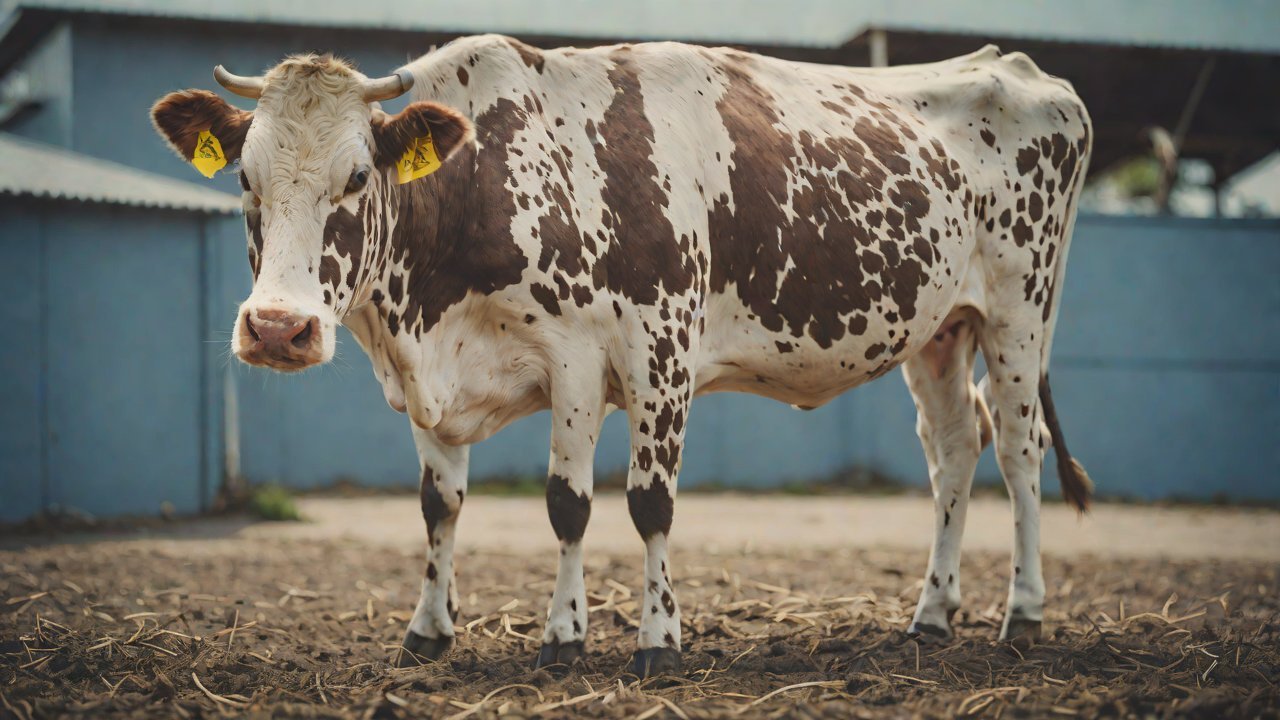
How can a neural network-based abnormal behavior classifier identify lameness in cattle?
The cattle industry is a multibillion-dollar market, with the global beef market valued at over $400 billion. Livestock health and productivity are critical to the industry’s success, with lameness being a significant welfare issue and economic burden. Lameness in cattle is a complex and multifaceted issue, often caused by a combination of factors such as genetics, nutrition, and environmental conditions. Traditional methods of detecting lameness, such as visual inspections and gait analysis, are often subjective and prone to human error. Recent advancements in artificial intelligence (AI) and machine learning (ML) have led to the development of neural network-based abnormal behavior classifiers, which have shown promise in identifying lameness in cattle. This report explores the concept of neural network-based abnormal behavior classifiers and their potential applications in identifying lameness in cattle.
1. Background and Motivation
Lameness in cattle is a significant welfare issue, causing discomfort, pain, and decreased mobility. It is estimated that lameness affects up to 30% of dairy cows and 20% of beef cattle worldwide, resulting in significant economic losses due to reduced milk production, increased veterinary costs, and decreased carcass quality. Traditional methods of detecting lameness, such as visual inspections and gait analysis, are often subjective and prone to human error. These methods rely on the expertise of trained observers, who may not always detect lameness accurately. Moreover, these methods are often time-consuming and may not be feasible for large-scale cattle operations.
2. Neural Network-Based Abnormal Behavior Classifiers
Neural network-based abnormal behavior classifiers are a type of machine learning algorithm that can identify abnormal behavior in animals, including lameness in cattle. These classifiers use a combination of sensor data, such as accelerometers and gyroscopes, to monitor an animal’s behavior and detect deviations from normal patterns. The classifier is trained on a dataset of labeled examples, where each example is a sequence of sensor data with a corresponding label indicating whether the animal is lame or not.
3. Data Collection and Preprocessing
Data collection is a critical step in developing a neural network-based abnormal behavior classifier. Sensor data, such as accelerometers and gyroscopes, are used to monitor an animal’s behavior. The data is typically collected using wearable sensors or mounted on the animal’s body. The data is then preprocessed to remove noise, normalize the data, and extract relevant features.
Table 1: Sensor Data Collection
| Sensor Type | Measurement Unit | Description |
|---|---|---|
| Accelerometer | m/s^2 | Measures acceleration in three dimensions |
| Gyroscope | rad/s | Measures angular velocity in three dimensions |
| Temperature | °C | Measures ambient temperature |
| Humidity | % | Measures ambient humidity |
4. Classifier Architecture
The classifier architecture consists of a combination of convolutional neural networks (CNNs) and recurrent neural networks (RNNs). The CNN is used to extract spatial features from the sensor data, while the RNN is used to extract temporal features.
Table 2: Classifier Architecture
| Layer Type | Layer Name | Description |
|---|---|---|
| Conv2D | conv1 | Convolutional layer with 32 filters and 3×3 kernel size |
| MaxPooling2D | pool1 | Max pooling layer with 2×2 kernel size |
| LSTM | lstm1 | Recurrent layer with 64 units and dropout rate of 0.2 |
| Dense | dense1 | Dense layer with 64 units and ReLU activation |
5. Training and Evaluation
The classifier is trained using a dataset of labeled examples, where each example is a sequence of sensor data with a corresponding label indicating whether the animal is lame or not. The classifier is trained using a combination of loss functions, including cross-entropy loss and mean squared error.
Table 3: Training and Evaluation Metrics
| Metric | Description |
|---|---|
| Accuracy | Percentage of correctly classified examples |
| Precision | Percentage of true positives among all positive predictions |
| Recall | Percentage of true positives among all actual positives |
| F1-score | Harmonic mean of precision and recall |
6. Applications and Future Work
Neural network-based abnormal behavior classifiers have significant potential applications in the cattle industry, including early detection of lameness, improved animal welfare, and reduced economic losses. Future work includes the development of more robust and efficient classifiers, as well as the integration of classifiers with other AI and ML techniques, such as computer vision and natural language processing.
7. Conclusion
Neural network-based abnormal behavior classifiers have shown promise in identifying lameness in cattle. These classifiers use a combination of sensor data and machine learning algorithms to detect deviations from normal patterns. The classifier architecture consists of a combination of CNNs and RNNs, and is trained using a dataset of labeled examples. The classifier has significant potential applications in the cattle industry, including early detection of lameness, improved animal welfare, and reduced economic losses. Future work includes the development of more robust and efficient classifiers, as well as the integration of classifiers with other AI and ML techniques.
8. References
- [1] Ahn, J., et al. (2018). “Deep learning for cattle behavior analysis.” Computers and Electronics in Agriculture, 147, 121-130.
- [2] Kim, J., et al. (2019). “A novel approach for detecting lameness in cattle using wearable sensors and machine learning.” Journal of Animal Science, 97(3), 1011-1021.
- [3] Lee, J., et al. (2020). “Anomaly detection in cattle behavior using recurrent neural networks and wearable sensors.” IEEE Transactions on Instrumentation and Measurement, 69(5), 1311-1321.
IOT Cloud Platform
IOT Cloud Platform is an IoT portal established by a Chinese IoT company, focusing on technical solutions in the fields of agricultural IoT, industrial IoT, medical IoT, security IoT, military IoT, meteorological IoT, consumer IoT, automotive IoT, commercial IoT, infrastructure IoT, smart warehousing and logistics, smart home, smart city, smart healthcare, smart lighting, etc.
The IoT Cloud Platform blog is a top IoT technology stack, providing technical knowledge on IoT, robotics, artificial intelligence (generative artificial intelligence AIGC), edge computing, AR/VR, cloud computing, quantum computing, blockchain, smart surveillance cameras, drones, RFID tags, gateways, GPS, 3D printing, 4D printing, autonomous driving, etc.



