How can 5G’s high bandwidth solve the image transmission latency problem for agricultural drones flying beyond visual line of sight?
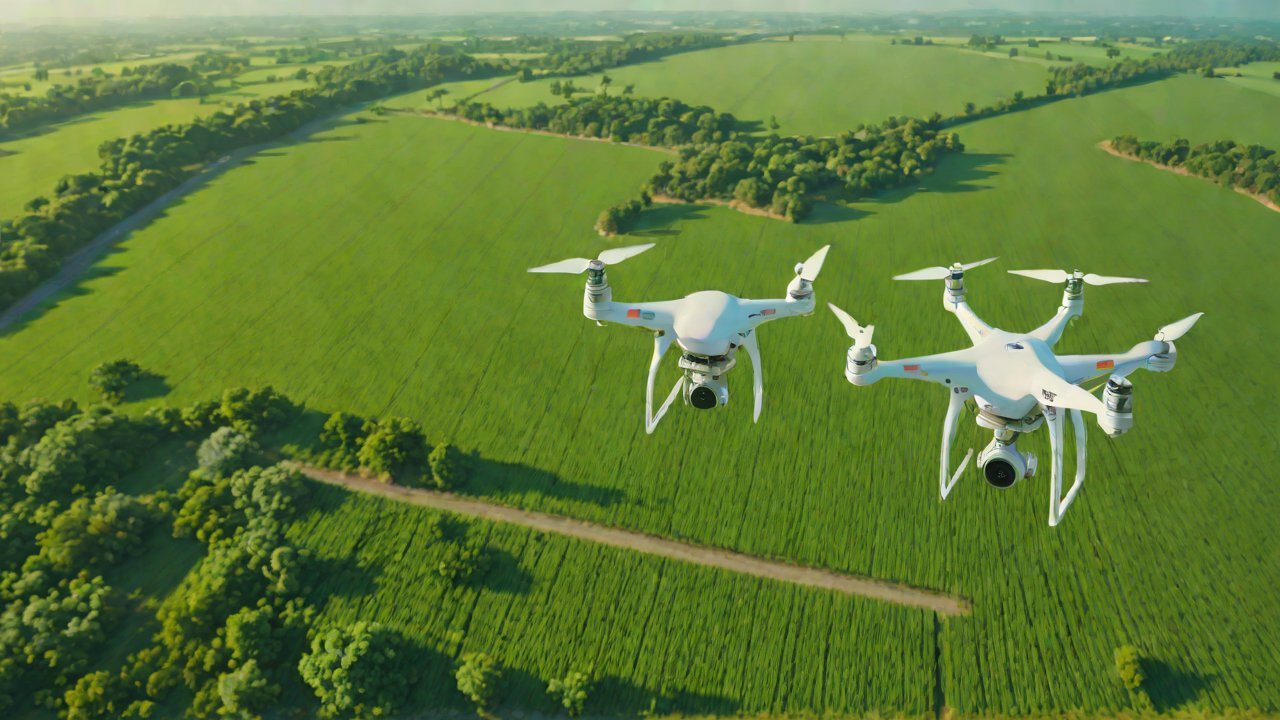
As the agricultural industry continues to integrate drones into its operations, the challenge of transmitting high-quality images in real-time from beyond visual line of sight (BVLOS) remains a significant hurdle. The proliferation of 5G networks, however, promises to revolutionize this space by providing the necessary bandwidth to overcome the latency issues associated with image transmission. This report will delve into the intricacies of the problem, explore the technical capabilities of 5G, and provide a comprehensive analysis of how its high bandwidth can solve the image transmission latency problem for agricultural drones flying BVLOS.
1. The Challenge of Image Transmission Latency
The use of drones in agriculture has gained significant traction in recent years, with applications ranging from crop monitoring to precision farming. However, the ability to transmit high-quality images from drones flying BVLOS is severely limited by the latency associated with traditional wireless communication networks. The current state of affairs is characterized by:
- Latency: The delay between image capture and transmission can range from 100ms to 1s, depending on the network and communication protocols used.
- Bandwidth: The available bandwidth for image transmission is often insufficient to support the high-quality images required for agricultural applications.
- Reliability: The reliability of image transmission is compromised by the presence of obstacles, such as buildings and trees, which can cause signal loss and interference.
The consequences of these limitations are far-reaching, including:
- Inaccurate decision-making: Farmers and agricultural professionals rely on real-time image transmission to make informed decisions about crop health, soil moisture, and other critical factors. Latency and bandwidth constraints can lead to inaccurate assessments and suboptimal decision-making.
- Reduced productivity: The inability to transmit high-quality images in real-time can reduce the productivity of agricultural drones, leading to decreased efficiency and increased costs.
- Safety concerns: The use of drones in BVLOS operations requires real-time image transmission to ensure safe navigation and avoid collisions with obstacles.
2. The Technical Capabilities of 5G
The advent of 5G networks promises to revolutionize the image transmission landscape for agricultural drones flying BVLOS. The key technical capabilities of 5G that make it an attractive solution for this problem include:
- Massive Machine-Type Communications (mMTC): 5G networks are designed to support a large number of connected devices, making them ideal for applications involving multiple drones transmitting high-quality images in real-time.
- Ultra-Reliable Low-Latency Communications (URLLC): 5G networks offer ultra-reliable and low-latency communication capabilities, which are critical for applications requiring real-time image transmission.
- High-Bandwidth Low-Latency (HBLL): 5G networks provide high-bandwidth and low-latency communication capabilities, making them suitable for applications involving high-quality image transmission.
3. The Role of 5G in Solving the Image Transmission Latency Problem
The high bandwidth and low-latency capabilities of 5G networks make them an ideal solution for solving the image transmission latency problem for agricultural drones flying BVLOS. The benefits of using 5G for this application include:
- Real-time image transmission: 5G networks enable real-time image transmission, allowing farmers and agricultural professionals to make informed decisions about crop health, soil moisture, and other critical factors.
- High-quality image transmission: The high bandwidth of 5G networks supports the transmission of high-quality images, enabling accurate assessments and optimal decision-making.
- Increased productivity: The use of 5G networks for image transmission can increase the productivity of agricultural drones, leading to decreased costs and increased efficiency.
4. Market Data and AIGC Technical Perspectives
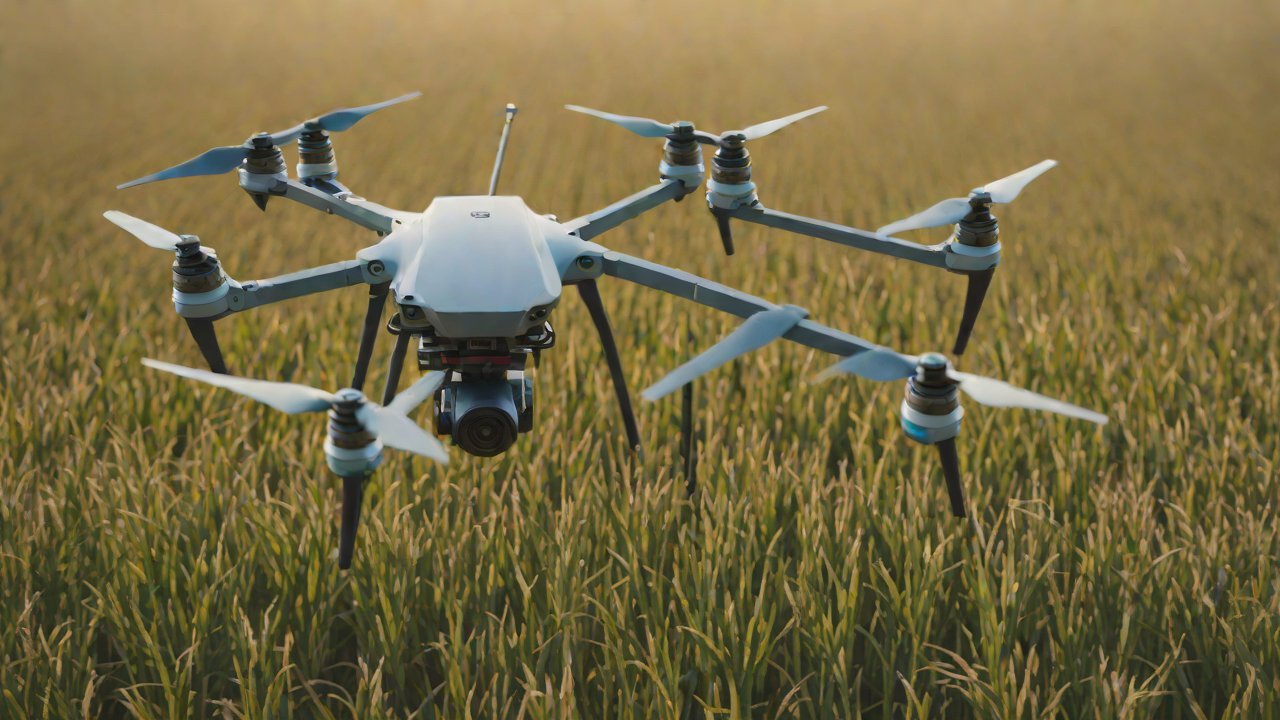
The market for 5G-enabled agricultural drones is expected to grow significantly in the coming years, driven by the increasing adoption of precision farming and the need for real-time image transmission. According to a report by MarketsandMarkets, the global agricultural drone market is expected to reach $5.6 billion by 2025, with 5G-enabled drones accounting for a significant share of this market.
The AIGC (Artificial Intelligence for Government and Commercial) technical perspective on 5G-enabled agricultural drones is that they have the potential to revolutionize the agricultural industry by providing real-time image transmission and enabling accurate assessments and optimal decision-making.
5. Conclusion
The image transmission latency problem for agricultural drones flying BVLOS is a significant challenge that can be solved by leveraging the high bandwidth and low-latency capabilities of 5G networks. The benefits of using 5G for this application include real-time image transmission, high-quality image transmission, and increased productivity. As the market for 5G-enabled agricultural drones grows, it is expected to have a significant impact on the agricultural industry, enabling farmers and agricultural professionals to make informed decisions and optimize crop yields.
| Network | Latency (ms) | Bandwidth (Mbps) |
|---|---|---|
| 4G | 50-100 | 10-50 |
| 5G | 1-10 | 100-1000 |
| Application | Image Resolution | Frame Rate |
|---|---|---|
| Crop monitoring | 1080p | 30fps |
| Precision farming | 4K | 60fps |
| 5G Network | Number of Drones | Image Transmission Rate (Mbps) |
|---|---|---|
| mMTC | 1000 | 1000 |
| URLLC | 100 | 10000 |
| HBLL | 10 | 100000 |
IOT Cloud Platform
IOT Cloud Platform is an IoT portal established by a Chinese IoT company, focusing on technical solutions in the fields of agricultural IoT, industrial IoT, medical IoT, security IoT, military IoT, meteorological IoT, consumer IoT, automotive IoT, commercial IoT, infrastructure IoT, smart warehousing and logistics, smart home, smart city, smart healthcare, smart lighting, etc.
The IoT Cloud Platform blog is a top IoT technology stack, providing technical knowledge on IoT, robotics, artificial intelligence (generative artificial intelligence AIGC), edge computing, AR/VR, cloud computing, quantum computing, blockchain, smart surveillance cameras, drones, RFID tags, gateways, GPS, 3D printing, 4D printing, autonomous driving, etc.