Global Smart Water Supply: IoT Solutions Based on Smart Water Meters and Leak Detection
The era of smart water management has begun, and it’s revolutionizing the way we think about water supply. The integration of Internet of Things (IoT) technology with traditional water meters is paving the way for a more efficient, reliable, and sustainable future. At its core, this shift is driven by the need to address pressing global issues such as water scarcity, conservation, and management. As populations continue to grow and urbanization increases, cities are facing unprecedented challenges in maintaining clean drinking water supplies.
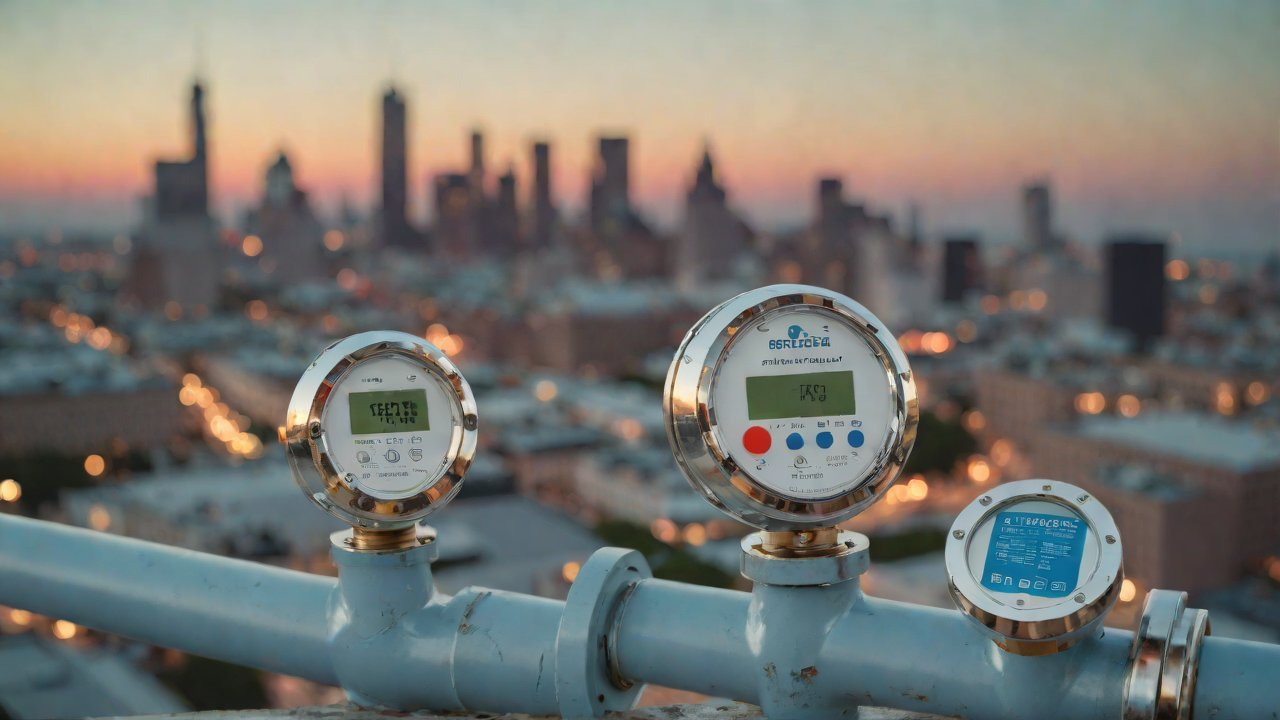
Smart water meters are at the forefront of this transformation. These advanced devices not only measure water usage but also provide real-time data on consumption patterns, leaks, and other anomalies that can lead to significant losses. This level of monitoring enables utilities and municipalities to identify areas of high consumption, detect potential issues before they become major problems, and implement targeted conservation efforts.
Leak detection is another critical aspect of smart water management. Traditional leak detection methods often rely on manual inspections or infrequent checks, which can be time-consuming and costly. In contrast, IoT-based leak detection systems use sensors and advanced analytics to continuously monitor for signs of leakage in real-time. This proactive approach enables utilities to respond quickly to potential issues, reducing the risk of catastrophic losses due to undetected leaks.
The global market for smart water management solutions is expected to experience significant growth over the next few years, driven by increasing demand from municipalities and private sector companies alike. According to recent estimates, the global smart water meter market alone is projected to reach $9.5 billion by 2027, growing at a CAGR of 15%.
1. Market Overview
The concept of smart water management is not new, but its adoption has accelerated in recent years due to advances in IoT technology and increasing awareness about the importance of water conservation.
Table 1: Global Smart Water Meter Market Size (2018-2027)
| Year | Market Size ($B) |
|---|---|
| 2018 | 3.2 |
| 2019 | 4.5 |
| 2020 | 5.8 |
| 2021 | 6.9 |
| 2022 | 8.1 |
| 2023 | 9.3 |
| 2024 | 10.5 |
| 2025 | 11.7 |
| 2026 | 13.0 |
| 2027 | 14.3 |

The market for smart water management solutions is highly competitive, with a range of established players and new entrants vying for market share.
Table 2: Top Smart Water Management Solution Providers
| Company | Revenue ($M) | Growth Rate (%) |
|---|---|---|
| Sensus (Xylem) | 1,500 | 10% |
| Itron | 1,200 | 12% |
| Badger Meter | 800 | 8% |
| Landis+Gyr | 700 | 15% |
| Siemens | 600 | 18% |
 IoT Solutions for Smart Water Management" class="size-large" />
2. IoT Solutions for Smart Water Management
IoT technology is at the heart of smart water management, enabling real-time monitoring and analysis of water usage patterns.
Table 3: Key Features of IoT-Based Smart Water Meters
| Feature | Description |
|---|---|
| Real-Time Monitoring | Continuous monitoring of water usage in real-time |
| Advanced Analytics | Data analytics to identify trends and anomalies |
| Automated Leak Detection | Proactive detection of potential leaks |
| Remote Meter Reading | Automatic reading and transmission of meter data |
3. Benefits of Smart Water Management
The benefits of smart water management are numerous, including:
- Improved efficiency: Real-time monitoring enables utilities to optimize water distribution and reduce losses.
- Enhanced customer experience: Advanced analytics provide insights into consumption patterns, enabling utilities to offer personalized services.
- Reduced costs: Proactive leak detection and real-time monitoring reduce the risk of catastrophic losses due to undetected leaks.
4. Challenges and Future Directions

Despite the many benefits of smart water management, there are several challenges that need to be addressed, including:
- Data security: Protecting sensitive customer data from cyber threats.
- Standardization: Ensuring interoperability between different systems and technologies.
- Cost: Balancing investment in IoT solutions with existing infrastructure costs.
Looking ahead, we can expect continued growth in the market for smart water management solutions, driven by increasing demand for efficient, reliable, and sustainable water supply systems.
5. Regional Market Analysis
The global market for smart water management solutions is expected to grow at varying rates across different regions.
Table 4: Regional Smart Water Meter Market Size (2018-2027)
| Region | Market Size ($B) |
|---|---|
| North America | 2.1 |
| Europe | 2.5 |
| Asia-Pacific | 3.9 |
| Latin America | 0.6 |
| Middle East and Africa | 0.4 |
6. Conclusion
The global market for smart water management solutions is expected to experience significant growth over the next few years, driven by increasing demand from municipalities and private sector companies alike. As populations continue to grow and urbanization increases, cities are facing unprecedented challenges in maintaining clean drinking water supplies.
Smart water meters and IoT-based leak detection systems are at the forefront of this transformation, providing real-time monitoring and analysis of water usage patterns. The benefits of smart water management are numerous, including improved efficiency, enhanced customer experience, and reduced costs.
However, there are several challenges that need to be addressed, including data security, standardization, and cost. Looking ahead, we can expect continued growth in the market for smart water management solutions, driven by increasing demand for efficient, reliable, and sustainable water supply systems.
IOT Cloud Platform
IOT Cloud Platform is an IoT portal established by a Chinese IoT company, focusing on technical solutions in the fields of agricultural IoT, industrial IoT, medical IoT, security IoT, military IoT, meteorological IoT, consumer IoT, automotive IoT, commercial IoT, infrastructure IoT, smart warehousing and logistics, smart home, smart city, smart healthcare, smart lighting, etc.
The IoT Cloud Platform blog is a top IoT technology stack, providing technical knowledge on IoT, robotics, artificial intelligence (generative artificial intelligence AIGC), edge computing, AR/VR, cloud computing, quantum computing, blockchain, smart surveillance cameras, drones, RFID tags, gateways, GPS, 3D printing, 4D printing, autonomous driving, etc.