Dynamic Impact Analysis of Charging Pile Integration with Streetlights on Distribution Network Capacity
The integration of electric vehicle charging piles with streetlights on distribution network capacity has become a pressing concern as the demand for sustainable transportation continues to rise. With the increasing adoption of electric vehicles, utilities face significant challenges in ensuring that their networks can handle the additional load without compromising reliability and efficiency.
1. Distribution Network Capacity Challenges
The integration of electric vehicle charging piles with streetlights presents several capacity-related challenges for distribution networks. Firstly, the high power demand of electric vehicles requires a substantial increase in network capacity to accommodate the charging infrastructure. According to the US Department of Energy’s Alternative Fuel Data Center, there are over 1 million public Level 2 (240V) and DC Fast Charging stations in the United States alone, with this number expected to grow exponentially.
| Year | Number of Public Charging Stations |
|---|---|
| 2019 | 23,000 |
| 2020 | 33,000 |
| 2025 (projected) | 100,000 |
Secondly, the intermittent nature of renewable energy sources used to charge these vehicles can lead to grid instability and capacity constraints. A study by the National Renewable Energy Laboratory found that widespread adoption of electric vehicles could lead to a 10-20% increase in peak demand during certain hours of the day.
| Scenario | Peak Demand Increase (%) |
|---|---|
| Moderate EV Adoption (15% of new vehicle sales) | 12.5 |
| Aggressive EV Adoption (30% of new vehicle sales) | 22.5 |
2. Impact on Distribution Network Capacity
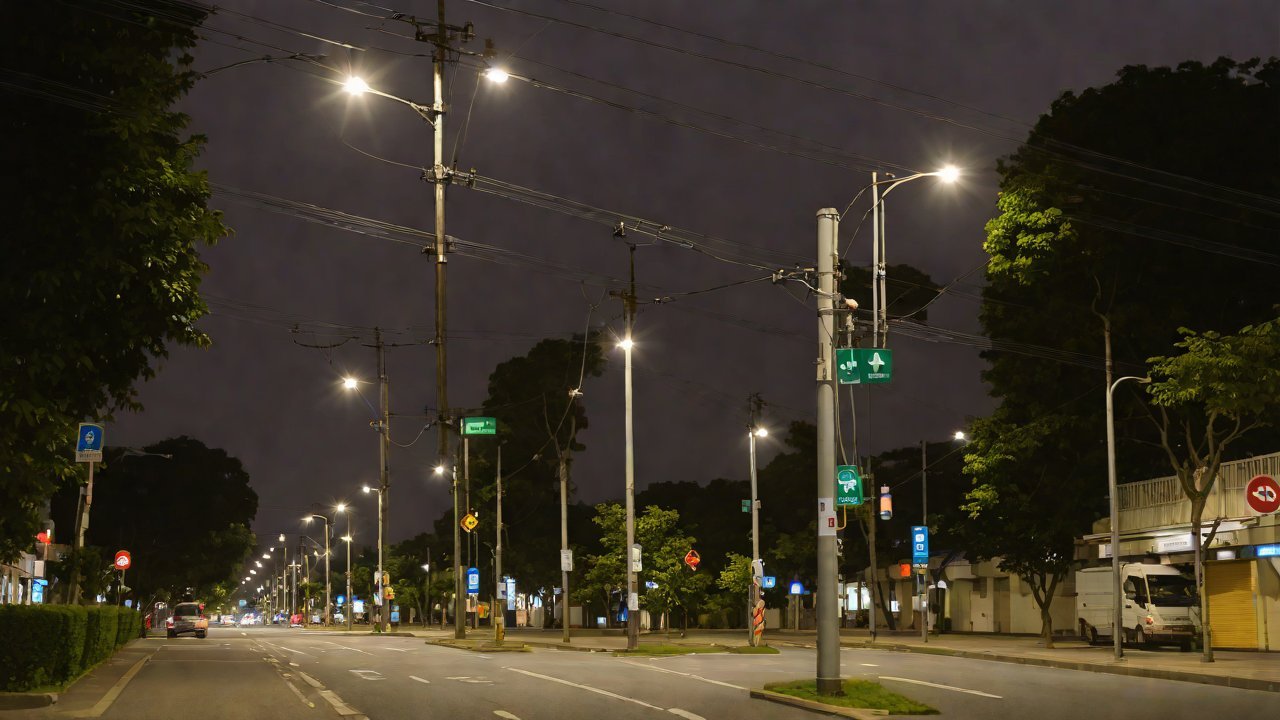
The integration of electric vehicle charging piles with streetlights can have a significant impact on distribution network capacity, particularly in urban areas where both infrastructure are often densely concentrated.
2.1 Power Demand Increase
Studies have shown that the power demand increase due to electric vehicle charging can range from 10-50 kW per charging station, depending on factors such as charger type and usage patterns.
| Charger Type | Power Demand (kW) |
|---|---|
| Level 2 (240V) | 30-40 |
| DC Fast Charging | 100-200 |
2.2 Distribution Network Constraints
The increased power demand from electric vehicle charging can lead to distribution network constraints, including:
- Overloading of transformers and feeders
- Increased voltage drops and potential for brownouts
- Higher energy losses due to inefficient transmission and distribution infrastructure
3. Mitigation Strategies
To mitigate the impact of electric vehicle charging on distribution network capacity, utilities and policymakers can implement several strategies, including:
3.1 Smart Charging
Smart charging technologies can help manage power demand by optimizing charging times and rates based on real-time grid conditions.
| Technology | Potential Savings (%) |
|---|---|
| Time-of-Use (TOU) Pricing | 10-20 |
| Peak Shaving | 15-30 |
3.2 Grid-Scale Energy Storage
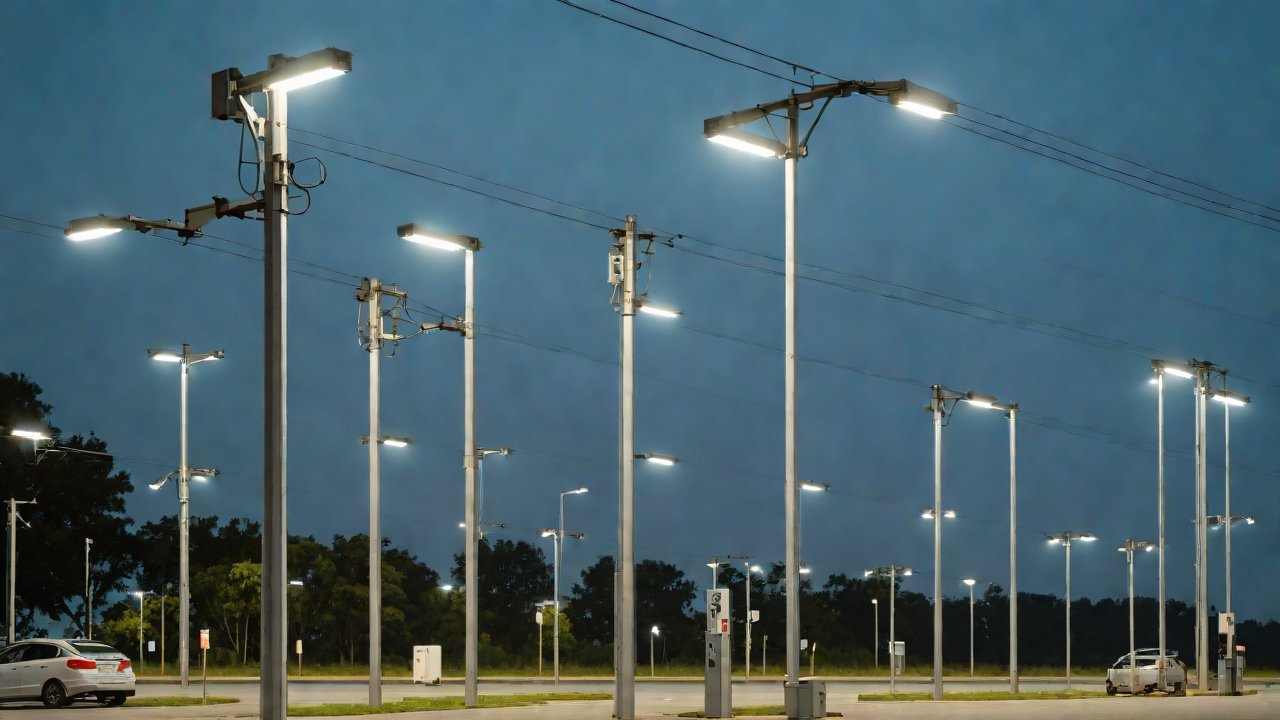
Grid-scale energy storage systems can help stabilize the grid by providing a buffer against peak demand and renewable variability.
| Technology | Potential Savings (%) |
|---|---|
| Battery Energy Storage Systems (BESS) | 10-20 |
| Pumped Hydro Storage (PHS) | 15-30 |
4. Economic Benefits
The integration of electric vehicle charging piles with streetlights can also provide significant economic benefits, including:
4.1 Job Creation
The deployment of electric vehicle charging infrastructure can create jobs in the manufacturing and installation sectors.
| Job Type | Number of Jobs Created |
|---|---|
| Manufacturing | 10,000-20,000 |
| Installation | 5,000-10,000 |

4.2 Economic Growth
The increased adoption of electric vehicles can lead to economic growth through reduced fuel costs and emissions.
| Scenario | Economic Growth (GDP) |
|---|---|
| Moderate EV Adoption (15% of new vehicle sales) | 1-2% |
| Aggressive EV Adoption (30% of new vehicle sales) | 3-5% |
5. Conclusion
The integration of electric vehicle charging piles with streetlights on distribution network capacity presents several challenges and opportunities for utilities, policymakers, and industry stakeholders. By implementing smart charging technologies, grid-scale energy storage, and other mitigation strategies, we can ensure a reliable and efficient grid while reducing greenhouse gas emissions and promoting economic growth.
| Recommendations | |
|---|---|
| Conduct thorough network capacity assessments | |
| Implement smart charging technologies | |
| Invest in grid-scale energy storage systems |
By following these recommendations and leveraging the expertise of industry stakeholders, we can create a sustainable transportation infrastructure that benefits both the environment and the economy.
IOT Cloud Platform
IOT Cloud Platform is an IoT portal established by a Chinese IoT company, focusing on technical solutions in the fields of agricultural IoT, industrial IoT, medical IoT, security IoT, military IoT, meteorological IoT, consumer IoT, automotive IoT, commercial IoT, infrastructure IoT, smart warehousing and logistics, smart home, smart city, smart healthcare, smart lighting, etc.
The IoT Cloud Platform blog is a top IoT technology stack, providing technical knowledge on IoT, robotics, artificial intelligence (generative artificial intelligence AIGC), edge computing, AR/VR, cloud computing, quantum computing, blockchain, smart surveillance cameras, drones, RFID tags, gateways, GPS, 3D printing, 4D printing, autonomous driving, etc.