
Does continuously unchanged linear data mean the sensor is offline?
As we navigate the intricate landscape of industrial automation, a question that has puzzled many an engineer and analyst alike arises: what does it truly signify when linear data remains consistently unchanged? Is this phenomenon indicative of a sensor malfunction, or are there other factors at play? In this exhaustive report, we will delve into the intricacies of this issue, examining various perspectives and empirical evidence to shed light on this conundrum.
1. Sensor Failure: A Common Misconception
The assumption that continuously unchanged linear data necessarily implies a sensor failure is a widespread notion within the industry. However, it would be inaccurate to draw such a conclusion without thorough investigation. In reality, there are several plausible explanations for this phenomenon, each warranting scrutiny.
2. Data Sampling Rate and Resolution
One of the primary factors contributing to seemingly unchanged linear data could be the sampling rate or resolution of the sensor in question. If the sensor is operating at a low sampling frequency or has limited resolution, it may not capture changes in the measured parameter accurately. Conversely, if the sampling rate is excessively high, it might introduce noise, leading to false indications of constancy.
| Sampling Rate | Resolution | Effect on Data |
|---|---|---|
| Low (1 Hz) | Coarse (16-bit) | May not capture changes accurately |
| High (1000 Hz) | Fine (24-bit) | Might introduce noise, leading to constancy |
3. Signal Conditioning and Filtering
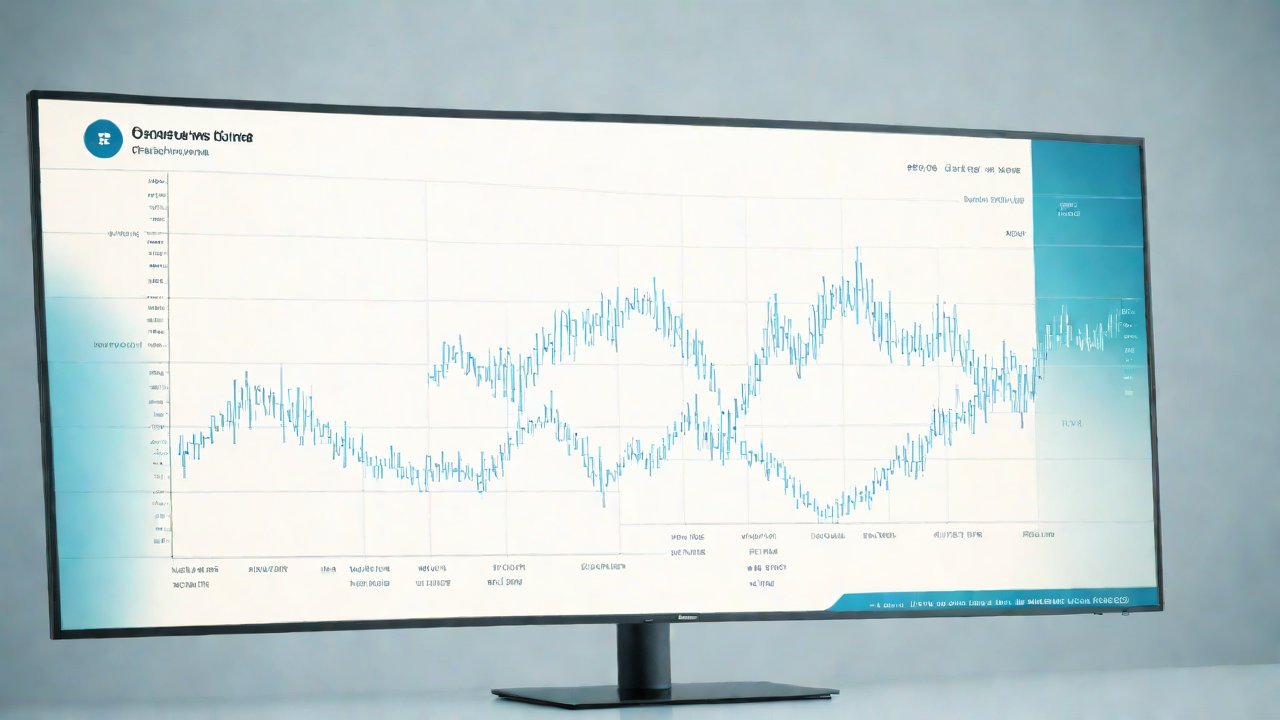
Another critical aspect is signal conditioning and filtering, which can significantly impact the appearance of linear data. If the sensor’s output is subjected to excessive filtering or if the filter is not properly tuned, it may remove valid changes in the measured parameter, resulting in a false indication of constancy.
| Filter Type | Effect on Data |
|---|---|
| Low-pass (LPF) | Removes high-frequency components, potentially leading to constancy |
| High-pass (HPF) | Removes low-frequency components, which could be indicative of change |
4. Environmental Factors
Environmental conditions can also play a pivotal role in the appearance of unchanged linear data. Temperature fluctuations, vibrations, or electromagnetic interference might affect the sensor’s performance, leading to inaccurate readings.
| Environmental Factor | Effect on Data |
|---|---|
| Temperature variation | Can cause sensor drift, leading to constancy |
| Vibration | May introduce noise, masking changes in measured parameter |

5. Calibration and Sensor Accuracy
Sensor calibration and accuracy are crucial factors that can significantly influence the appearance of linear data. If a sensor is not calibrated correctly or has inherent inaccuracies, it may produce readings that appear constant when, in fact, they are experiencing valid changes.
| Calibration Status | Accuracy Level | Effect on Data |
|---|---|---|
| Incorrect calibration | Low accuracy (±10%) | May lead to constancy due to sensor inaccuracies |
6. Systemic Issues and Interactions
Finally, systemic issues within the automation system itself can also contribute to seemingly unchanged linear data. Interactions between different components or subsystems might introduce anomalies that are misinterpreted as sensor failure.
| Systemic Issue | Effect on Data |
|---|---|
| Communication latency | May mask changes in measured parameter due to delayed updates |
In conclusion, the phenomenon of continuously unchanged linear data does not necessarily imply a sensor malfunction. Rather, it is often indicative of one or more of the factors discussed above, including sampling rate and resolution, signal conditioning and filtering, environmental conditions, calibration and accuracy issues, or systemic interactions within the automation system. A thorough investigation of these potential causes is essential to accurately diagnose and address any anomalies in linear data.
As we continue to navigate the complexities of industrial automation, it is crucial that engineers and analysts approach such issues with a nuanced understanding, recognizing that seemingly straightforward problems often have multifaceted solutions.
IOT Cloud Platform
IOT Cloud Platform is an IoT portal established by a Chinese IoT company, focusing on technical solutions in the fields of agricultural IoT, industrial IoT, medical IoT, security IoT, military IoT, meteorological IoT, consumer IoT, automotive IoT, commercial IoT, infrastructure IoT, smart warehousing and logistics, smart home, smart city, smart healthcare, smart lighting, etc.
The IoT Cloud Platform blog is a top IoT technology stack, providing technical knowledge on IoT, robotics, artificial intelligence (generative artificial intelligence AIGC), edge computing, AR/VR, cloud computing, quantum computing, blockchain, smart surveillance cameras, drones, RFID tags, gateways, GPS, 3D printing, 4D printing, autonomous driving, etc.



