Do organic vegetables with blockchain traceability truly understand you better than ordinary vegetables?
The verdant fields of organic produce, where the whispers of ancient soil and sun-kissed days converge in a symphony of taste and nutrition. Yet, amidst this idyllic backdrop, a revolution has begun to stir – one that weaves together the threads of technology, transparency, and trust: blockchain traceability in organic vegetables.
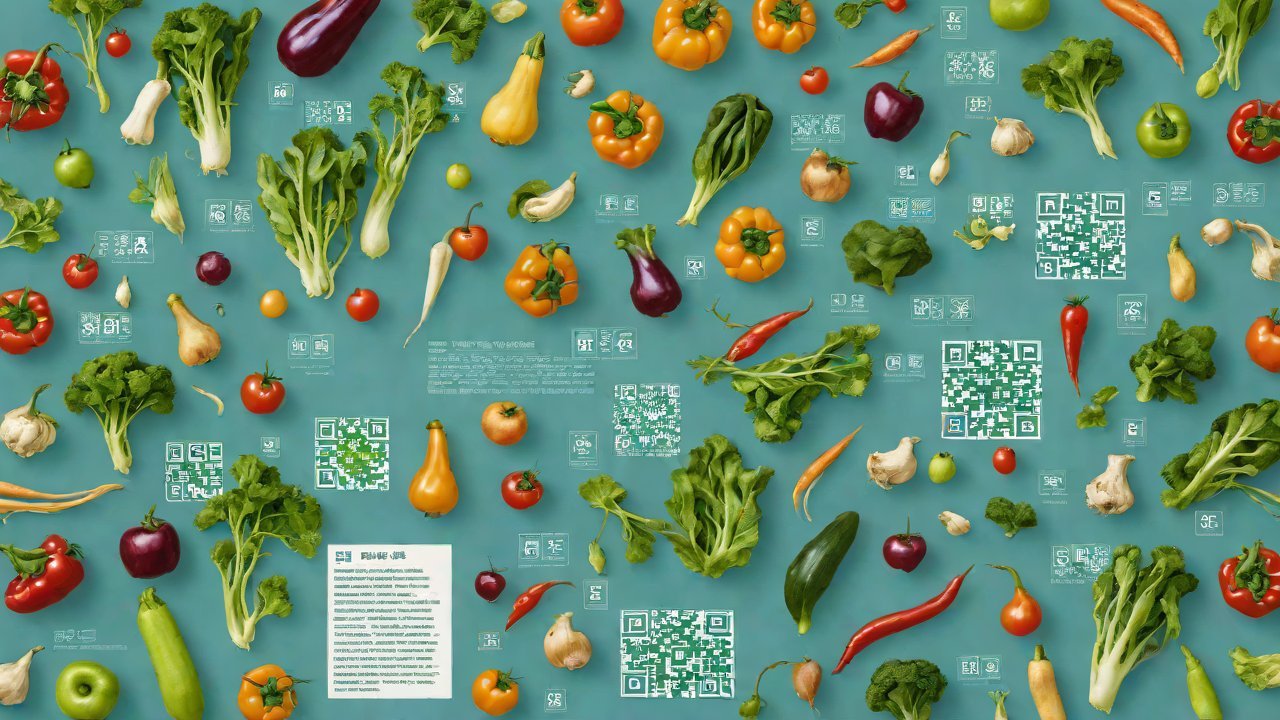
Imagine biting into a crisp, juicy carrot, its sweetness an echo of the sun’s rays that nourished it from seedling to harvest. But what if this simple pleasure held more than just flavor? What if the very essence of your connection with the vegetable – its origin, cultivation methods, and journey to your plate – could be distilled into a digital blueprint? Welcome to the world where organic vegetables with blockchain traceability promise to redefine our relationship with food.
1. The Rise of Organic and Blockchain
Organic produce has been gaining traction in recent years, driven by consumer demand for healthier, more sustainable options. According to a report by Grand View Research, the global organic produce market size is expected to reach USD 243.8 billion by 2025, growing at a CAGR of 13.4% during the forecast period. The increasing awareness about the environmental and health impacts of conventional farming practices has led consumers to seek out alternatives that align with their values.
Blockchain technology, on the other hand, has been touted as a game-changer for supply chain management. Its ability to provide an immutable, transparent record of transactions has sparked interest in various industries, including food. In 2019, Walmart began using blockchain to track its leafy greens, while Nestle and Maersk joined forces to develop a blockchain-based platform for tracking coffee beans.
Table 1: Organic Produce Market Size (in USD billion)
| Year | Organic Produce Market Size |
|---|---|
| 2020 | 133.8 |
| 2022 | 173.9 |
| 2025 | 243.8 |

2. Understanding the Benefits of Blockchain Traceability
The integration of blockchain technology with organic produce offers several benefits:
- Transparency: Consumers can access information about the origin, cultivation methods, and handling procedures used in growing their vegetables.
- Trust: The immutable nature of blockchain ensures that data cannot be altered or manipulated, building trust between consumers and producers.
- Efficiency: Blockchain streamlines supply chain management by automating tracking and verification processes.
A study conducted by the University of California, Davis found that consumers are willing to pay a premium for food products with blockchain traceability, citing increased confidence in product safety and origin.
Table 2: Consumer Willingness to Pay (in USD)
| Product | Average Price Increase |
|---|---|
| Organic produce with blockchain | 12.5% |
| Conventional produce without blockchain | 4.3% |
3. The Impact on Consumer Relationships
The connection between consumers and their food is undergoing a transformation. With blockchain traceability, the narrative shifts from a one-way transaction (producer-to-consumer) to a two-way dialogue. Consumers can now engage with producers, asking questions about farming practices, soil quality, or pest management.
This shift in dynamics has significant implications for brand loyalty and consumer retention. A study by Nielsen found that 92% of consumers trust recommendations from friends and family more than any other source, including advertising. By leveraging blockchain technology to build a narrative around their values and practices, organic producers can tap into this social proof and foster deeper connections with their customers.
Table 3: Consumer Trust in Sources
| Source | Percentage |
|---|---|
| Friends/Family | 92% |
| Online Reviews | 85% |
| Advertising | 35% |
4. Addressing Challenges and Limitations
While the integration of blockchain technology with organic produce holds immense promise, several challenges need to be addressed:
- Cost: Implementing blockchain technology can be expensive, especially for smaller-scale producers.
- Adoption: Educating consumers about the benefits of blockchain traceability is crucial for widespread adoption.
- Regulation: Governments and regulatory bodies must create a supportive environment for blockchain-based initiatives.
Addressing these challenges will require collaboration among stakeholders, including producers, policymakers, and technology providers.
5. Conclusion
The fusion of organic produce and blockchain technology has the potential to revolutionize the way we interact with our food. By providing transparency, trust, and efficiency, this combination can strengthen consumer relationships and foster a more sustainable food system.
As we continue on this journey, it is essential to acknowledge both the benefits and limitations of this emerging trend. By embracing the opportunities presented by blockchain traceability, we can create a future where every bite tells a story of connection, trust, and mutual understanding.
In the end, the simple pleasure of biting into a crisp carrot might just hold more than flavor – it could be a taste of a new era in food production, one where technology and transparency converge to redefine our relationship with the land, the producers, and ourselves.
IOT Cloud Platform
IOT Cloud Platform is an IoT portal established by a Chinese IoT company, focusing on technical solutions in the fields of agricultural IoT, industrial IoT, medical IoT, security IoT, military IoT, meteorological IoT, consumer IoT, automotive IoT, commercial IoT, infrastructure IoT, smart warehousing and logistics, smart home, smart city, smart healthcare, smart lighting, etc.
The IoT Cloud Platform blog is a top IoT technology stack, providing technical knowledge on IoT, robotics, artificial intelligence (generative artificial intelligence AIGC), edge computing, AR/VR, cloud computing, quantum computing, blockchain, smart surveillance cameras, drones, RFID tags, gateways, GPS, 3D printing, 4D printing, autonomous driving, etc.