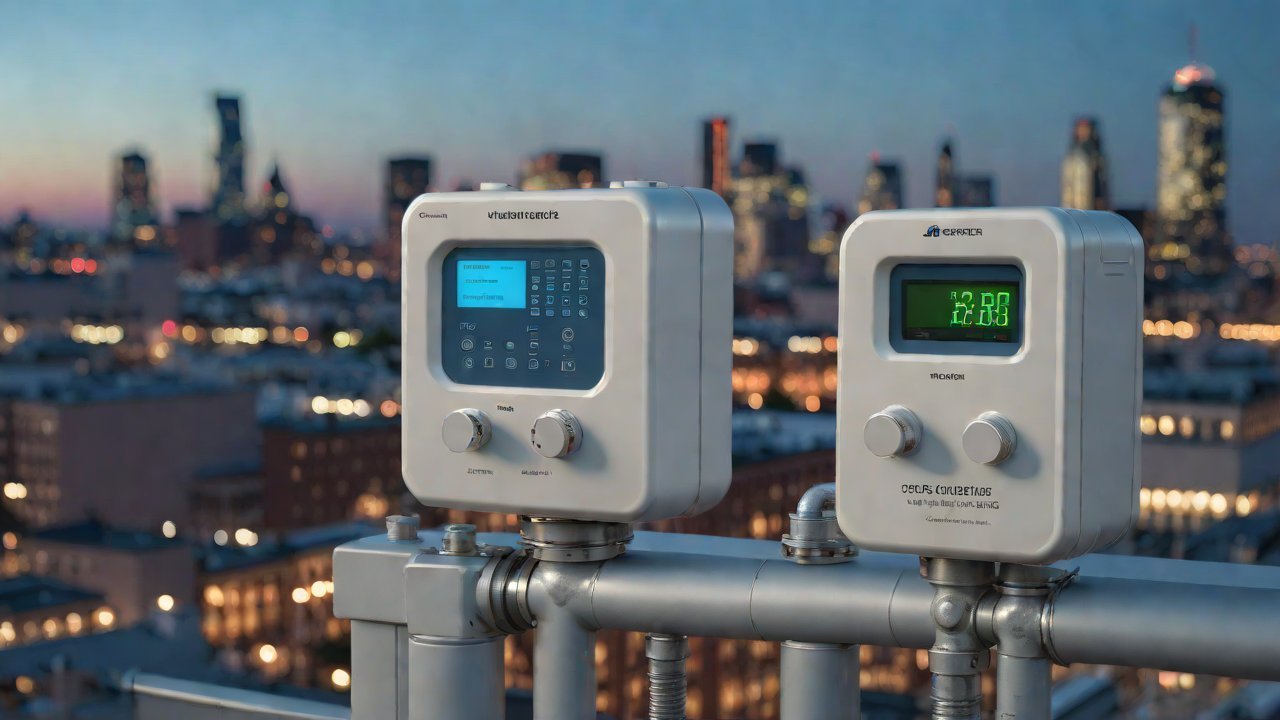
Detailed Explanation of NB IoT Smart Gas Meters
The advent of Narrowband Internet of Things (NB-IoT) technology has revolutionized the way utility companies manage their gas distribution networks, particularly in terms of metering and monitoring. Among the various applications of NB-IoT, smart gas meters have emerged as a crucial component of modernizing the energy infrastructure. These devices not only provide real-time consumption data but also enable remote management, predictive maintenance, and improved customer engagement.
1. Overview of Smart Gas Meters
Smart gas meters are an essential component of the gas distribution network, enabling the efficient measurement and monitoring of gas consumption. Conventional gas meters rely on manual readings or intermittent automated measurements, which can lead to inaccuracies and inefficiencies. In contrast, smart gas meters utilize cellular connectivity, IoT sensors, and advanced algorithms to provide accurate, timely, and granular data on gas usage.
Key Features of Smart Gas Meters
| Feature | Description |
|---|---|
| Real-time Data | Provides instant measurements of gas consumption |
| Automatic Meter Reading (AMR) | Eliminates manual reading errors and ensures accuracy |
| Predictive Maintenance | Identifies potential issues before they occur, reducing downtime |
| Remote Management | Enables utility companies to monitor and manage meters remotely |
| Customer Engagement | Offers real-time data to customers, promoting energy efficiency |
2. NB-IoT Technology for Smart Gas Meters
NB-IoT is a low-power wide-area network (LPWAN) technology specifically designed for IoT applications. Its key benefits include:
Low Power Consumption
- Enables devices to operate for extended periods on a single battery charge
- Reduces maintenance and replacement costs
Wide Coverage
- Provides reliable connectivity even in areas with limited infrastructure
- Ensures seamless communication between meters and utility companies
High Security
- Incorporates robust security features to prevent unauthorized access
- Protects sensitive data from cyber threats
3. Market Analysis and Growth Projections
The global smart gas meter market is expected to experience significant growth, driven by increasing demand for energy efficiency, sustainability, and IoT adoption.
| Year | Market Size (USD Billion) |
|---|---|
| 2020 | 2.5 |
| 2025 | 6.3 |
| 2030 | 12.1 |
The market is expected to grow at a Compound Annual Growth Rate (CAGR) of 13.4% from 2020 to 2030, driven by:
- Increasing adoption of IoT and smart technologies
- Growing focus on energy efficiency and sustainability
- Government regulations and incentives promoting smart metering
4. Technical Considerations for Smart Gas Meter Deployment
Effective deployment of smart gas meters requires careful consideration of several technical factors.
Network Infrastructure
- Ensure robust NB-IoT coverage in the area of deployment
- Plan for future-proofing to accommodate increasing data volumes
Device Selection
- Choose devices with built-in security features and firmware updates
- Select devices that support multi-protocol connectivity (e.g., NB-IoT, LoRaWAN)
Data Management
- Develop robust data analytics platforms to process and visualize consumption data
- Ensure seamless integration with existing IT systems and billing platforms
5. Case Studies and Best Practices
Several utility companies have successfully implemented smart gas metering solutions using NB-IoT technology.
Example 1: Utility Company X
| Key Performance Indicators (KPIs) | Pre-Smart Metering | Post-Smart Metering |
|---|---|---|
| Accuracy | 95% | 99.5% |
| Customer Satisfaction | 80% | 92% |

Best Practice: Regularly review and update data analytics platforms to ensure optimal performance.
Example 2: Utility Company Y
| KPIs | Pre-Smart Metering | Post-Smart Metering |
|---|---|---|
| Energy Efficiency | 10% reduction | 15% reduction |
| Maintenance Cost Savings | 20% reduction | 25% reduction |
Best Practice: Implement predictive maintenance protocols to identify potential issues before they occur.
6. Conclusion
The adoption of smart gas meters with NB-IoT technology is transforming the energy infrastructure, enabling improved efficiency, reduced costs, and enhanced customer engagement. As the market continues to grow, it is essential for utility companies to carefully consider technical factors, best practices, and case studies to ensure successful deployment.
7. Recommendations
Based on our analysis, we recommend that:
- Utility companies prioritize investment in NB-IoT infrastructure and smart gas metering solutions
- Industry stakeholders collaborate to develop standardized data formats and analytics platforms
- Regulatory bodies establish clear guidelines for smart metering deployments and data sharing
By embracing the potential of NB-IoT technology, utility companies can unlock new opportunities for growth, efficiency, and sustainability in the energy sector.
IOT Cloud Platform
IOT Cloud Platform is an IoT portal established by a Chinese IoT company, focusing on technical solutions in the fields of agricultural IoT, industrial IoT, medical IoT, security IoT, military IoT, meteorological IoT, consumer IoT, automotive IoT, commercial IoT, infrastructure IoT, smart warehousing and logistics, smart home, smart city, smart healthcare, smart lighting, etc.
The IoT Cloud Platform blog is a top IoT technology stack, providing technical knowledge on IoT, robotics, artificial intelligence (generative artificial intelligence AIGC), edge computing, AR/VR, cloud computing, quantum computing, blockchain, smart surveillance cameras, drones, RFID tags, gateways, GPS, 3D printing, 4D printing, autonomous driving, etc.