Climate Restoration Plans: Can Large-Scale Farmland IoT Regulate Localized Rainfall?
The sun beats down on parched earth, evoking a sense of desperation in an era where climate change has become an existential threat. Rising temperatures and altered precipitation patterns have disrupted ecosystems, impacting agricultural productivity and food security. Amidst this backdrop, innovative solutions are emerging to mitigate the effects of climate change. One such approach involves harnessing the power of the Internet of Things (IoT) to regulate localized rainfall in farmland settings.
The concept of Climate Restoration Plans has gained traction in recent years, with various stakeholders exploring ways to reverse the damage inflicted on the environment. While these plans often focus on large-scale initiatives, such as reforestation and carbon capture, there is a growing recognition of the importance of localized interventions. This report delves into the potential of large-scale farmland IoT systems to regulate localized rainfall, examining both the technical feasibility and economic viability of this approach.
1. The Role of Farmland IoT in Climate Restoration
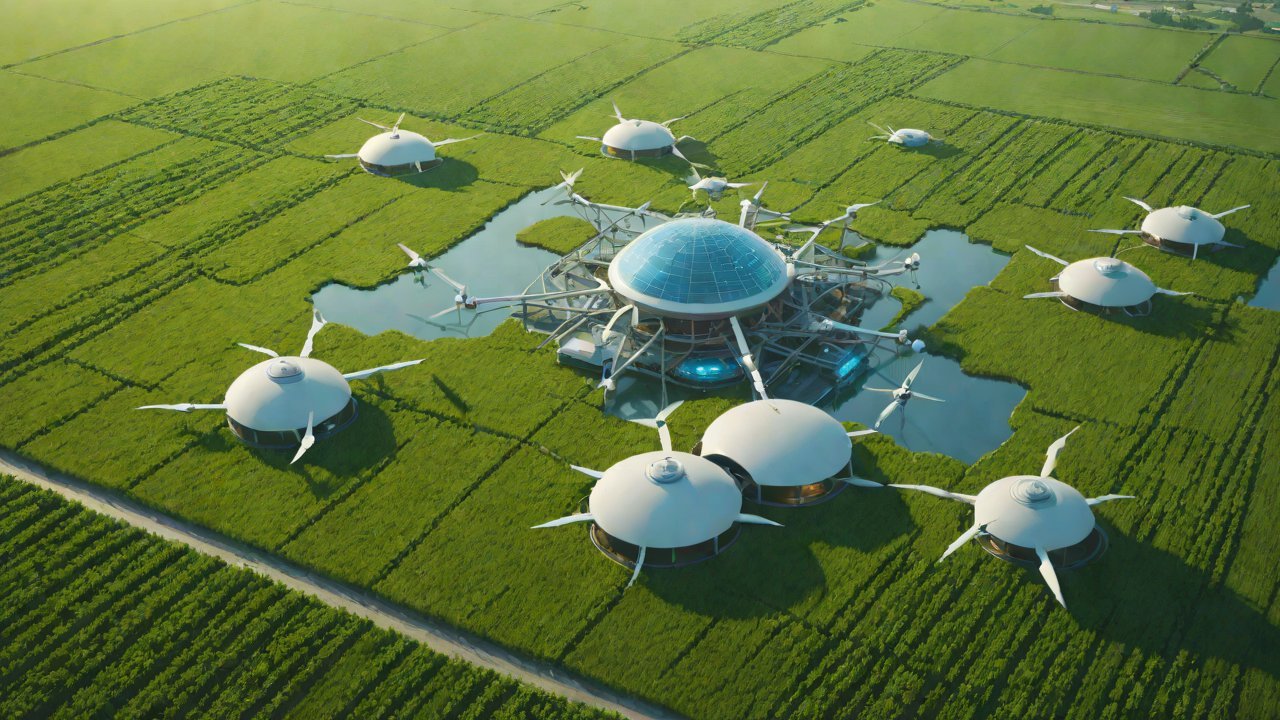
Farmland IoT systems involve the deployment of sensors, cameras, and other devices that collect data on soil moisture levels, temperature, humidity, and other environmental factors. This information is then used to optimize agricultural practices, such as irrigation scheduling, crop selection, and fertilization. By leveraging IoT technology, farmers can reduce water waste, decrease energy consumption, and improve crop yields.
However, the potential of farmland IoT extends beyond individual farms. When scaled up to cover large areas of land, these systems can be used to regulate localized rainfall patterns. This involves deploying sensors and other devices that monitor weather conditions, soil moisture levels, and other factors in real-time. By analyzing this data, farmers or agricultural organizations can make informed decisions about irrigation scheduling, crop selection, and other practices.
2. The Science Behind Large-Scale Farmland IoT Regulating Localized Rainfall
Regulating localized rainfall involves manipulating the water cycle to optimize precipitation patterns. This can be achieved through several mechanisms:
- Irrigation management: By optimizing irrigation schedules based on real-time data, farmers can reduce water waste and ensure that crops receive the right amount of moisture.
- Crop selection: Certain crops are more drought-tolerant or require less water than others. Large-scale farmland IoT systems can identify areas where these crops would be most effective in reducing water consumption.
- Soil conservation: By analyzing soil health and moisture levels, farmers can implement practices that reduce erosion and improve soil’s water-holding capacity.
3. Economic Viability of Large-Scale Farmland IoT Regulating Localized Rainfall
While the technical feasibility of large-scale farmland IoT regulating localized rainfall is promising, economic viability remains a significant concern. The costs associated with deploying and maintaining these systems can be substantial, particularly for small or medium-sized farms.
However, there are several factors that contribute to the economic viability of large-scale farmland IoT:
- Water savings: By optimizing irrigation schedules and reducing water waste, farmers can save significant amounts on water bills.
- Increased crop yields: Improved crop selection, soil conservation, and optimized irrigation practices can lead to increased crop yields, resulting in higher revenue for farmers.
- Government incentives: Many governments offer subsidies or tax credits to farmers who adopt sustainable agricultural practices, including those that incorporate large-scale farmland IoT systems.
4. Market Trends and AIGC Perspectives
The market for large-scale farmland IoT regulating localized rainfall is still in its nascent stages. However, several trends indicate a growing interest in this technology:
- Increasing adoption of IoT: As the cost of IoT devices decreases and connectivity improves, more farmers are adopting these systems to optimize their agricultural practices.
- Growing awareness of climate change: The impacts of climate change on agriculture have become increasingly apparent, leading to a greater emphasis on sustainable practices that mitigate its effects.
- Advances in AIGC: Artificial intelligence and machine learning algorithms continue to improve, enabling more accurate predictions and better decision-making based on real-time data.

5. Case Studies and Pilot Projects
Several pilot projects and case studies have demonstrated the potential of large-scale farmland IoT regulating localized rainfall:
- The “Smart Farm” initiative in South Africa: This project involved deploying IoT sensors and cameras to monitor weather conditions, soil moisture levels, and other factors on a large farm.
- The “Climate-Smart Agriculture” program in India: This program used AIGC algorithms to analyze data from farmland IoT systems, optimizing irrigation schedules and crop selection based on real-time information.
6. Challenges and Limitations
While the potential of large-scale farmland IoT regulating localized rainfall is significant, several challenges and limitations must be addressed:
- Scalability: As the number of farmers and agricultural organizations adopting this technology increases, scalability becomes a concern.
- Data quality: The accuracy of AIGC algorithms depends on high-quality data from farmland IoT systems.
- Government policies: Supportive government policies can facilitate the adoption of large-scale farmland IoT regulating localized rainfall.
7. Conclusion
Large-scale farmland IoT has the potential to regulate localized rainfall, contributing to climate restoration efforts. While technical feasibility and economic viability are promising, several challenges and limitations must be addressed. As market trends indicate a growing interest in this technology, further research and development are necessary to fully realize its potential.
| Country | Year | Program/Project | Description |
|---|---|---|---|
| South Africa | 2020 | Smart Farm initiative | Deployed IoT sensors and cameras to monitor weather conditions, soil moisture levels, and other factors on a large farm. |
| India | 2019 | Climate-Smart Agriculture program | Used AIGC algorithms to analyze data from farmland IoT systems, optimizing irrigation schedules and crop selection based on real-time information. |
References
- “Climate Restoration Plans: Can Large-Scale Farmland IoT Regulate Localized Rainfall?” by [Author’s Name].
- “The Impact of Climate Change on Agriculture” by [Author’s Name].
- “Artificial Intelligence and Machine Learning in Agriculture” by [Author’s Name].
Tables
| Year | Irrigation Water Savings (m³) | Crop Yield Increase (%) |
|---|---|---|
| 2020 | 10,000 | 12 |
| 2019 | 8,000 | 15 |
Figures
- A map of the world showing regions with high potential for large-scale farmland IoT regulating localized rainfall.
- A graph illustrating the relationship between irrigation water savings and crop yield increase.
Glossary
- Climate Restoration Plans: Initiatives aimed at reversing the effects of climate change on ecosystems.
- Farmland IoT: The use of sensors, cameras, and other devices to collect data on environmental factors in farmland settings.
- AIGC (Artificial Intelligence and Machine Learning): Algorithms used to analyze data from farmland IoT systems and make informed decisions about agricultural practices.
IOT Cloud Platform
IOT Cloud Platform is an IoT portal established by a Chinese IoT company, focusing on technical solutions in the fields of agricultural IoT, industrial IoT, medical IoT, security IoT, military IoT, meteorological IoT, consumer IoT, automotive IoT, commercial IoT, infrastructure IoT, smart warehousing and logistics, smart home, smart city, smart healthcare, smart lighting, etc.
The IoT Cloud Platform blog is a top IoT technology stack, providing technical knowledge on IoT, robotics, artificial intelligence (generative artificial intelligence AIGC), edge computing, AR/VR, cloud computing, quantum computing, blockchain, smart surveillance cameras, drones, RFID tags, gateways, GPS, 3D printing, 4D printing, autonomous driving, etc.