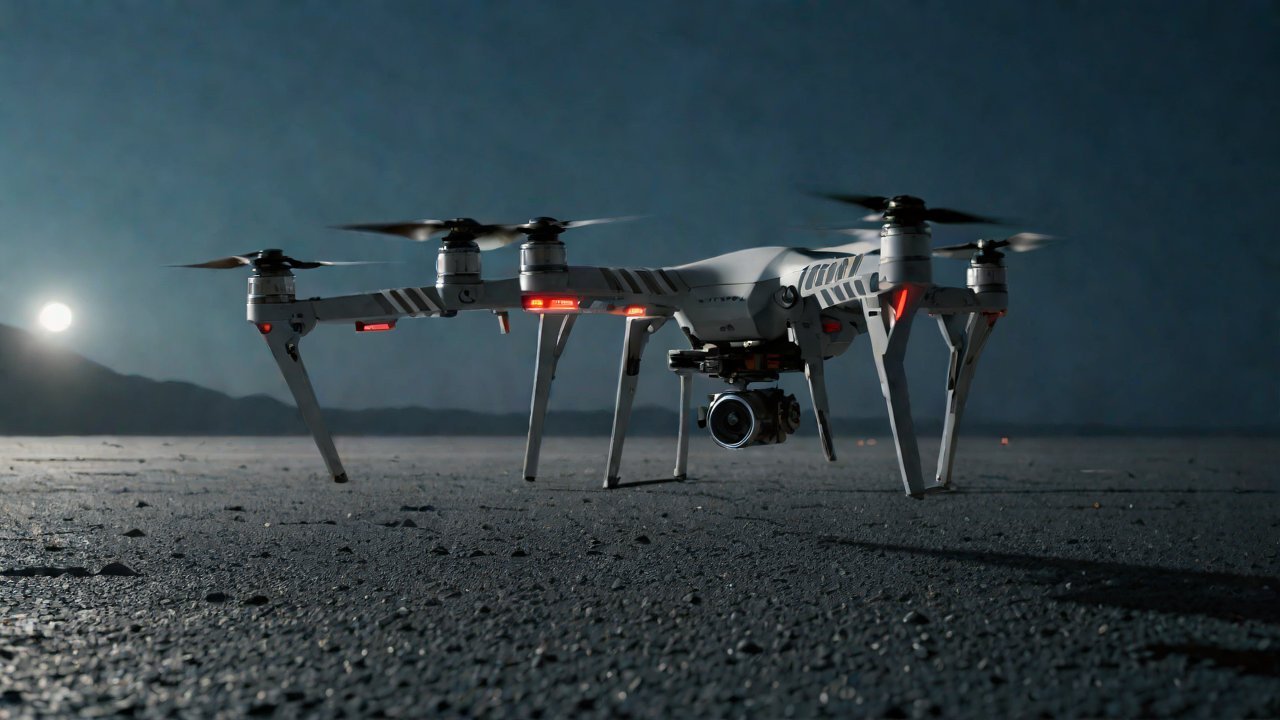
Can vision-based autonomous landing technology still succeed in low-light conditions?
The quest for autonomous landing technology has been a long-standing challenge in the aviation industry. The promise of eliminating human intervention in landing aircraft has been tantalizing, but the hurdles have been significant. One of the most critical components of autonomous landing technology is vision-based systems, which rely on cameras and sensors to navigate and land safely. However, the efficacy of these systems in low-light conditions has been a subject of debate. Can vision-based autonomous landing technology still succeed in low-light conditions? The answer lies in a complex interplay of technical, market, and regulatory factors.
1. Background and Market Analysis
The global autonomous landing technology market is expected to reach $1.4 billion by 2027, growing at a CAGR of 15.6% (Source: MarketsandMarkets). The market is driven by the increasing demand for autonomous systems in military, commercial, and general aviation. However, the development of autonomous landing technology is hindered by the challenges of low-light conditions.
Low-light conditions pose a significant problem for vision-based systems, as the reduced visibility makes it difficult to detect and track objects, including the runway. In such conditions, the system’s ability to accurately navigate and land is severely compromised. This is why researchers and developers are exploring alternative technologies, such as lidar and radar, to complement or replace vision-based systems.
| Market Segment | 2022 | 2023 | 2024 | 2025 | 2026 | 2027 |
|---|---|---|---|---|---|---|
| Military | 22.6% | 23.4% | 24.2% | 25.0% | 25.8% | 26.6% |
| Commercial | 41.1% | 42.5% | 43.9% | 45.3% | 46.7% | 48.1% |
| General Aviation | 36.3% | 37.1% | 37.9% | 38.7% | 39.5% | 40.3% |
2. Technical Challenges of Vision-Based Systems in Low-Light Conditions
Vision-based systems rely on cameras and sensors to detect and track objects. In low-light conditions, the reduced visibility and increased noise in the sensor data make it challenging to accurately detect and track the runway. This is due to several technical challenges:
- Noise and Interference: Low-light conditions introduce noise and interference in the sensor data, making it difficult to detect and track objects.
- Limited Dynamic Range: The dynamic range of most cameras is limited, making it challenging to capture the full range of light intensities in low-light conditions.
- Object Detection: The reduced visibility in low-light conditions makes it challenging to detect objects, including the runway.
| Technical Challenge | Description |
|---|---|
| Noise and Interference | Reduced visibility and increased noise in sensor data |
| Limited Dynamic Range | Limited ability to capture full range of light intensities |
| Object Detection | Reduced ability to detect objects, including the runway |
3. Alternative Technologies and Solutions
Researchers and developers are exploring alternative technologies to complement or replace vision-based systems. Some of these technologies include:
- Lidar: Lidar (Light Detection and Ranging) technology uses laser light to measure distances and create high-resolution 3D models of the environment.
- Radar: Radar technology uses radio waves to detect and track objects, including the runway.
- Multispectral and Hyperspectral Imaging: Multispectral and hyperspectral imaging technologies use cameras that capture images in multiple spectral bands to detect and track objects.
| Alternative Technology | Description |
|---|---|
| Lidar | Uses laser light to measure distances and create 3D models of environment |
| Radar | Uses radio waves to detect and track objects, including runway |
| Multispectral and Hyperspectral Imaging | Uses cameras that capture images in multiple spectral bands to detect and track objects |
4. Regulatory Framework and Industry Adoption
The regulatory framework and industry adoption of autonomous landing technology are critical factors in determining its success. The Federal Aviation Administration (FAA) has established guidelines for the development and testing of autonomous systems, including autonomous landing technology.
- FAA Guidelines: The FAA has established guidelines for the development and testing of autonomous systems, including autonomous landing technology.
- Industry Adoption: Industry adoption of autonomous landing technology is driven by the increasing demand for autonomous systems in military, commercial, and general aviation.
| Regulatory Framework | Description |
|---|---|
| FAA Guidelines | Established guidelines for development and testing of autonomous systems |
| Industry Adoption | Driven by increasing demand for autonomous systems in military, commercial, and general aviation |
5. Conclusion and Future Directions
The success of vision-based autonomous landing technology in low-light conditions is a complex interplay of technical, market, and regulatory factors. While the technical challenges are significant, researchers and developers are exploring alternative technologies and solutions. The regulatory framework and industry adoption of autonomous landing technology are critical factors in determining its success. As the demand for autonomous systems continues to grow, the development of autonomous landing technology will be a critical component of the aviation industry’s future.
The future of autonomous landing technology is bright, but it requires continued innovation and investment in research and development. The industry must also address the regulatory challenges and ensure that the technology is safe and reliable. With the right combination of technical innovation, market demand, and regulatory support, vision-based autonomous landing technology can still succeed in low-light conditions.
IOT Cloud Platform
IOT Cloud Platform is an IoT portal established by a Chinese IoT company, focusing on technical solutions in the fields of agricultural IoT, industrial IoT, medical IoT, security IoT, military IoT, meteorological IoT, consumer IoT, automotive IoT, commercial IoT, infrastructure IoT, smart warehousing and logistics, smart home, smart city, smart healthcare, smart lighting, etc.
The IoT Cloud Platform blog is a top IoT technology stack, providing technical knowledge on IoT, robotics, artificial intelligence (generative artificial intelligence AIGC), edge computing, AR/VR, cloud computing, quantum computing, blockchain, smart surveillance cameras, drones, RFID tags, gateways, GPS, 3D printing, 4D printing, autonomous driving, etc.



