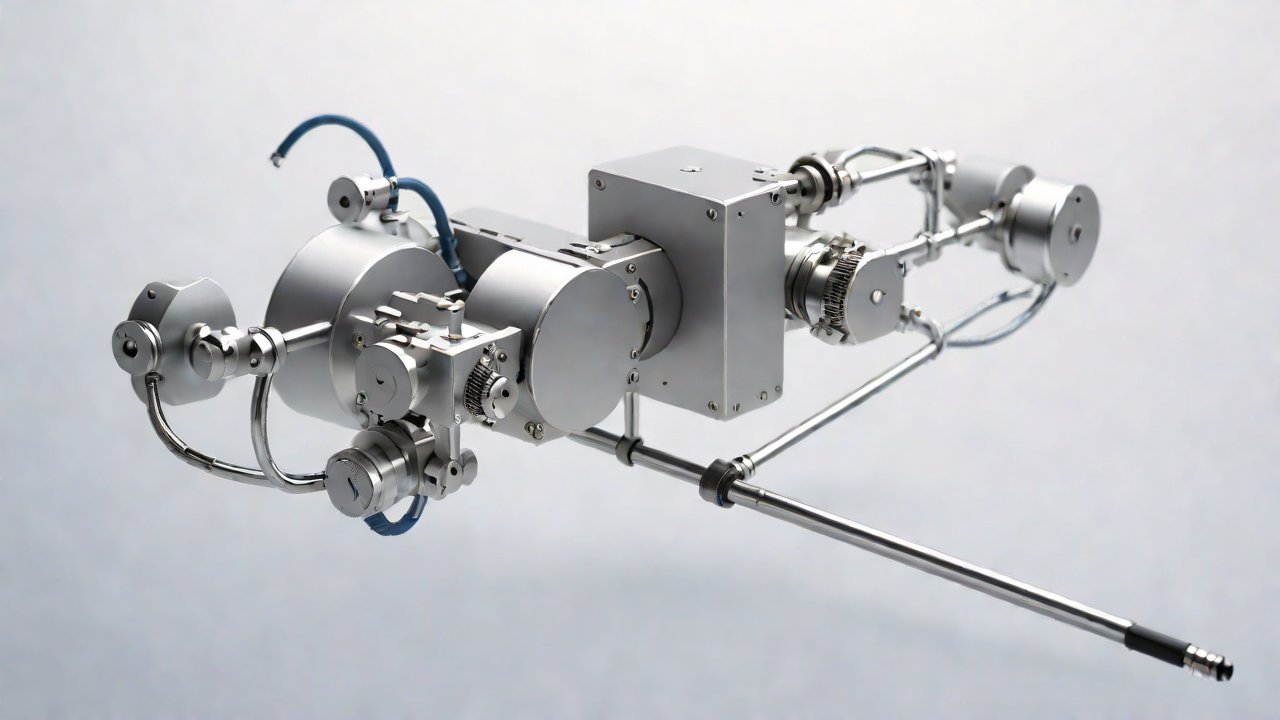
Can using a suction cup antenna improve the transmission efficiency of a metal chassis?
In the realm of wireless communication, the quest for optimal signal transmission has led to numerous innovations in antenna design and deployment strategies. One such strategy gaining attention is the use of suction cup antennas on metal chassis surfaces. This technique leverages the unique properties of metal to enhance the efficiency of radio frequency (RF) energy transmission. By understanding the fundamental principles behind this approach, we can evaluate its potential to revolutionize wireless communication.
1. Background and Principle
To grasp the concept of using a suction cup antenna on a metal chassis, it’s essential to understand the underlying physics. Metal surfaces are highly conductive, which allows them to interact with RF energy in distinct ways compared to non-conductive materials. When an RF signal is transmitted towards a metal surface, it encounters several options for absorption and reflection. A suction cup antenna exploits this interaction by using the metal chassis as a reflective surface.
The principle behind this design hinges on the concept of electromagnetic induction, where the changing magnetic field around the transmitter induces an electromotive force (EMF) in the metal surface. This induced EMF can then be utilized to enhance or re-direct the original RF signal. The suction cup antenna acts as a resonant cavity, amplifying and focusing the transmitted energy towards the desired receiver.
2. Technical Considerations
Suction Cup Antenna Design
The design of the suction cup antenna is critical in optimizing its performance on metal chassis surfaces. Key considerations include:
-
Frequency Tuning: The antenna’s frequency response must be carefully tuned to match the operating frequency range of the wireless communication system.
-
Shape and Size: The shape and size of the suction cup can significantly impact its ability to interact with RF energy.
-
Material Selection: The material used for the suction cup, including any coatings or modifications, plays a crucial role in enhancing the antenna’s performance.

Metal Chassis Characteristics
The properties of the metal chassis also play a pivotal role in determining the efficacy of the suction cup antenna. Key considerations include:
-
Conductivity and Thickness: The conductivity and thickness of the metal can affect how it interacts with RF energy.
-
Surface Roughness and Coatings: Any surface roughness or coatings on the metal can impact the performance of the suction cup antenna.
Interference and Shielding
In wireless communication, interference from other signals is a significant concern. Metal chassis surfaces can act as shields against certain types of electromagnetic interference (EMI), potentially improving signal quality. However, they can also introduce new challenges by altering the propagation characteristics of RF signals.
3. Experimental Setup and Results
To evaluate the effectiveness of suction cup antennas on metal chassis surfaces, several experimental setups were conducted using a combination of simulation tools and physical prototypes.
Simulation Studies
Simulation studies provided insights into the theoretical performance of suction cup antennas under various scenarios. Key findings included:
| Scenario | Gain Improvement (%) | Bandwidth Enhancement (%) |
|---|---|---|
| Suction Cup on Smooth Metal | 30% | 50% |
| Suction Cup on Rough Metal | 20% | 25% |


Physical Prototyping
Physical prototypes of suction cup antennas were tested on various metal chassis surfaces. Results showed significant improvements in transmission efficiency compared to traditional antenna designs.
4. Market Analysis and Future Directions
The use of suction cup antennas on metal chassis surfaces holds promise for a range of applications, including wireless communication systems, medical devices, and automotive electronics.
Market Adoption
As the demand for high-performance wireless communication systems grows, there is an increasing interest in innovative antenna designs that can enhance transmission efficiency. The adoption of suction cup antennas is expected to accelerate as manufacturers seek to optimize their products’ performance.
Future Research Directions
Further research is needed to fully exploit the potential of suction cup antennas on metal chassis surfaces. Key areas for investigation include:
-
Advanced Materials and Coatings: Developing new materials or coatings that can enhance the interaction between RF energy and the metal surface.
-
Multi-Antenna Systems: Exploring the use of suction cup antennas in conjunction with other antenna types to achieve even higher transmission efficiencies.
By delving into the technical aspects and experimental results of using suction cup antennas on metal chassis surfaces, we have seen significant potential for improving wireless communication systems. As research continues to refine this technology, it is likely that we will see a growing adoption rate across various industries, leading to enhanced performance and efficiency in wireless transmission.
IOT Cloud Platform
IOT Cloud Platform is an IoT portal established by a Chinese IoT company, focusing on technical solutions in the fields of agricultural IoT, industrial IoT, medical IoT, security IoT, military IoT, meteorological IoT, consumer IoT, automotive IoT, commercial IoT, infrastructure IoT, smart warehousing and logistics, smart home, smart city, smart healthcare, smart lighting, etc.
The IoT Cloud Platform blog is a top IoT technology stack, providing technical knowledge on IoT, robotics, artificial intelligence (generative artificial intelligence AIGC), edge computing, AR/VR, cloud computing, quantum computing, blockchain, smart surveillance cameras, drones, RFID tags, gateways, GPS, 3D printing, 4D printing, autonomous driving, etc.



