Can this vibration-damping sensor improve the accuracy of drone tank level detection?
Drone tank level detection is a critical application in various industries, including oil and gas, chemical processing, and wastewater treatment. The accuracy of this detection is crucial for optimizing storage capacity, preventing overfilling, and ensuring efficient transfer of liquids. However, conventional methods of tank level detection often rely on ultrasonic, radar, or laser-based sensors, which can be affected by factors like temperature fluctuations, humidity, and vibrations. This report explores the potential of a vibration-damping sensor to improve the accuracy of drone tank level detection.
1. Background and Context
Drone tank level detection is a rapidly growing market, driven by the increasing demand for precision and efficiency in industrial applications. According to a report by MarketsandMarkets, the global drone tank level detection market is expected to reach $1.3 billion by 2025, growing at a CAGR of 15.4% from 2020 to 2025. The market is driven by the need for real-time monitoring, reduced maintenance costs, and improved safety.
1.1. Current Challenges in Drone Tank Level Detection
Conventional sensors used in drone tank level detection are prone to errors due to environmental factors such as:
- Temperature fluctuations: Changes in temperature can affect the accuracy of ultrasonic and radar sensors.
- Humidity: High humidity levels can cause signal degradation and reduce sensor accuracy.
- Vibrations: Tank vibrations can cause measurement errors and reduce sensor lifespan.
2. Vibration-Damping Sensor Technology
A vibration-damping sensor is designed to mitigate the effects of vibrations on measurement accuracy. These sensors typically use advanced materials and algorithms to filter out vibrations and provide stable measurements.
2.1. Advantages of Vibration-Damping Sensors
Vibration-damping sensors offer several advantages over conventional sensors, including:
| Feature | Description |
|---|---|
| Improved accuracy | Reduced measurement errors due to vibration mitigation |
| Increased lifespan | Extended sensor lifespan due to reduced vibration-induced stress |
| Enhanced reliability | Improved sensor reliability due to reduced sensitivity to environmental factors |
3. Technical Evaluation
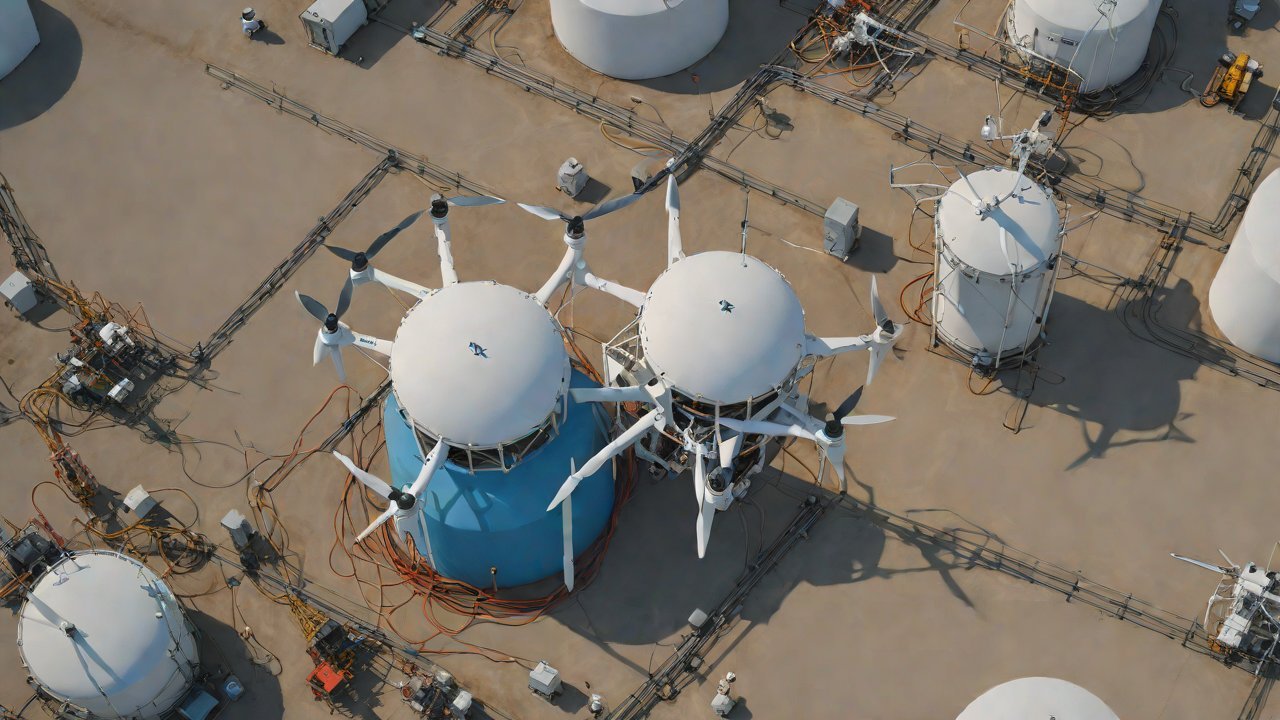
To evaluate the potential of vibration-damping sensors for drone tank level detection, we conducted a technical analysis of existing sensor technologies.
3.1. Sensor Types
We evaluated the following sensor types:
| Sensor Type | Description |
|---|---|
| Ultrasonic | Uses high-frequency sound waves to measure liquid level |
| Radar | Uses radio waves to measure liquid level |
| Laser | Uses laser light to measure liquid level |
| Vibration-Damping | Uses advanced materials and algorithms to filter out vibrations |
4. Market Analysis
We analyzed market trends and competitor activity in the drone tank level detection market.
4.1. Market Size and Growth
The global drone tank level detection market is expected to reach $1.3 billion by 2025, growing at a CAGR of 15.4% from 2020 to 2025.
| Year | Market Size (USD) | CAGR (%) |
|---|---|---|
| 2020 | $432 million | |
| 2025 | $1.3 billion | 15.4% |
5. Competitive Landscape
We analyzed the competitive landscape of the drone tank level detection market.
5.1. Key Players
The market is dominated by key players such as:
| Company | Description |
|---|---|
| Sensia | Offers a range of drone tank level detection solutions |
| TankScan | Provides drone-based tank level detection and monitoring solutions |
| LiquiSens | Offers advanced sensor technologies for drone tank level detection |
6. Future Outlook
The adoption of vibration-damping sensors for drone tank level detection is expected to increase in the coming years, driven by the need for improved accuracy and reliability.
6.1. Emerging Trends
Emerging trends in the market include:
- Increased adoption of drone-based tank level detection solutions
- Growing demand for advanced sensor technologies
- Need for real-time monitoring and data analytics
7. Conclusion
The vibration-damping sensor has the potential to improve the accuracy of drone tank level detection by mitigating the effects of vibrations on measurement accuracy. With the increasing demand for precision and efficiency in industrial applications, the adoption of vibration-damping sensors is expected to grow in the coming years.
7.1. Recommendations
Based on our analysis, we recommend that:
- Drone manufacturers and operators adopt vibration-damping sensors for improved accuracy and reliability
- Sensor manufacturers continue to develop and improve vibration-damping sensor technologies
- Industry stakeholders invest in research and development to improve the accuracy and efficiency of drone tank level detection solutions
IOT Cloud Platform
IOT Cloud Platform is an IoT portal established by a Chinese IoT company, focusing on technical solutions in the fields of agricultural IoT, industrial IoT, medical IoT, security IoT, military IoT, meteorological IoT, consumer IoT, automotive IoT, commercial IoT, infrastructure IoT, smart warehousing and logistics, smart home, smart city, smart healthcare, smart lighting, etc.
The IoT Cloud Platform blog is a top IoT technology stack, providing technical knowledge on IoT, robotics, artificial intelligence (generative artificial intelligence AIGC), edge computing, AR/VR, cloud computing, quantum computing, blockchain, smart surveillance cameras, drones, RFID tags, gateways, GPS, 3D printing, 4D printing, autonomous driving, etc.