Can this technology make asset assessment more transparent during land transfer?
Land transfers are a crucial aspect of real estate transactions, but they often involve opaque and time-consuming processes. The lack of transparency in asset assessment can lead to disputes between buyers and sellers, increased costs, and delayed deals. Emerging technologies, such as artificial intelligence (AI), blockchain, and the Internet of Things (IoT), may hold the key to improving the efficiency and transparency of land transfers. One such technology is a decentralized platform that utilizes AI-powered asset assessment tools to provide real-time, data-driven valuations.
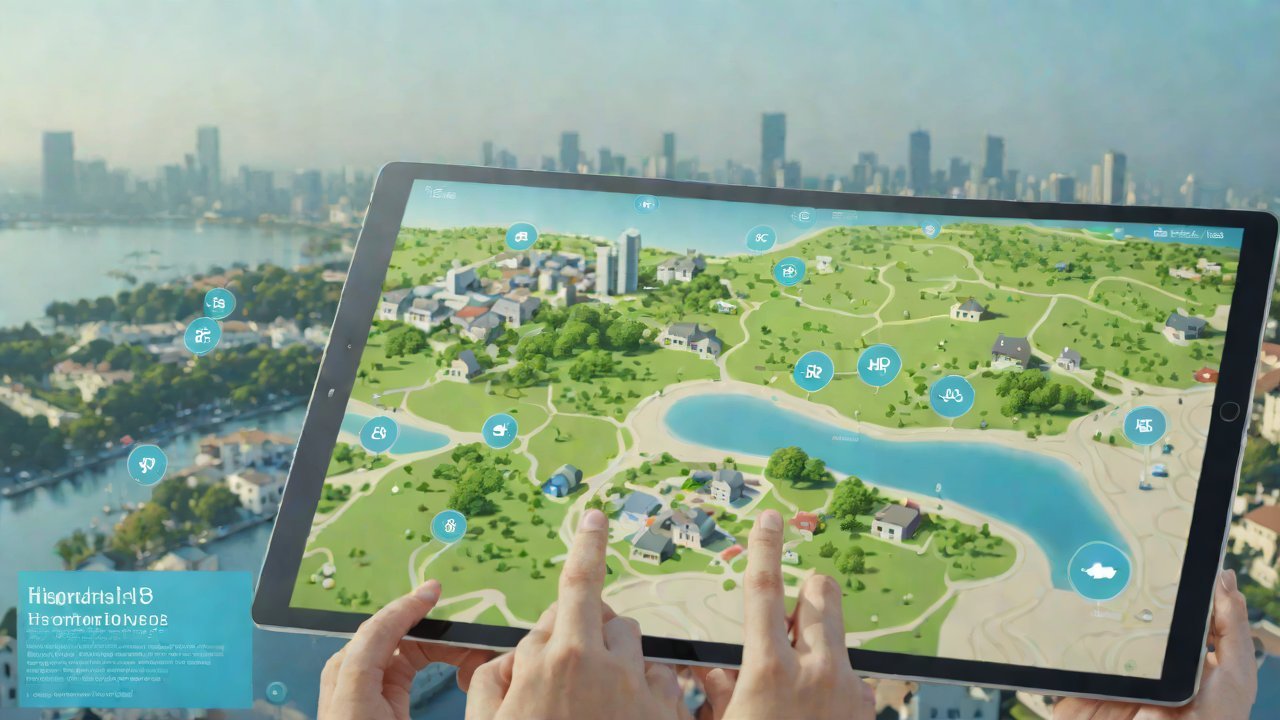
This platform leverages machine learning algorithms to analyze vast amounts of historical data on property sales, market trends, and environmental factors. By combining this data with satellite imaging and IoT sensors, the platform can generate accurate and up-to-date valuations of properties in real-time. This information is then recorded on a blockchain, providing an immutable and transparent record of asset assessment.
1. Current Challenges in Land Transfer
The current process of land transfer involves multiple stakeholders, including buyers, sellers, lawyers, surveyors, and government agencies. Each stakeholder has their own set of requirements, which can lead to delays and disputes. The lack of transparency in asset assessment is a significant challenge, as it can result in:
- Inaccurate valuations: Human error or bias can lead to inaccurate valuations, which can impact the sale price and subsequent transactions.
- Disputes: Inadequate documentation and unclear ownership records can lead to disputes between buyers and sellers.
- Delays: The manual process of land transfer can be time-consuming, leading to delays in deals and increased costs.
2. Emerging Technologies for Land Transfer
Emerging technologies have the potential to revolutionize the land transfer process by increasing transparency and efficiency. Some key players in this space include:
- Blockchain: A decentralized platform that enables secure, transparent, and tamper-proof record-keeping.
- Artificial Intelligence (AI): AI-powered tools can analyze vast amounts of data to provide accurate valuations and predict market trends.
- Internet of Things (IoT): IoT sensors can collect real-time data on property conditions, enabling more accurate assessments.
3. Decentralized Platform for Asset Assessment
The decentralized platform utilizes a combination of AI-powered asset assessment tools and blockchain technology to provide transparent and efficient land transfer processes. Key features include:
- Real-time Valuations: AI-powered tools generate accurate valuations in real-time, reducing the risk of human error.
- Immutable Records: Blockchain records ensure that all transactions are tamper-proof and transparent.
- Collaborative Platform: The platform enables multiple stakeholders to collaborate on land transfer processes, streamlining communication and reducing disputes.

Table 1: Comparison of Traditional vs. Decentralized Asset Assessment
| Traditional Method | Decentralized Method | |
|---|---|---|
| Transparency | Inadequate documentation and unclear ownership records | Immutable blockchain records provide transparent transaction history |
| Accuracy | Human error or bias can lead to inaccurate valuations | AI-powered tools generate accurate valuations in real-time |
| Efficiency | Manual process leads to delays and increased costs | Real-time valuations and collaborative platform streamline land transfer processes |

4. Benefits of Decentralized Asset Assessment
The decentralized platform offers several benefits, including:
- Increased Transparency: Immutable blockchain records provide a transparent transaction history.
- Improved Accuracy: AI-powered tools generate accurate valuations in real-time, reducing the risk of human error.
- Enhanced Efficiency: Real-time valuations and collaborative platform streamline land transfer processes.
5. Market Adoption and Future Outlook
The decentralized platform has the potential to revolutionize the land transfer process by increasing transparency and efficiency. Key factors influencing market adoption include:
- Regulatory Frameworks: Governments can play a crucial role in supporting or hindering the adoption of decentralized platforms.
- Market Demand: Buyers and sellers may be hesitant to adopt new technologies, but the benefits of increased transparency and accuracy may drive demand.
- Technological Advancements: Continued advancements in AI, blockchain, and IoT technologies will further enhance the capabilities of decentralized platforms.
Table 2: Market Adoption Roadmap
| Short-term (2023-2025) | Medium-term (2026-2030) | Long-term (2031-2040) | |
|---|---|---|---|
| Regulatory Frameworks | Governments begin to support decentralized platforms | Decentralized platforms become widely accepted | Regulators adapt to new technologies and business models |
| Market Demand | Early adopters drive demand for decentralized platforms | Mainstream adoption of decentralized platforms | Decentralized platforms become industry standard |

6. Conclusion
The decentralized platform has the potential to increase transparency and efficiency in land transfer processes by leveraging AI-powered asset assessment tools and blockchain technology. While challenges remain, including regulatory frameworks and market adoption, the benefits of increased transparency and accuracy may drive demand for decentralized platforms. As technological advancements continue, it is likely that decentralized platforms will become an integral part of the land transfer process.
IOT Cloud Platform
IOT Cloud Platform is an IoT portal established by a Chinese IoT company, focusing on technical solutions in the fields of agricultural IoT, industrial IoT, medical IoT, security IoT, military IoT, meteorological IoT, consumer IoT, automotive IoT, commercial IoT, infrastructure IoT, smart warehousing and logistics, smart home, smart city, smart healthcare, smart lighting, etc.
The IoT Cloud Platform blog is a top IoT technology stack, providing technical knowledge on IoT, robotics, artificial intelligence (generative artificial intelligence AIGC), edge computing, AR/VR, cloud computing, quantum computing, blockchain, smart surveillance cameras, drones, RFID tags, gateways, GPS, 3D printing, 4D printing, autonomous driving, etc.