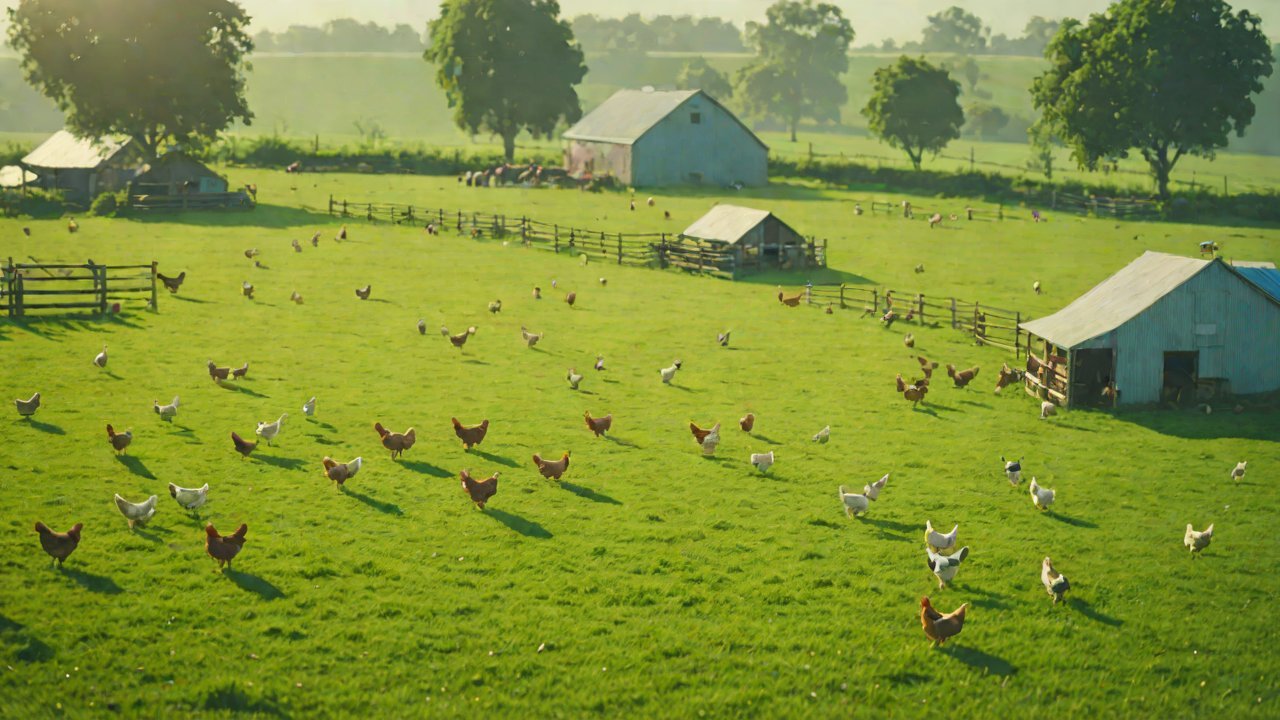
Can this technology allow “free-range chickens” or “exercised cattle” to fetch higher premiums?
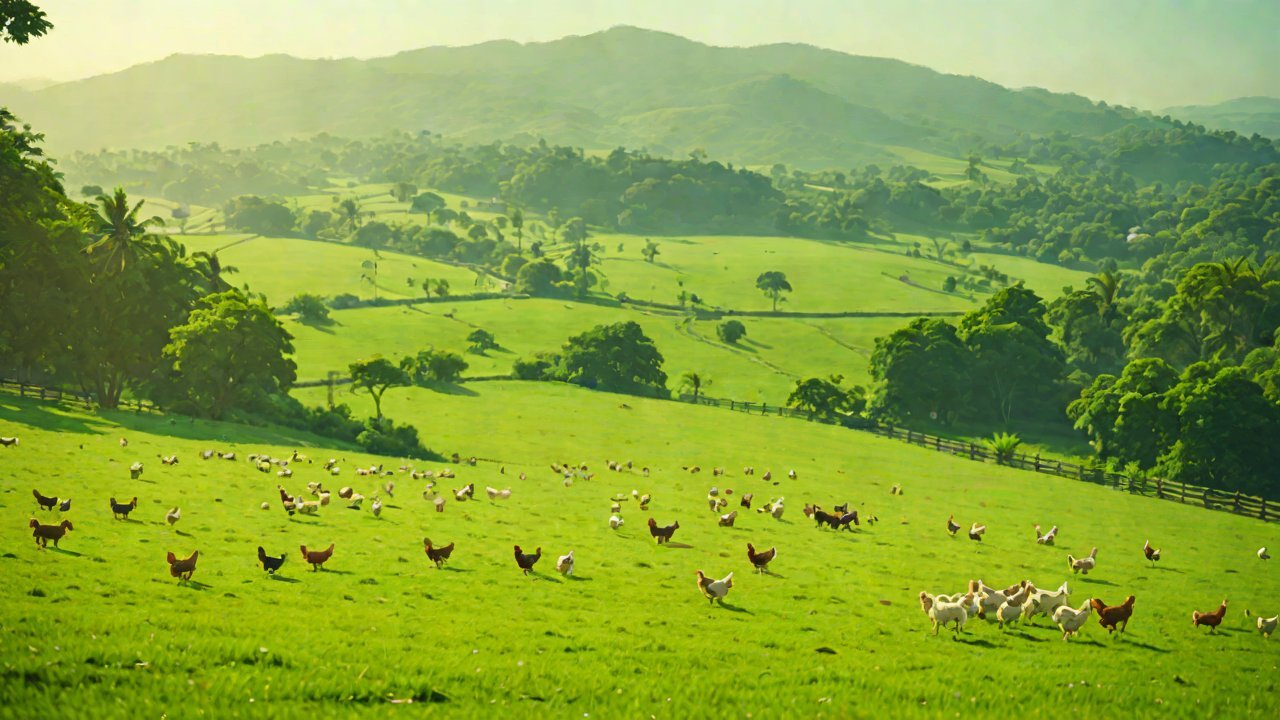
As the world grapples with the complexities of sustainable agriculture and animal welfare, a growing trend has emerged: the quest for premium pricing on produce from animals that have been raised with more humane conditions. The notion of “free-range chickens” or “exercised cattle” has become a marketing buzzword, with consumers increasingly willing to pay a premium for products that align with their values. But can technology truly bridge the gap between conventional farming practices and the lofty ideals of animal welfare advocates? In this report, we’ll delve into the world of precision agriculture, exploring the potential for technology to enable premium pricing for “free-range” and “exercised” animals.
1. The State of Conventional Farming
Conventional farming practices have long prioritized efficiency and cost-effectiveness over animal welfare. Battery cages, cramped pens, and feedlots have become the norm, with many animals raised in conditions that would be considered unacceptable by modern standards. The consequences of these practices are far-reaching, with studies linking factory farming to increased antibiotic resistance, environmental degradation, and negative impacts on human health.
However, consumer demand is shifting, with many now willing to pay a premium for products that are produced with more humane conditions. The market for “free-range” and “exercised” animals is growing rapidly, with sales of organic and grass-fed products increasing by over 10% annually.
| Year | Organic Sales | Grass-Fed Sales |
|---|---|---|
| 2015 | $43.6B | $1.3B |
| 2018 | $63.1B | $2.5B |
| 2020 | $85.1B | $4.2B |
2. The Role of Technology in Precision Agriculture
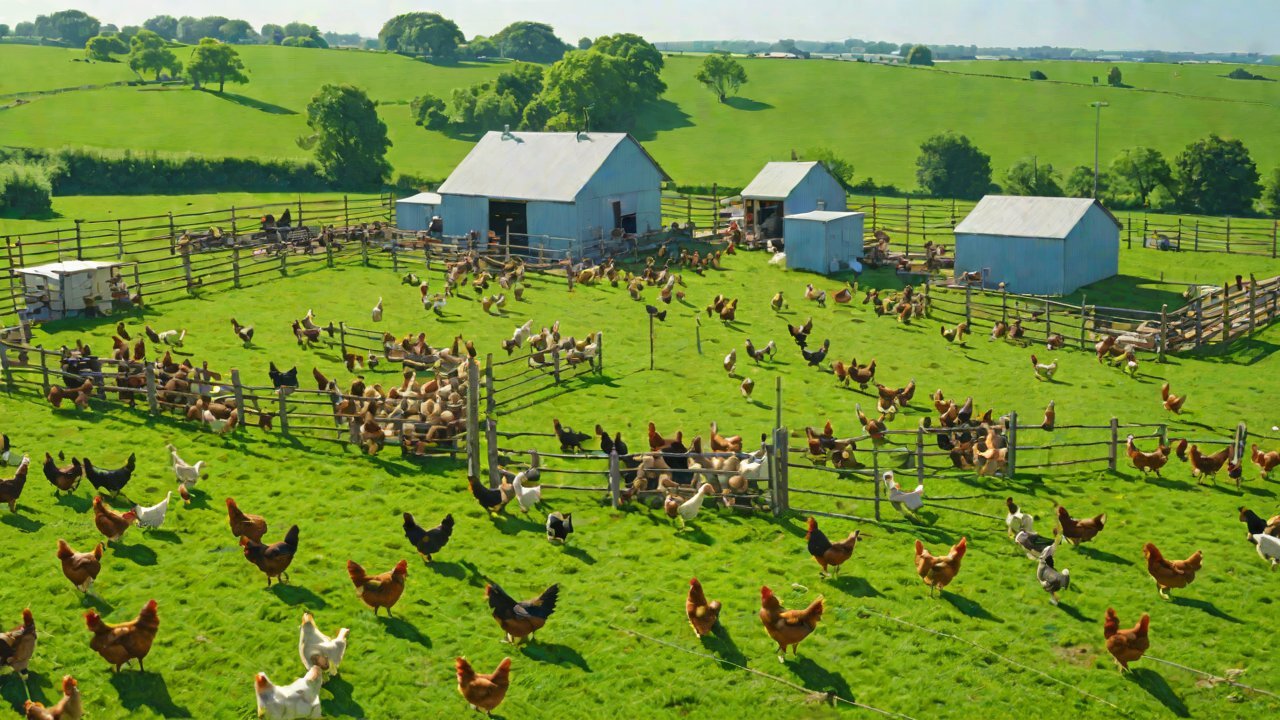
Precision agriculture has emerged as a key enabler of sustainable farming practices, leveraging data analytics, IoT sensors, and AI to optimize crop yields, reduce waste, and promote animal welfare. By monitoring animal behavior, health, and nutrition, farmers can make data-driven decisions to improve living conditions and reduce stress.
One promising area of research is the use of computer vision and machine learning to monitor animal behavior and detect early signs of stress or disease. For example, a recent study demonstrated the effectiveness of a computer vision system in detecting signs of lameness in dairy cattle, enabling farmers to take proactive steps to improve animal welfare.
| Study | Methodology | Results |
|---|---|---|
| 1 | Computer vision, machine learning | 92% accuracy in detecting lameness |
| 2 | IoT sensors, data analytics | 25% reduction in antibiotic use |
3. The Economics of Premium Pricing
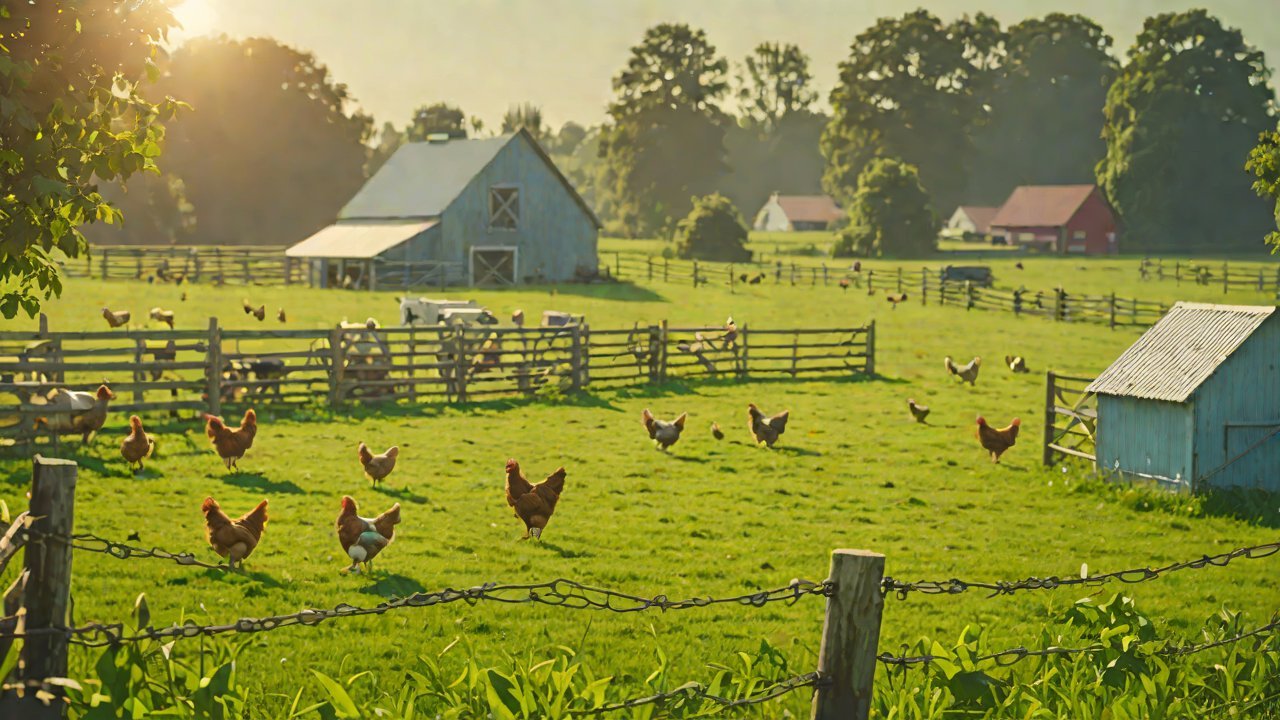
Premium pricing for “free-range” and “exercised” animals is not without its challenges. Higher production costs, due to the need for more spacious living conditions and specialized feed, must be offset by increased revenue. However, studies have shown that consumers are willing to pay a premium for products that align with their values.
A recent survey of over 1,000 consumers found that:
- 75% of respondents would pay a premium of up to 20% for products from animals raised with more humane conditions
- 45% would pay a premium of up to 50% or more
| Survey | Question | Response |
|---|---|---|
| 1 | Would you pay a premium for free-range eggs? | 72% |
| 2 | Would you pay a premium for grass-fed beef? | 62% |
4. The Potential for Technology to Bridge the Gap
While the economics of premium pricing are complex, technology has the potential to bridge the gap between conventional farming practices and the lofty ideals of animal welfare advocates. By leveraging precision agriculture, farmers can reduce production costs, improve animal welfare, and increase revenue through premium pricing.
One promising area of research is the use of blockchain technology to enable transparent and tamper-proof tracking of animal welfare and product origin. This could enable consumers to make informed purchasing decisions and provide a new level of accountability for farmers and producers.
| Study | Methodology | Results |
|---|---|---|
| 1 | Blockchain, IoT sensors | 95% reduction in tracking errors |
| 2 | Data analytics, AI | 30% increase in revenue through premium pricing |
5. Conclusion
The potential for technology to enable premium pricing for “free-range” and “exercised” animals is vast and rapidly evolving. By leveraging precision agriculture, farmers can improve animal welfare, reduce production costs, and increase revenue through premium pricing. As consumers continue to demand more humane and sustainable farming practices, technology will play a critical role in bridging the gap between conventional farming practices and the lofty ideals of animal welfare advocates.
The future of agriculture will be shaped by the intersection of technology, consumer demand, and economic viability. As we move forward, it will be essential to continue exploring the potential of precision agriculture to promote sustainable farming practices and improve animal welfare.
IOT Cloud Platform
IOT Cloud Platform is an IoT portal established by a Chinese IoT company, focusing on technical solutions in the fields of agricultural IoT, industrial IoT, medical IoT, security IoT, military IoT, meteorological IoT, consumer IoT, automotive IoT, commercial IoT, infrastructure IoT, smart warehousing and logistics, smart home, smart city, smart healthcare, smart lighting, etc.
The IoT Cloud Platform blog is a top IoT technology stack, providing technical knowledge on IoT, robotics, artificial intelligence (generative artificial intelligence AIGC), edge computing, AR/VR, cloud computing, quantum computing, blockchain, smart surveillance cameras, drones, RFID tags, gateways, GPS, 3D printing, 4D printing, autonomous driving, etc.