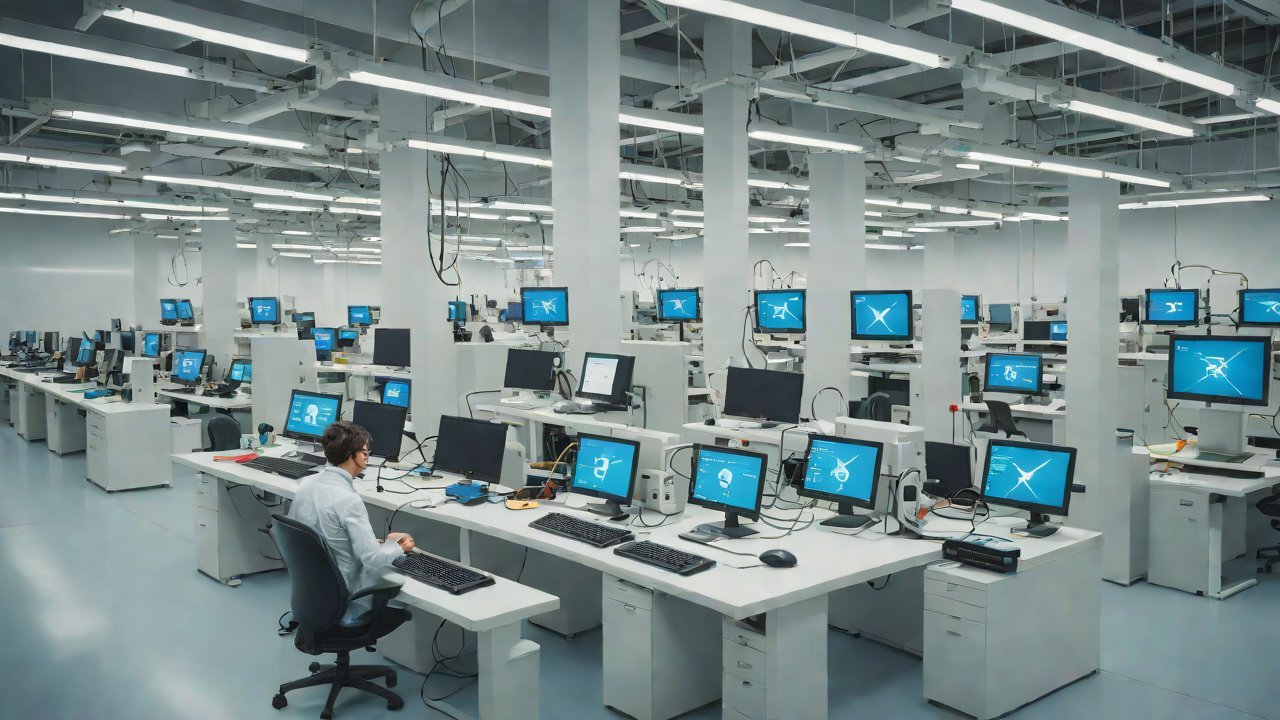
Can this software-defined production line change hardware functions with a single click?
Software-defined production lines have been touted as a revolutionary innovation in manufacturing, promising to streamline processes and increase efficiency. However, a key aspect of this concept is the ability to change hardware functions with a single click, which has sparked debate among industry experts. Can this be achieved, and what are the implications of such a capability? This report delves into the technical and market aspects of software-defined production lines, exploring the feasibility of changing hardware functions with a single click.
1. Background and Market Analysis
Software-defined production lines are an extension of the software-defined everything (SDE) concept, which has gained traction in recent years. SDE refers to the ability to program and manage various aspects of a system, from networking to computing, using software-defined networking (SDN) and software-defined storage (SDS) solutions. This concept has been applied to various industries, including manufacturing, where it has been used to create flexible and scalable production lines.
The market for software-defined production lines is expected to grow significantly in the coming years, driven by the increasing demand for automation and digital transformation in manufacturing. According to a report by MarketsandMarkets, the global software-defined manufacturing market is expected to reach $15.2 billion by 2025, growing at a compound annual growth rate (CAGR) of 23.6% during the forecast period.
| Market Segment | 2020 | 2025 | CAGR |
|---|---|---|---|
| Software-Defined Manufacturing | $4.5B | $15.2B | 23.6% |
| Software-Defined Networking | $10.3B | $25.6B | 17.3% |
| Software-Defined Storage | $6.2B | $13.4B | 12.1% |
2. Technical Feasibility
To determine the technical feasibility of changing hardware functions with a single click, it is essential to understand the underlying architecture of software-defined production lines. These systems typically consist of a control layer, which is responsible for managing the production process, and a hardware layer, which comprises the physical equipment and machinery.
The control layer is usually implemented using software-defined networking (SDN) solutions, which provide a programmable interface for managing network traffic and configuring network devices. SDN solutions use a central controller to manage the network, allowing for real-time configuration and optimization.
| SDN Solution | Description |
|---|---|
| OpenFlow | Open standard for SDN, allowing for programmable network control |
| ONOS | Open-source SDN controller, providing real-time network management |
| Floodlight | Open-source SDN controller, supporting network virtualization |
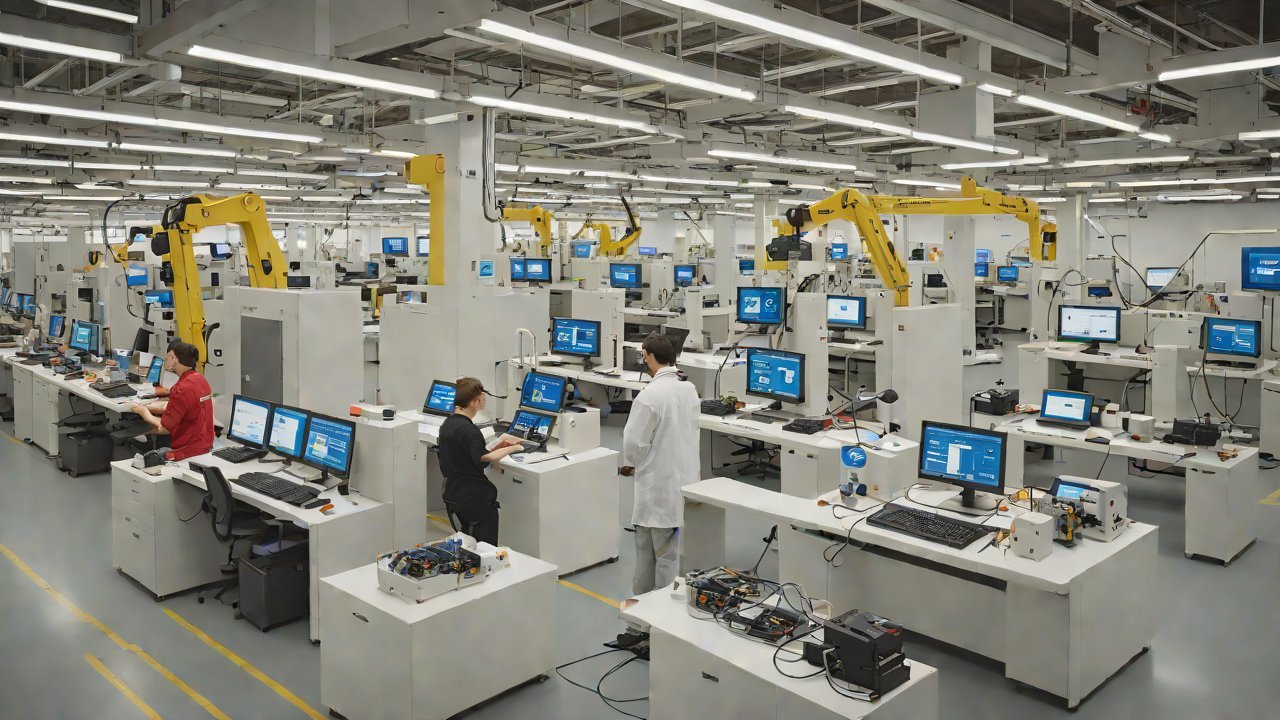
The hardware layer, on the other hand, consists of physical equipment and machinery, such as robots, conveyors, and sensors. To change hardware functions with a single click, the control layer must be able to communicate with the hardware layer and reconfigure the equipment accordingly.
| Hardware Layer | Description |
|---|---|
| Robots | Industrial robots, capable of performing various tasks |
| Conveyors | Automated conveyor systems, used for transporting goods |
| Sensors | Industrial sensors, used for monitoring and controlling production |
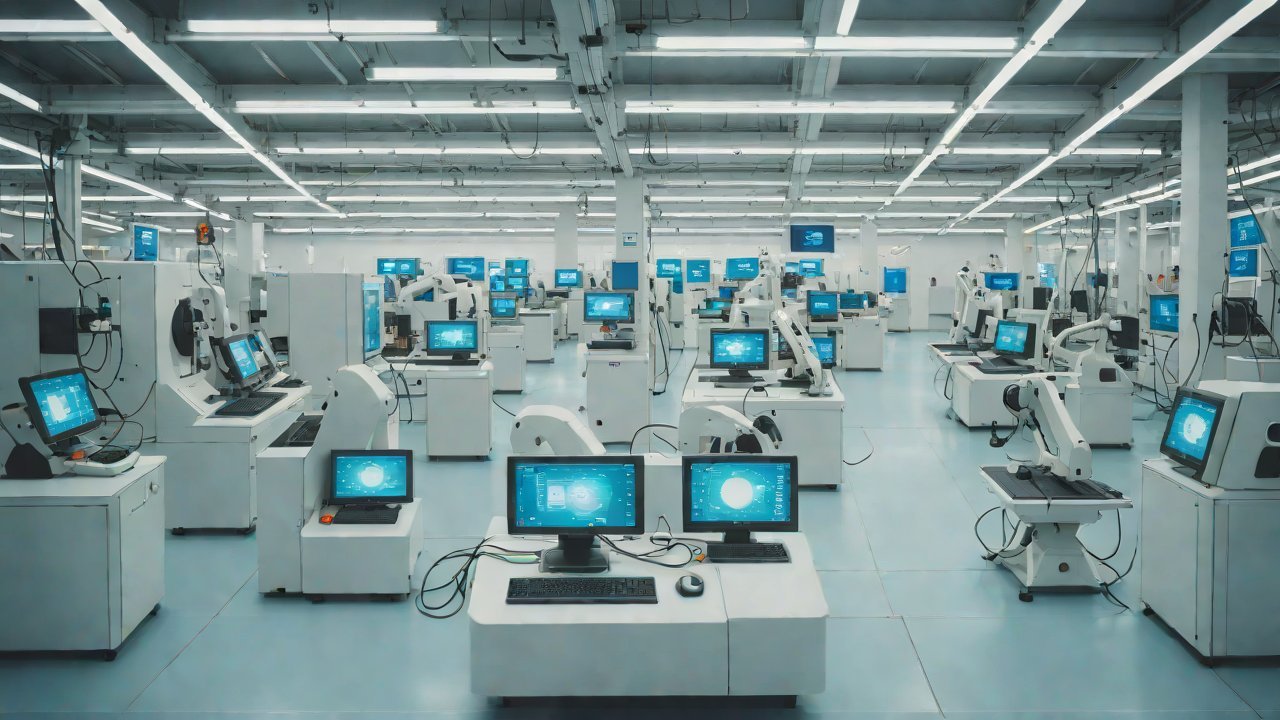
3. Changing Hardware Functions with a Single Click
Changing hardware functions with a single click requires a high degree of automation and flexibility in the production line. This can be achieved through the use of advanced software-defined networking solutions, such as SDN controllers and network functions virtualization (NFV) platforms.
NFV platforms allow for the virtualization of network functions, enabling the creation of virtual network functions (VNFs) that can be dynamically provisioned and scaled. This allows for the creation of flexible and scalable production lines, where hardware functions can be changed with a single click.
| NFV Platform | Description |
|---|---|
| VMware NSX | NFV platform, providing virtualization and network functions |
| OpenStack | Open-source NFV platform, supporting cloud-based infrastructure |
| Huawei CloudEngine | NFV platform, providing virtualization and network functions |
4. Implications and Challenges
Changing hardware functions with a single click has significant implications for the manufacturing industry. It enables the creation of flexible and scalable production lines, allowing for rapid response to changing market demands and increased efficiency.
However, there are also challenges associated with this capability. For example, the integration of software-defined production lines with existing hardware infrastructure can be complex and time-consuming. Additionally, the use of advanced software-defined networking solutions requires significant investment in training and expertise.
| Challenge | Description |
|---|---|
| Integration Complexity | Complexity associated with integrating software-defined production lines with existing hardware infrastructure |
| Training and Expertise | Need for significant investment in training and expertise to utilize advanced software-defined networking solutions |
| Security Risks | Potential security risks associated with the use of advanced software-defined networking solutions |
5. Conclusion
In conclusion, software-defined production lines have the potential to revolutionize the manufacturing industry by enabling the creation of flexible and scalable production lines. Changing hardware functions with a single click is a key aspect of this concept, which can be achieved through the use of advanced software-defined networking solutions.
While there are challenges associated with this capability, the benefits of increased efficiency and flexibility make it an attractive option for manufacturers. As the market for software-defined production lines continues to grow, it is likely that we will see increased adoption of this technology in the coming years.
| Recommendation | Description |
|---|---|
| Invest in Training and Expertise | Significant investment in training and expertise required to utilize advanced software-defined networking solutions |
| Integrate with Existing Infrastructure | Complexity associated with integrating software-defined production lines with existing hardware infrastructure |
| Monitor Security Risks | Potential security risks associated with the use of advanced software-defined networking solutions require monitoring and mitigation |
IOT Cloud Platform
IOT Cloud Platform is an IoT portal established by a Chinese IoT company, focusing on technical solutions in the fields of agricultural IoT, industrial IoT, medical IoT, security IoT, military IoT, meteorological IoT, consumer IoT, automotive IoT, commercial IoT, infrastructure IoT, smart warehousing and logistics, smart home, smart city, smart healthcare, smart lighting, etc.
The IoT Cloud Platform blog is a top IoT technology stack, providing technical knowledge on IoT, robotics, artificial intelligence (generative artificial intelligence AIGC), edge computing, AR/VR, cloud computing, quantum computing, blockchain, smart surveillance cameras, drones, RFID tags, gateways, GPS, 3D printing, 4D printing, autonomous driving, etc.



