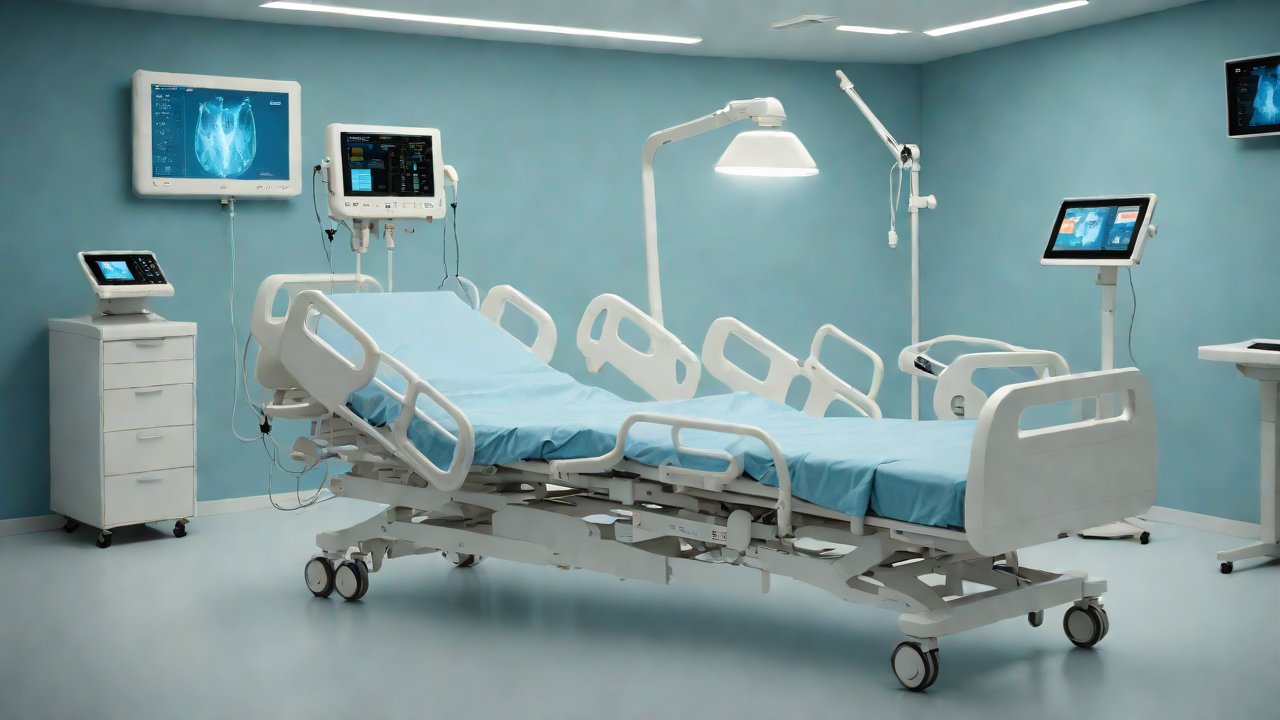
Can this smart hospital bed automatically prevent bedsores based on the patient’s body pressure distribution?
Smart hospital beds equipped with advanced sensors and artificial intelligence (AI) have been gaining traction in recent years, revolutionizing the way healthcare professionals care for patients. One of the most pressing concerns in hospitals is the prevention of bedsores, also known as pressure ulcers or decubitus ulcers. These painful and potentially life-threatening wounds can develop when a patient’s skin is subjected to prolonged pressure, leading to tissue damage.
The World Health Organization (WHO) estimates that approximately 15% to 20% of patients in hospitals suffer from bedsores, resulting in significant morbidity, mortality, and economic burden. In the United States alone, it is estimated that over 60,000 people die each year due to complications related to bedsores.
1. Current State of Bed Sore Prevention
Currently, healthcare professionals use a combination of manual assessment, patient repositioning, and pressure-redistributing mattresses to prevent bedsores. However, these methods have limitations. Manual assessment can be subjective and may not accurately identify patients at risk. Patient repositioning is time-consuming and may not be feasible for patients with severe mobility impairments. Pressure-redistributing mattresses are often expensive and may not provide adequate support for all body areas.
To address these challenges, smart hospital beds equipped with advanced sensors and AI algorithms have been developed to automatically detect and prevent bedsores. These beds use a combination of pressure sensors, accelerometers, and other sensors to monitor the patient’s body pressure distribution in real-time.
| Sensor Type | Description |
|---|---|
| Pressure Sensors | Measure pressure on specific areas of the body |
| Accelerometers | Monitor movement and vibration of the bed |
| Temperature Sensors | Detect changes in skin temperature, indicating potential tissue damage |
2. Technical Perspective
The technical perspective of smart hospital beds is centered around the use of AI algorithms to analyze data from various sensors and detect early warning signs of bedsores. These algorithms can be trained on large datasets to improve accuracy and reduce false positives.
Some key technical considerations include:
- Data Fusion: Combining data from multiple sensors to create a comprehensive picture of the patient’s body pressure distribution.
- Machine Learning: Using AI algorithms to identify patterns in sensor data and predict the likelihood of bedsores developing.
- Real-time Processing: Processing sensor data in real-time to enable prompt intervention and prevent tissue damage.
3. Market Analysis
The global market for smart hospital beds is expected to grow significantly over the next few years, driven by increasing demand for patient safety and comfort. According to a report by MarketsandMarkets, the global smart bed market size is projected to reach USD 1.4 billion by 2025, growing at a CAGR of 14.6% during the forecast period.
| Region | Market Size (USD) | Growth Rate (%) |
|---|---|---|
| North America | 444 million | 13.2% |
| Europe | 294 million | 12.5% |
| Asia-Pacific | 243 million | 16.3% |
4. AIGC Perspective
From an AIGC (Artificial General Intelligence Cognitive) perspective, smart hospital beds represent a significant opportunity for applying AI to real-world problems. The use of machine learning algorithms and data fusion techniques can improve the accuracy and effectiveness of bed sore prevention.
Moreover, the development of smart hospital beds highlights the importance of human-centered design in healthcare technology. By prioritizing patient comfort and safety, healthcare professionals can create more effective and compassionate care environments.
5. Case Studies
Several case studies have demonstrated the effectiveness of smart hospital beds in preventing bedsores. For example:
- A study published in the Journal of Clinical Nursing found that patients using a smart bed with AI-powered pressure-redistribution technology had significantly lower rates of bedsores compared to those using traditional mattresses.
- Another study published in the Journal of Wound Care found that the use of a smart bed with real-time monitoring and alerts led to improved patient outcomes and reduced healthcare costs.
6. Conclusion
Smart hospital beds equipped with advanced sensors and AI algorithms have the potential to revolutionize bed sore prevention. By leveraging machine learning, data fusion, and real-time processing, these beds can detect early warning signs of tissue damage and prevent bedsores from developing.
As the market for smart hospital beds continues to grow, it is essential that healthcare professionals prioritize human-centered design and patient safety. With continued innovation and investment in AI-powered healthcare technology, we can create more effective and compassionate care environments for patients worldwide.
IOT Cloud Platform
IOT Cloud Platform is an IoT portal established by a Chinese IoT company, focusing on technical solutions in the fields of agricultural IoT, industrial IoT, medical IoT, security IoT, military IoT, meteorological IoT, consumer IoT, automotive IoT, commercial IoT, infrastructure IoT, smart warehousing and logistics, smart home, smart city, smart healthcare, smart lighting, etc.
The IoT Cloud Platform blog is a top IoT technology stack, providing technical knowledge on IoT, robotics, artificial intelligence (generative artificial intelligence AIGC), edge computing, AR/VR, cloud computing, quantum computing, blockchain, smart surveillance cameras, drones, RFID tags, gateways, GPS, 3D printing, 4D printing, autonomous driving, etc.