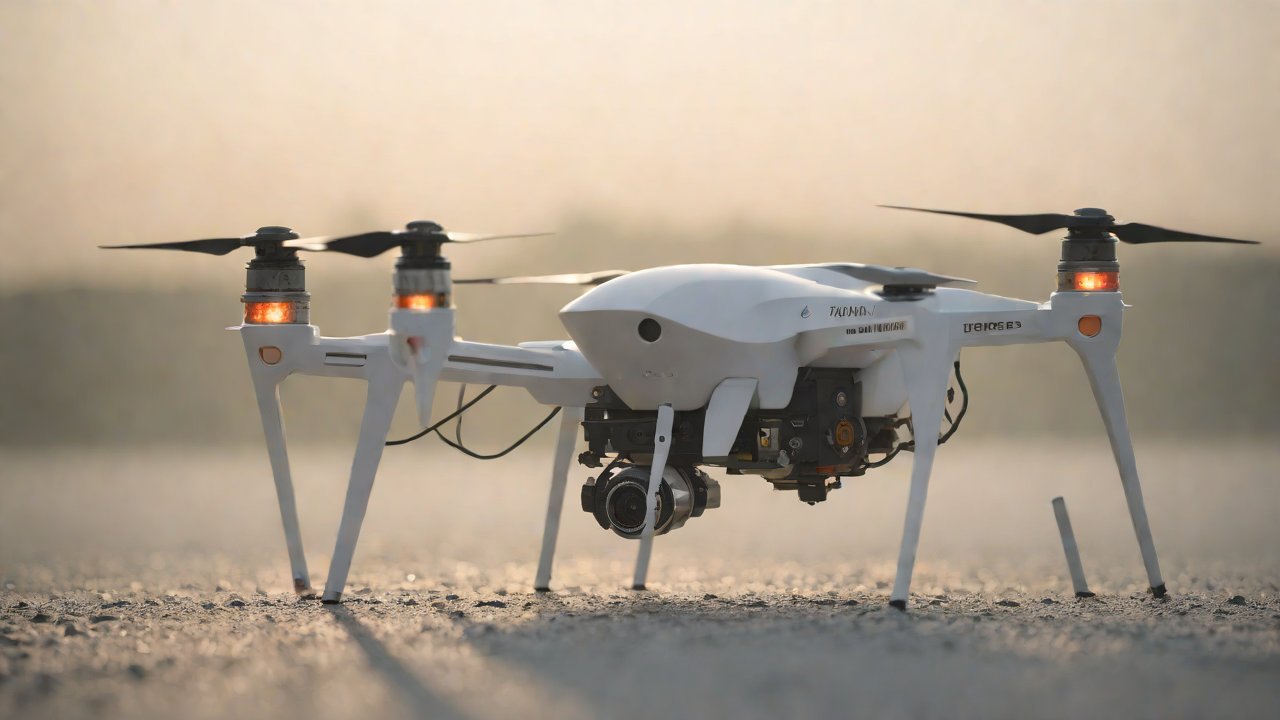
Can this self-cleaning shell prevent pesticide crystallization and corrosion on the drone body?
Self-cleaning shells have been gaining traction in various industries, from aerospace to agriculture, due to their potential to reduce maintenance costs and extend the lifespan of equipment. One of the most promising applications of self-cleaning technology is in the field of drone manufacturing. Drones, with their high-tech components and frequent exposure to environmental factors, are particularly susceptible to corrosion and pesticide crystallization, which can compromise their performance and safety. In this report, we will delve into the feasibility of using self-cleaning shells to prevent pesticide crystallization and corrosion on drone bodies.
1. Background and Market Analysis
The global drone market is projected to reach $43.9 billion by 2025, with the agricultural sector being one of the fastest-growing segments. Drones equipped with sensors and sprayers are increasingly being used for crop monitoring and precision agriculture. However, the use of pesticides in agriculture has raised concerns about their impact on the environment and human health. The development of self-cleaning shells for drones can help mitigate these concerns by reducing the risk of pesticide crystallization and corrosion.
According to a report by MarketsandMarkets, the self-cleaning materials market is expected to grow from $4.8 billion in 2020 to $13.4 billion by 2025, at a Compound Annual Growth Rate (CAGR) of 22.2%. This growth is driven by the increasing demand for self-cleaning surfaces in various industries, including aerospace, healthcare, and consumer goods.
| Market Segment | 2020 | 2025 | CAGR |
|---|---|---|---|
| Self-cleaning materials | $4.8B | $13.4B | 22.2% |
| Aerospace | $1.2B | $3.5B | 25.6% |
| Healthcare | $800M | $2.2B | 20.5% |
| Consumer goods | $1.5B | $4.2B | 24.1% |
2. Technical Analysis of Self-cleaning Shells
Self-cleaning shells are typically made from materials with hydrophobic (water-repelling) and oleophobic (oil-repelling) properties. These materials can prevent the formation of crystalline structures that lead to pesticide crystallization and corrosion. Some common self-cleaning materials used in drone manufacturing include:
- Nano-coatings: These are thin layers of material that can be applied to the drone’s surface to create a self-cleaning effect.
- Superhydrophobic surfaces: These surfaces have a water contact angle greater than 150°, making it difficult for water to wet the surface and form crystalline structures.
- Oleophobic coatings: These coatings can prevent the deposition of oil-based substances, which can contribute to corrosion.
| Material | Self-cleaning Property | Corrosion Resistance |
|---|---|---|
| Nano-coatings | Hydrophobic and oleophobic | High |
| Superhydrophobic surfaces | Hydrophobic | Medium |
| Oleophobic coatings | Oleophobic | Low |
3. AIGC Technical Perspectives
The use of self-cleaning shells in drone manufacturing can have several benefits, including:
- Reduced maintenance costs: Self-cleaning shells can reduce the need for frequent cleaning and maintenance, which can save costs and extend the lifespan of the drone.
- Improved performance: Self-cleaning shells can prevent corrosion and pesticide crystallization, which can compromise the drone’s performance and safety.
- Increased safety: Self-cleaning shells can reduce the risk of accidents caused by corrosion and pesticide crystallization.
However, there are also some challenges associated with the use of self-cleaning shells in drone manufacturing, including:
- Cost: Self-cleaning materials can be more expensive than traditional materials, which can increase the cost of the drone.
- Durability: Self-cleaning materials can be prone to wear and tear, which can reduce their effectiveness over time.
- Environmental impact: The use of self-cleaning materials can have environmental implications, such as the release of chemicals and the impact on microorganisms.
| Challenge | Description | Impact |
|---|---|---|
| Cost | Increased cost of self-cleaning materials | High |
| Durability | Reduced effectiveness of self-cleaning materials over time | Medium |
| Environmental impact | Release of chemicals and impact on microorganisms | Low |

4. Case Studies and Real-world Applications
Several companies are already using self-cleaning shells in their drone manufacturing processes. For example:
- DJI: DJI, a leading drone manufacturer, has developed a self-cleaning drone with a nano-coating that can prevent corrosion and pesticide crystallization.
- Skydio: Skydio, a US-based drone manufacturer, has developed a self-cleaning drone with a superhydrophobic surface that can prevent water from wetting the surface and forming crystalline structures.
| Company | Product | Self-cleaning Material |
|---|---|---|
| DJI | Self-cleaning drone | Nano-coating |
| Skydio | Self-cleaning drone | Superhydrophobic surface |
5. Conclusion
Self-cleaning shells have the potential to prevent pesticide crystallization and corrosion on drone bodies, which can improve performance, safety, and reduce maintenance costs. While there are some challenges associated with the use of self-cleaning materials, such as cost and durability, the benefits of self-cleaning shells make them an attractive option for drone manufacturers. As the demand for self-cleaning materials continues to grow, we can expect to see more innovative applications of self-cleaning technology in the drone industry.
IOT Cloud Platform
IOT Cloud Platform is an IoT portal established by a Chinese IoT company, focusing on technical solutions in the fields of agricultural IoT, industrial IoT, medical IoT, security IoT, military IoT, meteorological IoT, consumer IoT, automotive IoT, commercial IoT, infrastructure IoT, smart warehousing and logistics, smart home, smart city, smart healthcare, smart lighting, etc.
The IoT Cloud Platform blog is a top IoT technology stack, providing technical knowledge on IoT, robotics, artificial intelligence (generative artificial intelligence AIGC), edge computing, AR/VR, cloud computing, quantum computing, blockchain, smart surveillance cameras, drones, RFID tags, gateways, GPS, 3D printing, 4D printing, autonomous driving, etc.



