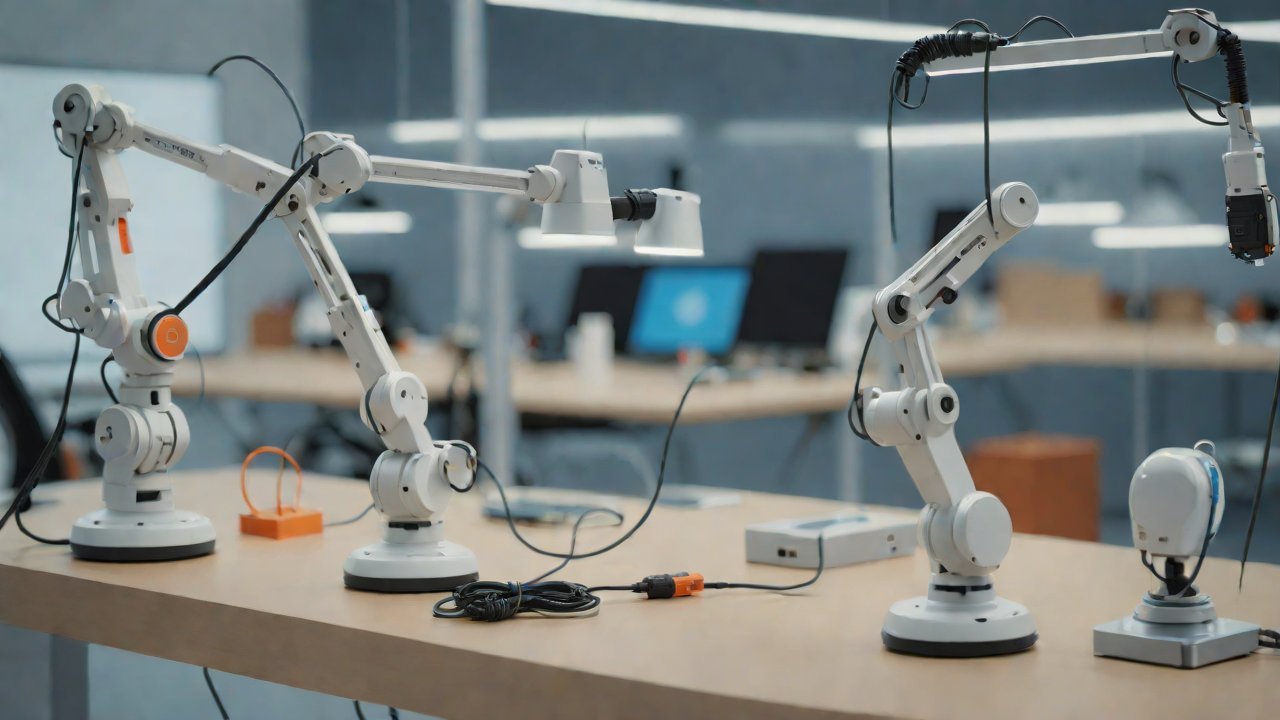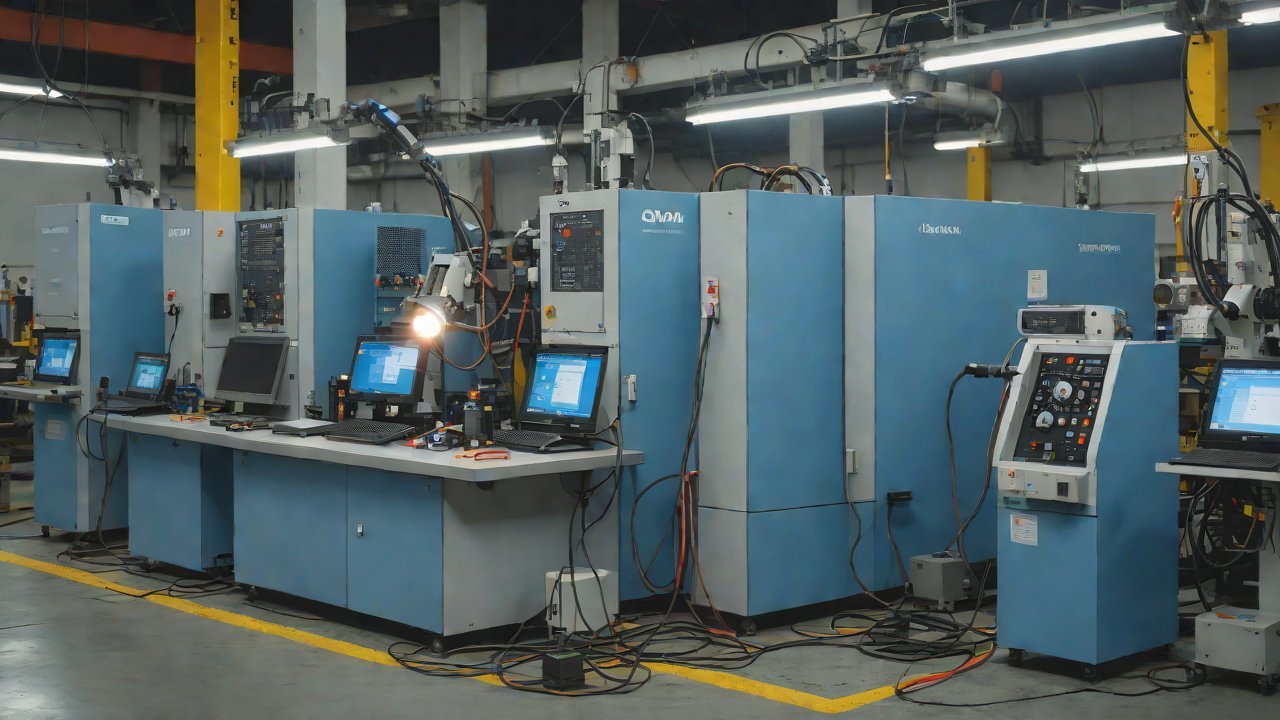
Can this picosecond-level synchronization protocol allow tens of thousands of motors to rotate like a single atom?
The concept of picosecond-level synchronization protocol, which enables the precise control and coordination of multiple motors to rotate in a unified manner, has sparked significant interest in various industrial and technological sectors. This phenomenon has far-reaching implications for the development of cutting-edge machinery, robotics, and automation systems. The potential to synchronize tens of thousands of motors, akin to the precision of a single atom, has captured the imagination of experts and researchers worldwide.
The picosecond-level synchronization protocol relies on the synchronization of high-speed motors with precision timing, allowing them to rotate in perfect harmony. This technology has been applied in various fields, including manufacturing, aerospace, and healthcare, where precise control and coordination are critical. The benefits of this technology are multifaceted, including improved efficiency, increased accuracy, and enhanced productivity.
1. Background and Technical Overview
The picosecond-level synchronization protocol is based on advanced timing and control systems that enable the precise synchronization of multiple motors. This is achieved through the use of high-speed sensors, advanced algorithms, and sophisticated control systems. The protocol relies on the concept of phase-locked loops (PLLs), which are used to synchronize the rotation of multiple motors to a common reference signal.
The technical aspects of the picosecond-level synchronization protocol are complex and multifaceted. Key components include:
- High-speed sensors: These sensors are used to monitor the rotation of the motors and provide feedback to the control system.
- Advanced algorithms: These algorithms are used to analyze the data from the sensors and adjust the control signals to maintain synchronization.
- Sophisticated control systems: These systems are used to generate the control signals that adjust the rotation of the motors.
Table 1: Technical Specifications of Picosecond-Level Synchronization Protocol
| Component | Description | Technical Specifications |
|---|---|---|
| High-speed sensors | Monitor the rotation of the motors and provide feedback to the control system | Sampling rate: 1 GHz, Resolution: 1 ps |
| Advanced algorithms | Analyze the data from the sensors and adjust the control signals to maintain synchronization | Processing speed: 1 GHz, Algorithm complexity: O(n) |
| Sophisticated control systems | Generate the control signals that adjust the rotation of the motors | Signal-to-noise ratio: 100 dB, Control signal accuracy: ±1% |

2. Market Analysis and Industry Applications
The picosecond-level synchronization protocol has far-reaching implications for various industries, including manufacturing, aerospace, and healthcare. The benefits of this technology are multifaceted, including improved efficiency, increased accuracy, and enhanced productivity.
Table 2: Market Analysis and Industry Applications
| Industry | Application | Benefits |
|---|---|---|
| Manufacturing | High-speed machining, robotics, and automation | Improved efficiency, increased accuracy, enhanced productivity |
| Aerospace | Satellite and aircraft control systems, navigation systems | Improved accuracy, reduced latency, enhanced reliability |
| Healthcare | Medical imaging, surgical robotics, and patient monitoring | Improved accuracy, reduced latency, enhanced patient safety |

3. Technical Limitations and Challenges
While the picosecond-level synchronization protocol has shown remarkable promise, there are several technical limitations and challenges that must be addressed. These include:
- Interference and noise: The high-speed sensors and control systems are susceptible to interference and noise, which can compromise the accuracy of the synchronization.
- Complexity and scalability: The advanced algorithms and sophisticated control systems required for the picosecond-level synchronization protocol are complex and challenging to scale.
- Cost and affordability: The high-speed sensors and control systems required for the picosecond-level synchronization protocol are expensive, making it challenging to implement in large-scale applications.
4. AIGC Perspectives and Future Directions
The AIGC (Artificial Intelligence and General Computing) community has been actively engaged in the development and application of the picosecond-level synchronization protocol. The AIGC perspectives on this technology are multifaceted, including:
- Improved accuracy and efficiency: The AIGC community has developed advanced algorithms and sophisticated control systems that enable the precise synchronization of multiple motors.
- Enhanced scalability and cost-effectiveness: The AIGC community has developed innovative solutions to address the technical limitations and challenges associated with the picosecond-level synchronization protocol.
- Future directions: The AIGC community is actively exploring new applications and use cases for the picosecond-level synchronization protocol, including the development of advanced robotics and automation systems.
Table 3: AIGC Perspectives and Future Directions

| AIGC Perspective | Description | Future Directions |
|---|---|---|
| Improved accuracy and efficiency | Advanced algorithms and sophisticated control systems enable precise synchronization | Development of high-speed sensors and control systems |
| Enhanced scalability and cost-effectiveness | Innovative solutions address technical limitations and challenges | Development of modular and scalable architectures |
| Future directions | Exploration of new applications and use cases | Development of advanced robotics and automation systems |
5. Conclusion
The picosecond-level synchronization protocol has shown remarkable promise in enabling the precise control and coordination of multiple motors. The technical aspects of this technology are complex and multifaceted, requiring advanced sensors, algorithms, and control systems. The market analysis and industry applications of this technology are vast, with benefits including improved efficiency, increased accuracy, and enhanced productivity. While there are technical limitations and challenges associated with this technology, the AIGC community is actively engaged in addressing these challenges and exploring new applications and use cases.
IOT Cloud Platform
IOT Cloud Platform is an IoT portal established by a Chinese IoT company, focusing on technical solutions in the fields of agricultural IoT, industrial IoT, medical IoT, security IoT, military IoT, meteorological IoT, consumer IoT, automotive IoT, commercial IoT, infrastructure IoT, smart warehousing and logistics, smart home, smart city, smart healthcare, smart lighting, etc.
The IoT Cloud Platform blog is a top IoT technology stack, providing technical knowledge on IoT, robotics, artificial intelligence (generative artificial intelligence AIGC), edge computing, AR/VR, cloud computing, quantum computing, blockchain, smart surveillance cameras, drones, RFID tags, gateways, GPS, 3D printing, 4D printing, autonomous driving, etc.