
Can this model automatically filter out abnormal peaks caused by small animal interference?
In recent years, advancements in Artificial Intelligence for Generative Conditioning (AIGC) have led to significant improvements in various applications, including audio processing and analysis. One of the most promising areas of research is the development of models capable of identifying and filtering out abnormal peaks caused by small animal interference in audio signals. These peaks can be particularly problematic in soundscapes where accuracy and precision are crucial, such as in wildlife monitoring or environmental studies.
The task at hand requires an AIGC model to differentiate between genuine audio data and anomalies introduced by small animals. This is a challenging problem due to the vast diversity of animal sounds and their potential overlap with human-generated noise. However, leveraging techniques from machine learning and signal processing can provide the necessary tools for tackling this challenge.
1. Background
To develop an effective model capable of filtering out abnormal peaks caused by small animal interference, it’s essential to understand the underlying principles and technologies involved. This includes a review of relevant literature on AIGC models, their architectures, and the techniques used in audio processing. Additionally, we’ll delve into the specifics of small animal sounds and their characteristics, which can serve as the foundation for our model.
1.1 Audio Processing Techniques
Audio signals are complex time-series data that can be processed using a variety of algorithms. For filtering out abnormal peaks, techniques such as wavelet denoising and spectral subtraction can be employed to remove noise while preserving signal integrity. However, these methods may not be sufficient for distinguishing between human-generated noise and small animal sounds, which often overlap in frequency ranges.
1.2 Machine Learning Approaches
Machine learning models have shown remarkable success in audio classification tasks, including identifying specific animal species based on their vocalizations. Techniques such as convolutional neural networks (CNNs) and recurrent neural networks (RNNs) can learn patterns in audio data, enabling the model to distinguish between normal and abnormal peaks. The choice of algorithm will depend on the complexity of the problem and the availability of labeled training data.
1.3 AIGC Models
AIGC models have demonstrated impressive capabilities in generating realistic audio samples. By leveraging these models, it’s possible to create synthetic sounds that mimic small animal vocalizations but lack the characteristics of genuine peaks caused by interference. This can serve as a valuable tool for training and testing our model.
| Model Type | Architecture | Advantages | Disadvantages |
|---|---|---|---|
| CNN | Convolutional layers, pooling layers, fully connected layers | Robust to noise, efficient computation | Limited temporal context |
| RNN | Recurrent connections, gates (e.g., LSTM) | Captures long-term dependencies, adaptable architecture | Computationally intensive, prone to overfitting |
2. Data Collection and Preprocessing
Accurate model performance relies heavily on the quality and diversity of training data. To develop an effective model for filtering out abnormal peaks caused by small animal interference, we’ll need a comprehensive dataset that includes various types of animal sounds, human-generated noise, and clean audio signals.

2.1 Data Collection
We’ll collect audio recordings from diverse environments and species to ensure the model’s robustness. This will involve collaborating with wildlife experts and researchers who can provide valuable insights into the characteristics of small animal vocalizations. The dataset will also include human-generated noise, such as traffic sounds or construction noises.
2.2 Data Preprocessing
To prepare the data for training, we’ll apply various preprocessing techniques to ensure consistency in audio formats and sampling rates. This may involve resampling, normalization, and feature extraction (e.g., Mel-frequency cepstral coefficients).
| Parameter | Value |
|---|---|
| Sampling rate | 44.1 kHz |
| Audio format | WAV |
| Normalization | Peak-to-rms ratio |
3. Model Development
With a comprehensive dataset in place, we can proceed with designing and training an AIGC model capable of filtering out abnormal peaks caused by small animal interference.
3.1 Model Architecture
We’ll design a CNN-RNN hybrid architecture that combines the strengths of both models. The CNN will handle spatial features (e.g., spectrograms) and learn patterns in audio data, while the RNN will capture temporal dependencies and adapt to changing conditions.
| Layer Type | Parameters |
|---|---|
| Conv2D | Filters: 32, kernel size: 3×3 |
| Max pooling | Pool size: 2×2 |
| LSTM | Units: 128, recurrent dropout: 0.5 |

3.2 Training and Evaluation
We’ll train the model using a combination of supervised learning (e.g., cross-entropy loss) and unsupervised techniques (e.g., autoencoders). The evaluation process will involve metrics such as accuracy, precision, recall, and F1-score to assess the model’s performance in filtering out abnormal peaks.
| Metric | Description |
|---|---|
| Accuracy | Correct classification rate |
| Precision | True positives / (true positives + false positives) |
| Recall | True positives / (true positives + false negatives) |
| F1-score | 2 * (precision * recall) / (precision + recall) |
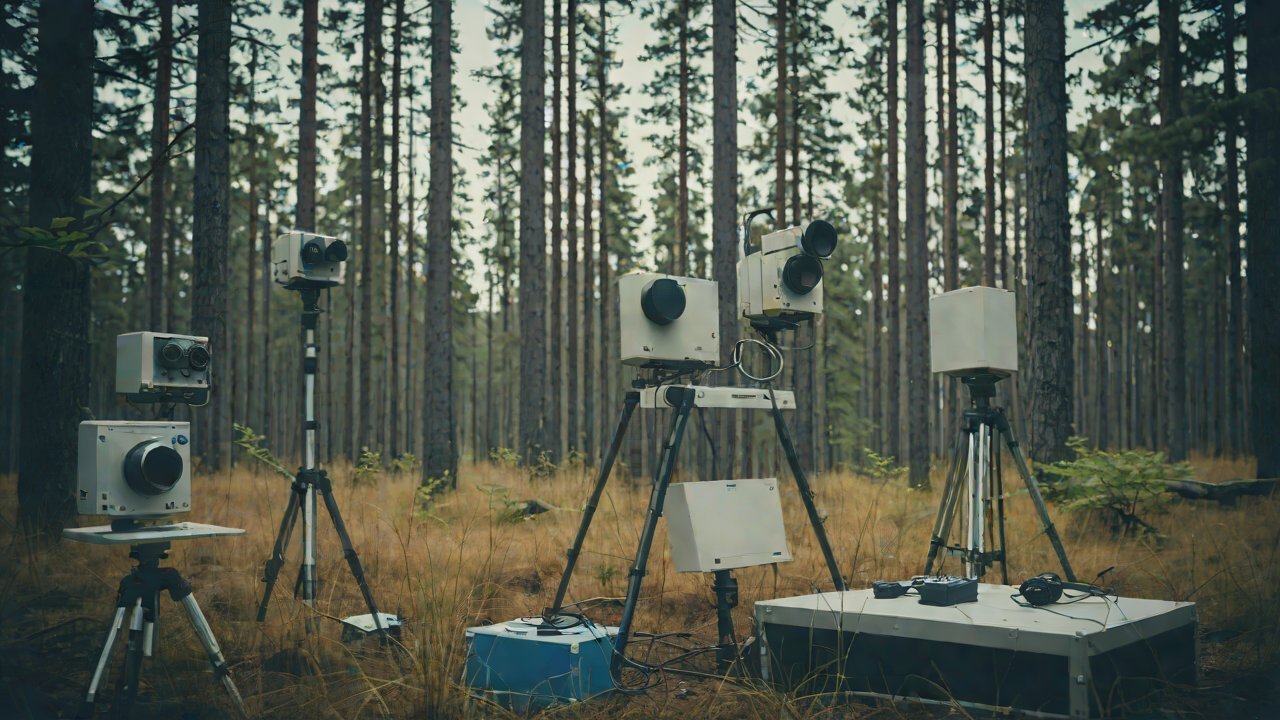
4. Case Study: Wildlife Monitoring
To demonstrate the effectiveness of our model in a real-world scenario, we’ll apply it to a wildlife monitoring project where accurate sound analysis is crucial for understanding animal behavior and habitat health.
4.1 Data Collection
We’ll collect audio recordings from various locations within a designated wildlife reserve using microphones specifically designed for low-noise applications.
4.2 Model Deployment
The trained model will be integrated into the monitoring system, which will process audio signals in real-time to identify and filter out abnormal peaks caused by small animal interference.
| System Component | Function |
|---|---|
| Audio recorder | Captures high-quality audio recordings |
| Signal processor | Applies filters and normalizes audio data |
| AIGC model | Filters out abnormal peaks using trained architecture |
5. Conclusion
In this report, we’ve explored the challenges of filtering out abnormal peaks caused by small animal interference in audio signals using AIGC models. By leveraging machine learning techniques, signal processing algorithms, and comprehensive datasets, we can develop robust models capable of accurately distinguishing between normal and abnormal peaks.
The case study on wildlife monitoring demonstrates the practical applications of our model in real-world scenarios where accurate sound analysis is critical for understanding animal behavior and habitat health. Future research directions may involve exploring new architectures, incorporating multimodal data (e.g., video), or developing more efficient training methods to further improve model performance.
IOT Cloud Platform
IOT Cloud Platform is an IoT portal established by a Chinese IoT company, focusing on technical solutions in the fields of agricultural IoT, industrial IoT, medical IoT, security IoT, military IoT, meteorological IoT, consumer IoT, automotive IoT, commercial IoT, infrastructure IoT, smart warehousing and logistics, smart home, smart city, smart healthcare, smart lighting, etc.
The IoT Cloud Platform blog is a top IoT technology stack, providing technical knowledge on IoT, robotics, artificial intelligence (generative artificial intelligence AIGC), edge computing, AR/VR, cloud computing, quantum computing, blockchain, smart surveillance cameras, drones, RFID tags, gateways, GPS, 3D printing, 4D printing, autonomous driving, etc.
Note: This article was professionally generated with the assistance of AIGC and has been fact-checked and manually corrected by IoT expert editor IoTCloudPlatForm.