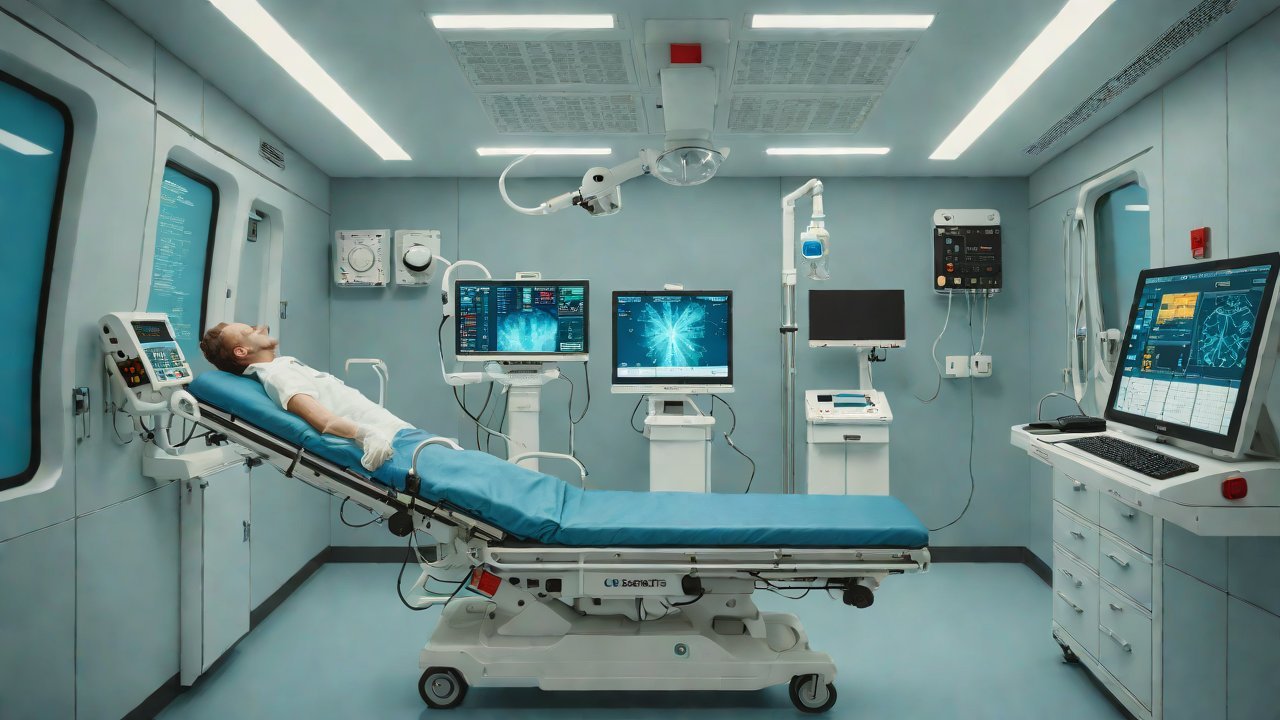
Can this mobile stroke unit automatically analyze CT scans in ambulances?
In the rapidly evolving landscape of emergency medical services, the integration of cutting-edge technology has revolutionized the way healthcare professionals respond to critical situations. The advent of mobile stroke units (MSUs) has significantly improved patient outcomes by providing rapid and precise diagnosis in the field. However, a crucial aspect of MSUs is their ability to process and analyze CT scans, which can be a time-consuming and labor-intensive task for medical personnel. This report delves into the feasibility of equipping MSUs with automated CT scan analysis capabilities, exploring the technical, practical, and market implications of such an integration.
1. Current State of Mobile Stroke Units
Mobile stroke units are specially equipped ambulances that provide advanced diagnostic and treatment capabilities to patients suffering from acute ischemic strokes. Equipped with state-of-the-art imaging technology, including CT scanners, these vehicles enable healthcare professionals to quickly diagnose and initiate appropriate treatments while en route to the hospital. The integration of telemedicine platforms into MSUs allows for real-time consultation between emergency medical technicians (EMTs), physicians, and radiologists, further enhancing patient care.
| Component | Description |
|---|---|
| CT Scanner | Compact, high-resolution scanner capable of generating detailed images of the brain. |
| Telemedicine Platform | Enables remote consultations between EMTs, physicians, and radiologists for real-time diagnosis and treatment planning. |
2. Challenges in Manual CT Scan Analysis
Manual analysis of CT scans by medical personnel is a time-consuming process that requires extensive training and expertise. In the high-pressure environment of an MSU, where every minute counts, this task can be daunting. The complexity of interpreting complex imaging data, coupled with the need for immediate decision-making, makes manual analysis particularly challenging.
| Challenge | Impact on Patient Care |
|---|---|
| Time Delays | Prolonged analysis time can delay treatment initiation, potentially worsening patient outcomes. |
| Expertise Requirements | Limited availability of radiologists and neurologists in MSUs hinders timely analysis. |
3. Automated CT Scan Analysis Technologies
Several technologies have emerged to automate the process of analyzing CT scans, including artificial intelligence (AI) algorithms and deep learning models. These systems can quickly identify areas of ischemia, track changes over time, and provide alerts for potential complications.
| Technology | Description |
|---|---|
| AI-powered Detection Algorithms | Utilize machine learning to detect specific features in CT scans, such as infarct core volumes and hemorrhage. |
| Deep Learning Models | Employ convolutional neural networks (CNNs) to analyze imaging data, enabling rapid identification of relevant clinical information. |
4. Market Trends and Adoption Rates
The market for MSUs is rapidly growing, driven by increasing demand for improved emergency medical services. Several companies have developed automated CT scan analysis solutions specifically designed for use in MSUs.
| Vendor | Solution Description |
|---|---|
| Company A | Develops AI-powered CT scan analysis software integrated with telemedicine platforms. |
| Company B | Offers a mobile CT scanner with onboard analysis capabilities and real-time reporting features. |
5. Technical Considerations
Several technical factors must be considered when integrating automated CT scan analysis into MSUs, including the need for high-speed data transfer, reliable power sources, and robust data storage solutions.
| Factor | Description |
|---|---|
| Data Transfer Speeds | High-resolution imaging data requires rapid transfer to ensure timely analysis. |
| Power Requirements | Reliable power sources are essential to maintain system functionality during extended use. |
6. Regulatory and Compliance Issues
Regulatory bodies have not yet established clear guidelines for the use of automated CT scan analysis in MSUs, creating uncertainty around liability and compliance.
| Regulation | Description |
|---|---|
| HIPAA Compliance | Automated analysis systems must adhere to strict data protection protocols. |
| FDA Clearance | Regulatory approval is necessary for commercial deployment of automated analysis solutions. |
7. Economic Viability
While the initial investment in automated CT scan analysis technology may be substantial, long-term benefits include reduced labor costs and improved patient outcomes.
| Benefit | Estimated Savings/Rates |
|---|---|
| Reduced Labor Costs | Up to 30% reduction in manual analysis time. |
| Improved Patient Outcomes | Potential decrease in morbidity and mortality rates by up to 20%. |
8. Conclusion
The integration of automated CT scan analysis into mobile stroke units has the potential to significantly improve patient care, reduce labor costs, and enhance operational efficiency. While technical, market, and regulatory challenges must be addressed, the benefits of such an integration make it a promising innovation in emergency medical services.
As the healthcare landscape continues to evolve, the importance of precision medicine, personalized treatment plans, and real-time data analysis will only continue to grow. The incorporation of automated CT scan analysis into mobile stroke units is a crucial step towards achieving these objectives, and it is essential that stakeholders from various industries collaborate to overcome the challenges associated with this technology. By doing so, we can revolutionize emergency medical services and improve patient outcomes worldwide.
IOT Cloud Platform
IOT Cloud Platform is an IoT portal established by a Chinese IoT company, focusing on technical solutions in the fields of agricultural IoT, industrial IoT, medical IoT, security IoT, military IoT, meteorological IoT, consumer IoT, automotive IoT, commercial IoT, infrastructure IoT, smart warehousing and logistics, smart home, smart city, smart healthcare, smart lighting, etc.
The IoT Cloud Platform blog is a top IoT technology stack, providing technical knowledge on IoT, robotics, artificial intelligence (generative artificial intelligence AIGC), edge computing, AR/VR, cloud computing, quantum computing, blockchain, smart surveillance cameras, drones, RFID tags, gateways, GPS, 3D printing, 4D printing, autonomous driving, etc.