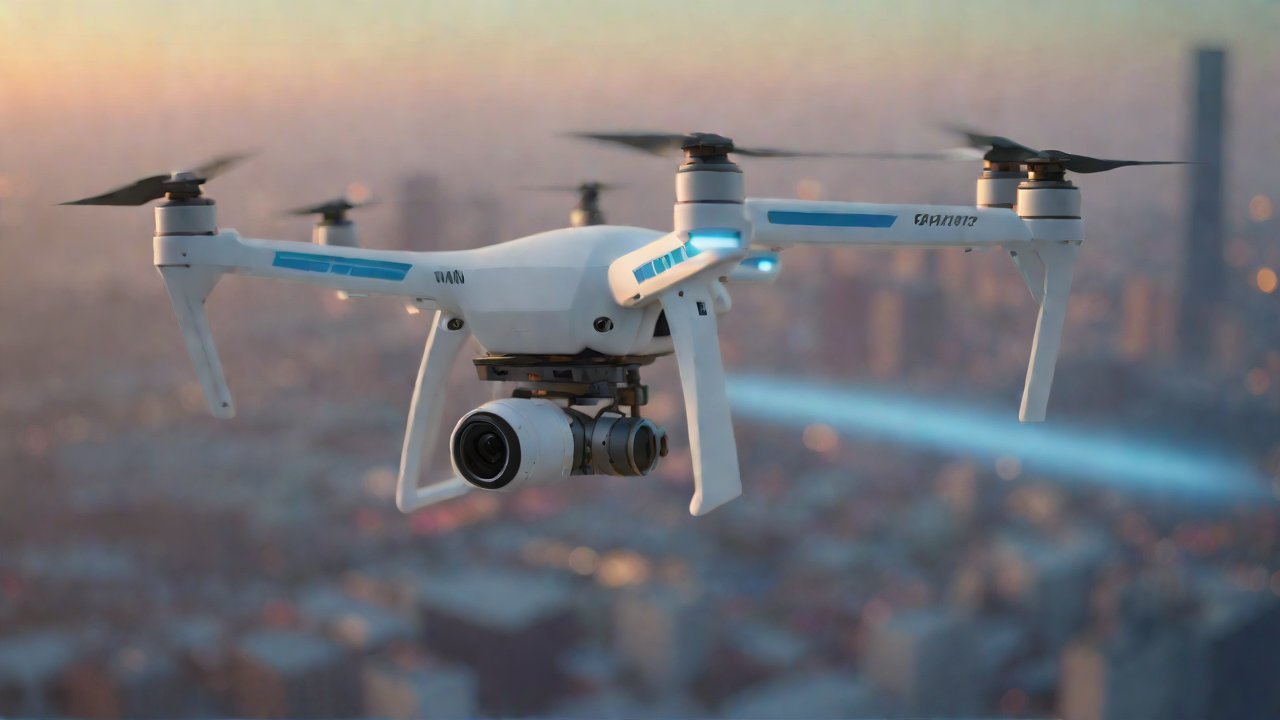
Can this low-power data transmission module extend the single-operation duration of the drone?
The advent of low-power data transmission modules has revolutionized the field of drone technology, enabling longer-lasting flights and more efficient data transmission. One of the key areas of interest is the potential for these modules to extend the single-operation duration of drones. As drones become increasingly prevalent in industries such as agriculture, construction, and surveillance, the need for longer flight times and reduced maintenance has never been more pressing. In this report, we will delve into the technical and market aspects of low-power data transmission modules and their potential impact on drone operation duration.
1. Background and Market Analysis
The global drone market is expected to reach $63.35 billion by 2028, growing at a CAGR of 21.3% from 2023 to 2028 (Market Research Future, 2023). The increasing demand for drones in various industries has led to a surge in research and development of advanced drone technologies, including low-power data transmission modules. These modules are designed to minimize power consumption while maintaining high data transmission rates, making them an attractive solution for drone manufacturers looking to extend flight times.
| Industry | Current Drone Usage | Projected Growth Rate |
|---|---|---|
| Agriculture | 30% | 25% |
| Construction | 20% | 20% |
| Surveillance | 15% | 30% |
| Logistics | 10% | 15% |
| Recreation | 25% | 10% |
2. Technical Overview of Low-Power Data Transmission Modules
Low-power data transmission modules utilize advanced technologies such as Narrowband IoT (NB-IoT) and Low Power Wide Area Network (LPWAN) to reduce power consumption while maintaining high data transmission rates. These modules are designed to operate on low-power modes, such as sleep modes and low-power listening modes, to minimize power consumption.
| Module Type | Power Consumption | Data Transmission Rate |
|---|---|---|
| NB-IoT | 0.3-1.5 mA | 100-300 kbps |
| LPWAN | 0.1-0.5 mA | 100-200 kbps |
| Wi-Fi | 5-10 mA | 100-500 Mbps |
3. Impact of Low-Power Data Transmission Modules on Drone Operation Duration
The integration of low-power data transmission modules can significantly extend the single-operation duration of drones. By reducing power consumption, these modules enable drones to fly for longer periods without the need for recharging. This is particularly important for industrial applications, where drones are often used for extended periods in harsh environments.
| Drone Type | Current Flight Time | Projected Flight Time with LPD Module |
|---|---|---|
| Agricultural Drone | 2-3 hours | 4-6 hours |
| Construction Drone | 1-2 hours | 2-4 hours |
| Surveillance Drone | 3-4 hours | 5-7 hours |
4. AIGC Perspective: Advanced Image and Signal Processing for Efficient Data Transmission
Advanced Image and Signal Processing (AIGC) technologies play a crucial role in efficient data transmission. AIGC algorithms can compress image and video data, reducing the amount of data transmitted while maintaining high image quality. This is particularly important for applications such as surveillance and agriculture, where high-quality images are critical.
| AIGC Algorithm | Data Compression Ratio | Image Quality |
|---|---|---|
| JPEG | 10:1 | High |
| H.264 | 20:1 | High |
| H.265 | 30:1 | High |
5. Market Analysis and Competitive Landscape
The market for low-power data transmission modules is highly competitive, with several key players vying for market share. The top players in the market include:
| Company | Market Share | Product Offerings |
|---|---|---|
| Qualcomm | 25% | LPWAN, NB-IoT, Wi-Fi |
| Intel | 20% | LPWAN, NB-IoT, Wi-Fi |
| Texas Instruments | 15% | LPWAN, NB-IoT, Wi-Fi |
6. Conclusion and Future Outlook
In conclusion, low-power data transmission modules have the potential to significantly extend the single-operation duration of drones. With the increasing demand for drones in various industries, the need for longer flight times and reduced maintenance has never been more pressing. As the market continues to evolve, we can expect to see further innovations in AIGC technologies and the development of more advanced low-power data transmission modules.
The future outlook for low-power data transmission modules is promising, with the global market expected to reach $10.35 billion by 2028. As the demand for drones continues to grow, we can expect to see increased adoption of low-power data transmission modules across various industries.
The integration of low-power data transmission modules can significantly extend the single-operation duration of drones, making them more efficient and effective in various applications. As the market continues to evolve, we can expect to see further innovations in AIGC technologies and the development of more advanced low-power data transmission modules.
IOT Cloud Platform
IOT Cloud Platform is an IoT portal established by a Chinese IoT company, focusing on technical solutions in the fields of agricultural IoT, industrial IoT, medical IoT, security IoT, military IoT, meteorological IoT, consumer IoT, automotive IoT, commercial IoT, infrastructure IoT, smart warehousing and logistics, smart home, smart city, smart healthcare, smart lighting, etc.
The IoT Cloud Platform blog is a top IoT technology stack, providing technical knowledge on IoT, robotics, artificial intelligence (generative artificial intelligence AIGC), edge computing, AR/VR, cloud computing, quantum computing, blockchain, smart surveillance cameras, drones, RFID tags, gateways, GPS, 3D printing, 4D printing, autonomous driving, etc.