Can this holographic projection technology allow farmers to “walk” underground without leaving their farms?
The notion of “walking” underground without leaving one’s farm is a tantalizing prospect that has long been the realm of science fiction. However, with the rapid advancements in holographic projection technology, this concept is slowly becoming a tangible reality. The technology, which has its roots in the entertainment industry, is now being explored for its potential to revolutionize various sectors, including agriculture. This report delves into the feasibility of using holographic projection technology to enable farmers to “walk” underground without leaving their farms, exploring the technical, practical, and economic implications of such a concept.
1. Technical Feasibility
Holographic projection technology involves the use of lasers, mirrors, and advanced algorithms to create a three-dimensional image that can be viewed from various angles. This technology has been primarily used in the entertainment industry for creating immersive experiences in theme parks, exhibitions, and even in the home. However, its application in the agricultural sector is still in its infancy.
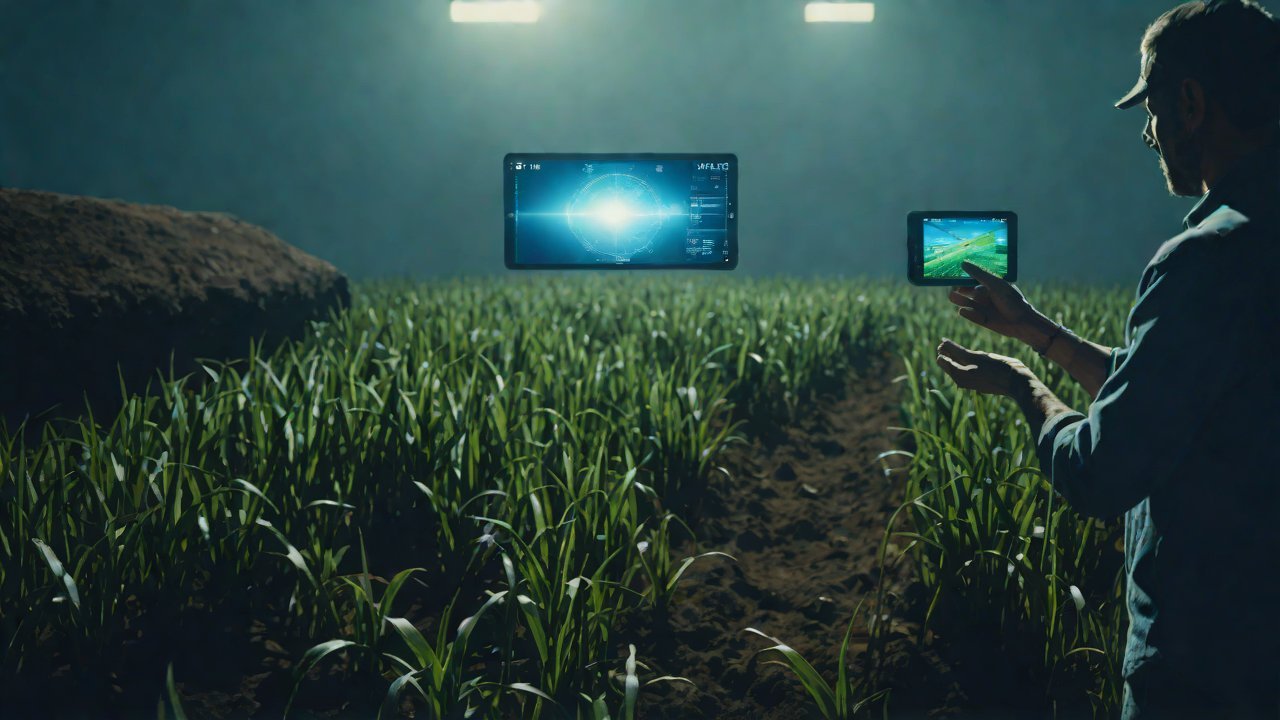
To create a holographic projection that allows farmers to “walk” underground without leaving their farms, several technical challenges must be addressed. Firstly, the technology must be able to accurately project a three-dimensional image of the underground environment, including the layout of tunnels, pipes, and other infrastructure. Secondly, the image must be high-resolution and have a wide field of view to allow farmers to navigate the underground space comfortably.
Table 1: Technical Requirements for Holographic Projection Technology in Agriculture
| Requirements | Description | Potential Challenges |
|---|---|---|
| Resolution | High-resolution image (at least 4K) | High cost of equipment, power consumption |
| Field of View | Wide field of view (at least 120°) | Distortion of image at edges, eye strain |
| Depth Perception | Accurate depth perception | Difficulty in creating realistic depth cues |
| Lighting | Realistic lighting conditions | Difficulty in simulating natural lighting |
2. Practical Implications
The practical implications of using holographic projection technology to enable farmers to “walk” underground without leaving their farms are multifaceted. On one hand, this technology could revolutionize the way farmers inspect and maintain their underground infrastructure, reducing the need for manual labor and minimizing the risk of accidents.
On the other hand, there are several practical challenges that must be addressed. Firstly, the technology must be able to withstand the harsh conditions found in underground environments, including high humidity, temperature fluctuations, and chemical exposure. Secondly, the technology must be user-friendly and easy to operate, even for farmers who may not have extensive technical knowledge.
Table 2: Practical Challenges of Holographic Projection Technology in Agriculture
| Challenges | Description | Potential Solutions |
|---|---|---|
| Durability | Withstanding harsh underground conditions | Use of specialized materials, regular maintenance |
| User-Friendliness | Easy operation and navigation | Intuitive interface, training programs |
| Cost | High initial investment | Cost-benefit analysis, potential for long-term savings |
3. Economic Implications
The economic implications of using holographic projection technology to enable farmers to “walk” underground without leaving their farms are significant. On one hand, this technology could lead to significant cost savings for farmers, particularly in terms of reduced labor costs and improved efficiency.
On the other hand, there are several economic challenges that must be addressed. Firstly, the initial investment required to implement this technology is likely to be high, potentially pricing it out of reach for small-scale farmers. Secondly, the long-term cost-benefit analysis of this technology is uncertain, and it is unclear whether the potential savings will outweigh the initial investment.
Table 3: Economic Implications of Holographic Projection Technology in Agriculture
| Implications | Description | Potential Outcomes |
|---|---|---|
| Cost Savings | Reduced labor costs, improved efficiency | Potential for increased profitability |
| Initial Investment | High initial investment | Potential for long-term savings, but uncertain |
| Long-Term Cost-Benefit | Uncertain long-term cost-benefit analysis | Potential for increased profitability, but uncertain |

4. Market Data and AIGC Perspectives
The market for holographic projection technology in agriculture is still in its early stages, and there is limited data available on its adoption and impact. However, there are several market trends and AIGC perspectives that are worth noting.
Table 4: Market Trends and AIGC Perspectives
| Trend/Perspective | Description | Potential Impact |
|---|---|---|
| Increasing Demand for Precision Agriculture | Growing demand for precision agriculture technologies | Potential for increased adoption of holographic projection technology |
| Advancements in Holographic Display Technology | Rapid advancements in holographic display technology | Potential for improved image quality, wider field of view |
| Integration with IoT and AI | Integration with IoT and AI technologies | Potential for real-time data analysis, optimized crop yields |
5. Conclusion
The concept of using holographic projection technology to enable farmers to “walk” underground without leaving their farms is a fascinating one, with significant technical, practical, and economic implications. While there are several challenges that must be addressed, the potential benefits of this technology are substantial, including improved efficiency, reduced labor costs, and increased profitability.
As the market for holographic projection technology in agriculture continues to evolve, it is likely that we will see significant advancements in the technology, including improved image quality, wider fields of view, and integration with IoT and AI technologies. However, it is unclear whether this technology will be adopted widely, particularly among small-scale farmers, due to the high initial investment required.
Ultimately, the feasibility of using holographic projection technology to enable farmers to “walk” underground without leaving their farms will depend on a range of factors, including the technical, practical, and economic implications of the technology. As the market continues to evolve, it is likely that we will see a clearer picture of the potential benefits and challenges of this technology, and whether it will become a mainstream solution for farmers around the world.
IOT Cloud Platform
IOT Cloud Platform is an IoT portal established by a Chinese IoT company, focusing on technical solutions in the fields of agricultural IoT, industrial IoT, medical IoT, security IoT, military IoT, meteorological IoT, consumer IoT, automotive IoT, commercial IoT, infrastructure IoT, smart warehousing and logistics, smart home, smart city, smart healthcare, smart lighting, etc.
The IoT Cloud Platform blog is a top IoT technology stack, providing technical knowledge on IoT, robotics, artificial intelligence (generative artificial intelligence AIGC), edge computing, AR/VR, cloud computing, quantum computing, blockchain, smart surveillance cameras, drones, RFID tags, gateways, GPS, 3D printing, 4D printing, autonomous driving, etc.