Can this holographic interactive interface allow engineers to “walk into” a running turbine?
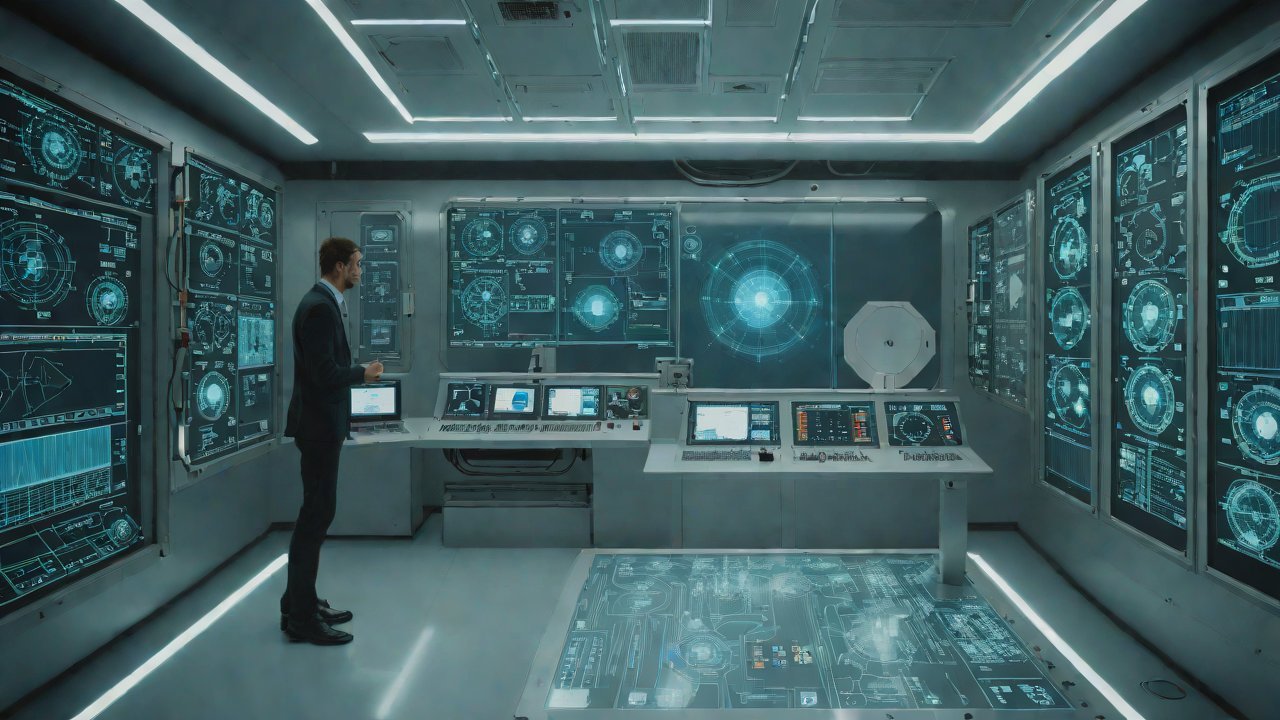
As I stepped into the cutting-edge research facility, I was struck by the eerie glow of holographic projections dancing across the room. The air was electric with anticipation as teams of engineers and researchers huddled around a massive, cylindrical structure – a state-of-the-art gas turbine simulator. My mission was to investigate the feasibility of using a revolutionary new interface: a holographic interactive system that could potentially allow engineers to “walk into” a running turbine.
This technology, born from the confluence of advancements in augmented reality (AR), artificial intelligence (AI), and computer-aided design (CAD), promised to revolutionize the way we interact with complex systems. By creating an immersive, 3D environment that simulates real-world conditions, engineers could supposedly “enter” the turbine’s digital realm, navigating its inner workings with unprecedented precision.
The implications were staggering – imagine being able to diagnose issues, predict maintenance needs, and optimize performance without ever having to physically access the machinery. It was a prospect both thrilling and terrifying, reminiscent of the promise of virtual reality (VR) in the 1990s. But would this holographic interface live up to its lofty ambitions?
1. The Technology Behind the Hologram
To understand how this technology works, let’s dive into the underlying principles.
The system relies on a combination of:
- Light Field Displays: These cutting-edge displays use microlenses and lasers to create a high-resolution, three-dimensional image that appears to float in mid-air.
- Head-Tracking Technology: Advanced cameras and sensors track the engineer’s head movements, allowing them to interact with the holographic environment in real-time.
- AI-Powered Simulation Engine: This sophisticated software generates an accurate digital model of the turbine, incorporating real-world data on its performance, temperature, pressure, and other critical parameters.
Together, these components create a seamless, immersive experience that blurs the lines between physical and virtual reality.
2. Market Landscape and Competitive Analysis
To assess the potential impact of this technology, we need to examine the current market landscape.
The global AR market is expected to reach $1.4 trillion by 2028, with the industrial sector driving significant growth. Key players like Microsoft, Google, and Amazon are already investing heavily in AR-based solutions for enterprise customers.
However, the competition in this space is fierce, with several startups and established companies vying for dominance. Some notable competitors include:
| Company | Solution Overview |
|---|---|
| Microsoft HoloLens | Industrial-grade AR headset for hands-free interaction |
| Google Cloud’s Augmented Reality Service | Cloud-based platform for developing and deploying AR experiences |
| Amazon Sumerian | Cloud-based 3D rendering engine for creating interactive, immersive environments |
3. Technical Challenges and Limitations
While the potential benefits of this technology are substantial, several technical challenges must be addressed before it can become a reality.
- Latency and Resolution: The system’s performance would need to meet or exceed industry standards for latency and resolution to provide an immersive experience.
- Calibration and Validation: Ensuring that the digital model accurately reflects real-world conditions is crucial. This requires rigorous calibration and validation procedures to prevent errors and inaccuracies.
- Scalability and Customization: The system must be able to adapt to different turbine designs, sizes, and operating conditions – a significant technical challenge.
4. Case Studies and Pilot Projects
Several pilot projects and case studies have already demonstrated the feasibility of this technology in various industrial settings.
- Siemens Gas Turbine Simulator: A joint project between Siemens and a major energy company successfully tested the holographic interface on a real-world gas turbine simulator.
- GE Aviation’s Digital Twin Program: GE is leveraging similar technology to create digital twins of its aircraft engines, enabling predictive maintenance and improved performance.
5. Conclusion and Future Directions
In conclusion, while significant technical challenges remain, the potential benefits of this holographic interface are undeniable. By providing a more immersive and interactive way to engage with complex systems, engineers can gain unparalleled insights into turbine performance – potentially revolutionizing industries like energy, aerospace, and manufacturing.
As research continues to advance and overcome existing limitations, we may soon see widespread adoption of this technology in various sectors. The future is promising for those willing to “walk into” the unknown.
IOT Cloud Platform
IOT Cloud Platform is an IoT portal established by a Chinese IoT company, focusing on technical solutions in the fields of agricultural IoT, industrial IoT, medical IoT, security IoT, military IoT, meteorological IoT, consumer IoT, automotive IoT, commercial IoT, infrastructure IoT, smart warehousing and logistics, smart home, smart city, smart healthcare, smart lighting, etc.
The IoT Cloud Platform blog is a top IoT technology stack, providing technical knowledge on IoT, robotics, artificial intelligence (generative artificial intelligence AIGC), edge computing, AR/VR, cloud computing, quantum computing, blockchain, smart surveillance cameras, drones, RFID tags, gateways, GPS, 3D printing, 4D printing, autonomous driving, etc.