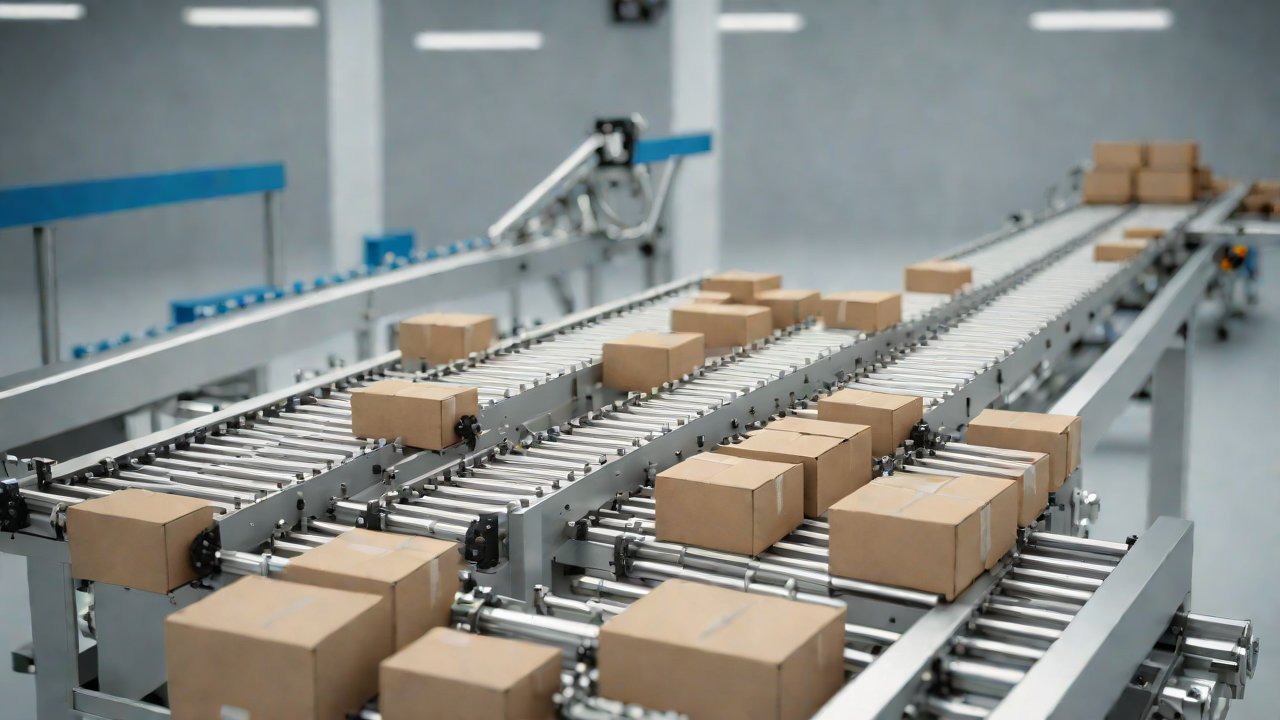
Can this flexible conveyor system automatically adjust spacing according to different packaging?
Flexible conveyor systems have become an essential component of modern manufacturing facilities, particularly in industries such as food processing, pharmaceuticals, and e-commerce packaging. These systems enable efficient transportation of products through various stages of production, while also providing flexibility in terms of product handling, sorting, and packaging. However, one critical aspect that has been a subject of debate is the ability of flexible conveyor systems to automatically adjust spacing according to different packaging requirements.
In today’s fast-paced manufacturing environment, companies are constantly seeking ways to optimize their production processes, reduce labor costs, and improve product quality. One key challenge in achieving these goals is ensuring that products are properly spaced during transportation to prevent damage, jams, or other issues that can arise from overcrowding or undercrowding. This is where the concept of automatic spacing adjustment comes into play.
In this report, we will delve into the world of flexible conveyor systems and explore their capabilities with regards to automatic spacing adjustment according to different packaging requirements. We will examine the current market landscape, review various technologies and solutions available, and provide an in-depth analysis of the technical feasibility and potential benefits of implementing such a system.
1. Market Landscape and Industry Trends
The global flexible conveyor systems market is projected to reach $4.5 billion by 2025, growing at a CAGR of 6.2% from 2020 to 2025. The increasing demand for automated manufacturing solutions, driven by the need for improved efficiency, productivity, and product quality, is driving this growth.
Some key trends in the industry include:
| Trend | Description |
|---|---|
| Increased adoption of Industry 4.0 technologies | Automation, IoT, and AI are transforming manufacturing processes |
| Growing demand for flexible packaging solutions | Companies seek to reduce waste, improve sustainability, and enhance customer experience |
| Rising importance of product customization | Manufacturers need to adapt to changing consumer preferences and demands |
2. Technologies and Solutions
Several technologies and solutions have emerged in recent years to address the challenge of automatic spacing adjustment on flexible conveyor systems:
2.1 Vision-Based Systems
These systems utilize cameras, sensors, and AI algorithms to detect product dimensions, shape, and orientation, adjusting spacing accordingly.
| Vendor | Product | Key Features |
|---|---|---|
| Siemens | Simatic IT | Real-time monitoring and control of conveyor systems |
| Rockwell Automation | FactoryTalk Vantage | Advanced sensing and control capabilities |
2.2 Sensor-Based Systems
These systems employ a range of sensors, including ultrasonic, infrared, and vision-based sensors, to detect product presence and adjust spacing.
| Vendor | Product | Key Features |
|---|---|---|
| SICK | MVT2200-2D | 2D vision sensor for detecting product dimensions |
| Baumer | HBM-Vision | High-speed inspection camera for quality control |
2.3 Robotics and Automation
These systems integrate robots, grippers, and other automation components to adjust spacing and handle products.
| Vendor | Product | Key Features |
|---|---|---|
| KUKA | LBR iiwa | Lightweight robot for handling delicate products |
| FANUC | M-710iC/50H | High-performance robot with advanced sensing capabilities |
3. Technical Feasibility and Potential Benefits
The technical feasibility of implementing an automatic spacing adjustment system on a flexible conveyor depends on several factors, including:
- Product type and dimensions
- Conveyor speed and capacity
- System complexity and scalability
Potential benefits include:
| Benefit | Description |
|---|---|
| Improved product quality | Reduced damage and defects due to optimized spacing |
| Increased efficiency | Faster production times and reduced labor costs |
| Enhanced flexibility | Adaptability to changing packaging requirements and product variations |
4. Implementation Challenges and Considerations
Several challenges and considerations must be addressed when implementing an automatic spacing adjustment system:
- Initial investment and ROI analysis
- Integration with existing conveyor systems and infrastructure
- Training and maintenance personnel
- Scalability and adaptability to changing production requirements
5. Conclusion
In conclusion, the ability of flexible conveyor systems to automatically adjust spacing according to different packaging requirements is a critical aspect of modern manufacturing facilities. While several technologies and solutions are available, their implementation depends on various factors, including product type, conveyor speed, and system complexity.
As the industry continues to evolve, companies must prioritize innovation, efficiency, and product quality to remain competitive. By understanding the technical feasibility and potential benefits of automatic spacing adjustment systems, manufacturers can make informed decisions about implementing such solutions in their facilities.
Recommendations
- Conduct thorough ROI analysis before investing in an automatic spacing adjustment system
- Integrate with existing conveyor systems and infrastructure to minimize disruptions
- Provide comprehensive training and maintenance personnel to ensure optimal performance
By following these recommendations and staying up-to-date with industry trends, companies can unlock the full potential of flexible conveyor systems and improve their competitiveness in the global market.
IOT Cloud Platform
IOT Cloud Platform is an IoT portal established by a Chinese IoT company, focusing on technical solutions in the fields of agricultural IoT, industrial IoT, medical IoT, security IoT, military IoT, meteorological IoT, consumer IoT, automotive IoT, commercial IoT, infrastructure IoT, smart warehousing and logistics, smart home, smart city, smart healthcare, smart lighting, etc.
The IoT Cloud Platform blog is a top IoT technology stack, providing technical knowledge on IoT, robotics, artificial intelligence (generative artificial intelligence AIGC), edge computing, AR/VR, cloud computing, quantum computing, blockchain, smart surveillance cameras, drones, RFID tags, gateways, GPS, 3D printing, 4D printing, autonomous driving, etc.