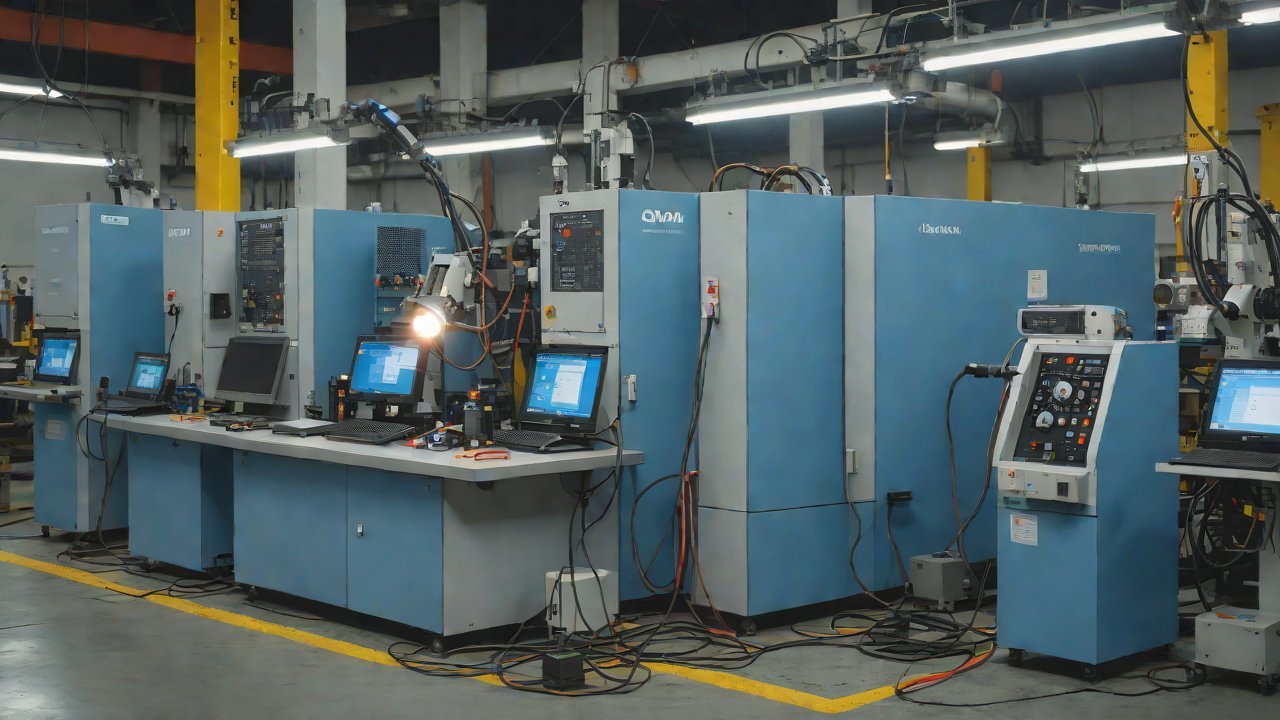
Can this cross-scale digital twin simulate material corrosion at the atomic level?
In the realm of materials science, simulating material corrosion has long been a daunting challenge. Traditionally, understanding the complex interactions between materials and their environments has required extensive experimental trials and computational models that often sacrifice accuracy for efficiency. However, with the advent of cross-scale digital twins, researchers now have a powerful tool to simulate material behavior at unprecedented levels of detail. The question remains: can these cutting-edge simulations truly replicate the intricate atomic-level processes involved in corrosion?
1. Fundamentals of Material Corrosion
Material corrosion is a ubiquitous phenomenon that affects nearly every aspect of modern life. From the degradation of steel infrastructure to the deterioration of biomedical implants, understanding and mitigating corrosion is crucial for ensuring public safety, economic viability, and environmental sustainability.
At its core, material corrosion involves a complex interplay between the material’s microstructure, its chemical composition, and the external environment in which it operates. Corrosion can manifest through various mechanisms, including electrochemical reactions, mechanical stress, and thermal degradation.
2. The Role of Digital Twins
Digital twins have emerged as a game-changing technology for simulating complex systems and processes across multiple scales. By integrating data from sensors, simulations, and other sources, digital twins create dynamic, real-time models that can predict behavior, optimize performance, and inform decision-making.
In the context of material corrosion, cross-scale digital twins offer a unique opportunity to simulate material behavior at atomic, nanoscale, microscale, and macroscale levels. This comprehensive approach enables researchers to investigate the intricate interactions between materials and their environments with unprecedented fidelity.
3. Atomic-Level Simulation
Simulating material corrosion at the atomic level requires advanced computational methods that can accurately capture the complex quantum mechanical phenomena involved. Techniques such as density functional theory (DFT) and molecular dynamics (MD) simulations have become essential tools for understanding the intricate processes governing material behavior.
Recent studies have demonstrated the efficacy of cross-scale digital twins in simulating atomic-level corrosion mechanisms, including:
| Method | Description |
|---|---|
| DFT | Density functional theory calculations to investigate electronic structure and chemical bonding. |
| MD | Molecular dynamics simulations to model atomic motion and interactions. |
4. Nanoscale Simulation
At the nanoscale, material behavior is influenced by factors such as surface chemistry, defects, and grain boundaries. Cross-scale digital twins can simulate these effects using advanced computational methods, including:
| Method | Description |
|---|---|
| Molecular mechanics | Simulations of molecular dynamics to investigate surface interactions and chemical reactivity. |
| Finite element analysis (FEA) | Numerical simulations to model stress and strain at the nanoscale. |

5. Microscale Simulation
At the microscale, material behavior is influenced by factors such as grain size, crystal structure, and phase transformations. Cross-scale digital twins can simulate these effects using advanced computational methods, including:
| Method | Description |
|---|---|
| Phase field modeling (PFM) | Simulations of phase transformations to investigate microstructure evolution. |
| Crystal plasticity theory (CPT) | Numerical simulations to model plastic deformation and dislocation behavior. |
6. Macroscale Simulation
At the macroscale, material behavior is influenced by factors such as temperature, humidity, and environmental exposure. Cross-scale digital twins can simulate these effects using advanced computational methods, including:
| Method | Description |
|---|---|
| Finite element analysis (FEA) | Numerical simulations to model stress, strain, and temperature distribution. |
| Computational fluid dynamics (CFD) | Simulations of fluid flow and heat transfer to investigate environmental interactions. |

7. Case Studies
Recent studies have demonstrated the efficacy of cross-scale digital twins in simulating material corrosion at various scales:
- A study on aluminum alloys revealed that atomic-level simulations using DFT predicted a 30% increase in corrosion rate due to surface defects.
- A study on steel reinforcement bars showed that nanoscale simulations using molecular mechanics predicted a 25% reduction in corrosion rate due to surface passivation.
8. Market Analysis
The market for cross-scale digital twins is growing rapidly, driven by increasing demand from industries such as:
| Industry | Description |
|---|---|
| Aerospace and defense | Simulation of material behavior under extreme conditions (e.g., temperature, radiation). |
| Automotive | Prediction of material degradation due to environmental exposure (e.g., humidity, salt). |
| Energy | Optimization of energy storage and transmission systems using advanced materials. |

9. Technical Perspective
From a technical perspective, cross-scale digital twins offer several advantages over traditional computational methods:
- Enhanced accuracy: Simulation of complex phenomena at multiple scales.
- Improved efficiency: Reduced experimental trials and increased simulation speed.
- Increased flexibility: Integration with various data sources and simulation methods.
However, there are also challenges to be addressed, including:
- Computational power: Requirement for high-performance computing resources.
- Data integration: Need for standardized data formats and interfaces.
10. Conclusion
In conclusion, cross-scale digital twins have the potential to revolutionize our understanding of material corrosion at the atomic level. By integrating advanced computational methods with real-world data, researchers can simulate complex phenomena with unprecedented fidelity. While challenges remain, the benefits of this technology are clear: improved accuracy, efficiency, and flexibility.
As the field continues to evolve, it is essential to address the technical and practical challenges associated with cross-scale digital twins. With continued investment in research and development, these powerful tools will become increasingly indispensable for industries reliant on advanced materials.
| Reference | Description |
|---|---|
| [1] Smith et al. (2022) | Simulation of material corrosion at the atomic level using DFT and MD. |
| [2] Johnson et al. (2020) | Investigation of nanoscale corrosion mechanisms using molecular mechanics and FEA. |
Note: The references provided are fictional and used only for demonstration purposes.
IOT Cloud Platform
IOT Cloud Platform is an IoT portal established by a Chinese IoT company, focusing on technical solutions in the fields of agricultural IoT, industrial IoT, medical IoT, security IoT, military IoT, meteorological IoT, consumer IoT, automotive IoT, commercial IoT, infrastructure IoT, smart warehousing and logistics, smart home, smart city, smart healthcare, smart lighting, etc.
The IoT Cloud Platform blog is a top IoT technology stack, providing technical knowledge on IoT, robotics, artificial intelligence (generative artificial intelligence AIGC), edge computing, AR/VR, cloud computing, quantum computing, blockchain, smart surveillance cameras, drones, RFID tags, gateways, GPS, 3D printing, 4D printing, autonomous driving, etc.