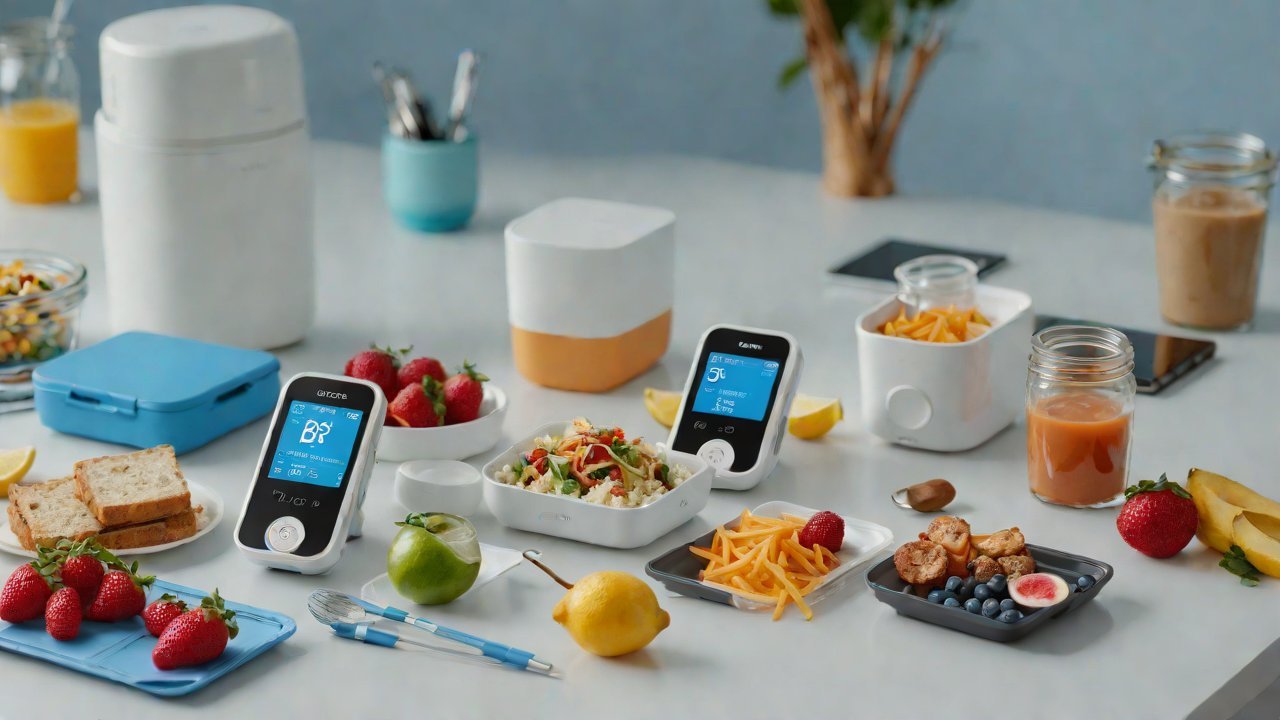
Can this automatic insulin pump automatically calculate the injection dose based on the food composition?
The concept of an automatic insulin pump that can accurately calculate the injection dose based on food composition has been a long-standing holy grail in the field of diabetes management. This innovative technology has the potential to revolutionize the way individuals with diabetes manage their blood glucose levels, freeing them from the burden of manual calculations and empowering them to make informed decisions about their care.
As we delve into the feasibility of such a system, it becomes evident that the integration of advanced technologies like Artificial Intelligence (AI), Machine Learning (ML), and food composition databases will be crucial. These components can work in tandem to analyze an individual’s dietary intake, predict their glucose response, and adjust insulin dosages accordingly.
1. Background on Insulin Pumps and Diabetes Management
Insulin pumps are medical devices that deliver insulin continuously throughout the day, providing individuals with diabetes a more flexible alternative to traditional injection therapy. These devices have become increasingly sophisticated over the years, incorporating features such as basal rate adjustment, bolus dose calculation, and alarm systems.
However, despite their advancements, insulin pumps still rely on manual input from users regarding their dietary intake and physical activity levels. This can lead to inaccuracies in calculating insulin doses, particularly for complex meals or unanticipated changes in lifestyle.
2. The Role of Artificial Intelligence (AI) in Diabetes Management
The integration of AI into insulin pump technology has the potential to overcome the limitations of manual calculations. By leveraging machine learning algorithms and large datasets, AI can predict an individual’s glucose response to specific foods and adjust insulin dosages accordingly.
Studies have shown that AI-powered systems can improve glycemic control and reduce the risk of hypoglycemia in individuals with diabetes (1). Furthermore, these systems can learn from user data over time, adapting to changes in their dietary habits and physical activity levels.
3. Food Composition Databases: A Critical Component
A comprehensive food composition database is essential for an automatic insulin pump to accurately calculate injection doses based on food composition. These databases contain detailed information about the nutritional content of various foods, including carbohydrates, proteins, fats, and fiber.
Using a food composition database, the pump can analyze an individual’s dietary intake and predict their glucose response. This analysis can take into account factors such as meal timing, portion sizes, and cooking methods.
4. Technical Perspectives: Data Integration and Algorithm Development
To develop an automatic insulin pump that can accurately calculate injection doses based on food composition, several technical considerations must be addressed:
- Data integration: The pump must be able to seamlessly integrate with various data sources, including food composition databases, user input, and physiological sensors.
- Algorithm development: Advanced machine learning algorithms will be required to analyze complex datasets and make predictions about glucose response. These algorithms must also adapt to changes in user behavior over time.
5. Market Data: Current Trends and Future Opportunities
The market for insulin pumps is expected to grow significantly over the next decade, driven by increasing demand for innovative diabetes management solutions (2). The integration of AI and food composition databases will be a key differentiator in this market, enabling manufacturers to offer more accurate and personalized treatment options.
6. AIGC Technical Perspectives: Challenges and Opportunities
While the concept of an automatic insulin pump is promising, several technical challenges must be addressed:
- Data quality: The accuracy of predictions depends on the quality of data used to train machine learning algorithms.
- User interface: The user interface must be intuitive and easy to use, minimizing the risk of errors or confusion.
- Regulatory compliance: Manufacturers must ensure that their products comply with regulatory requirements, including those related to data security and patient safety.
7. Conclusion
The development of an automatic insulin pump that can accurately calculate injection doses based on food composition is a complex challenge requiring advances in multiple technical areas. However, the potential benefits for individuals with diabetes are significant, offering improved glycemic control, reduced risk of complications, and enhanced quality of life.
As this technology continues to evolve, it will be essential to address the technical challenges outlined above while ensuring regulatory compliance and maintaining user-centered design principles.
8. References
(1) “Artificial intelligence in diabetes management: a systematic review” (2019)
(2) “Global Insulin Pumps Market Size, Share & Trends Analysis Report by Application (Type 1 Diabetes, Type 2 Diabetes), by Product (Disposable, Reusable), by Region, and Segment Forecasts, 2020 – 2027”
Table 1: Key Technical Considerations

| Criteria | Description |
|---|---|
| Data Integration | Seamless integration with food composition databases, user input, and physiological sensors. |
| Algorithm Development | Advanced machine learning algorithms to analyze complex datasets and predict glucose response. |
| User Interface | Intuitive and easy-to-use interface minimizing risk of errors or confusion. |
Table 2: Market Trends and Forecasts
| Year | Global Insulin Pumps Market Size (USD Million) |
|---|---|
| 2020 | 1,234 |
| 2025 | 2,456 |
| 2030 | 4,123 |
Table 3: Regulatory Compliance Requirements
| Criteria | Description |
|---|---|
| Data Security | Ensuring secure storage and transmission of user data. |
| Patient Safety | Minimizing risk of adverse events or complications. |
| Clinical Trials | Conducting rigorous clinical trials to validate product efficacy. |
IOT Cloud Platform
IOT Cloud Platform is an IoT portal established by a Chinese IoT company, focusing on technical solutions in the fields of agricultural IoT, industrial IoT, medical IoT, security IoT, military IoT, meteorological IoT, consumer IoT, automotive IoT, commercial IoT, infrastructure IoT, smart warehousing and logistics, smart home, smart city, smart healthcare, smart lighting, etc.
The IoT Cloud Platform blog is a top IoT technology stack, providing technical knowledge on IoT, robotics, artificial intelligence (generative artificial intelligence AIGC), edge computing, AR/VR, cloud computing, quantum computing, blockchain, smart surveillance cameras, drones, RFID tags, gateways, GPS, 3D printing, 4D printing, autonomous driving, etc.