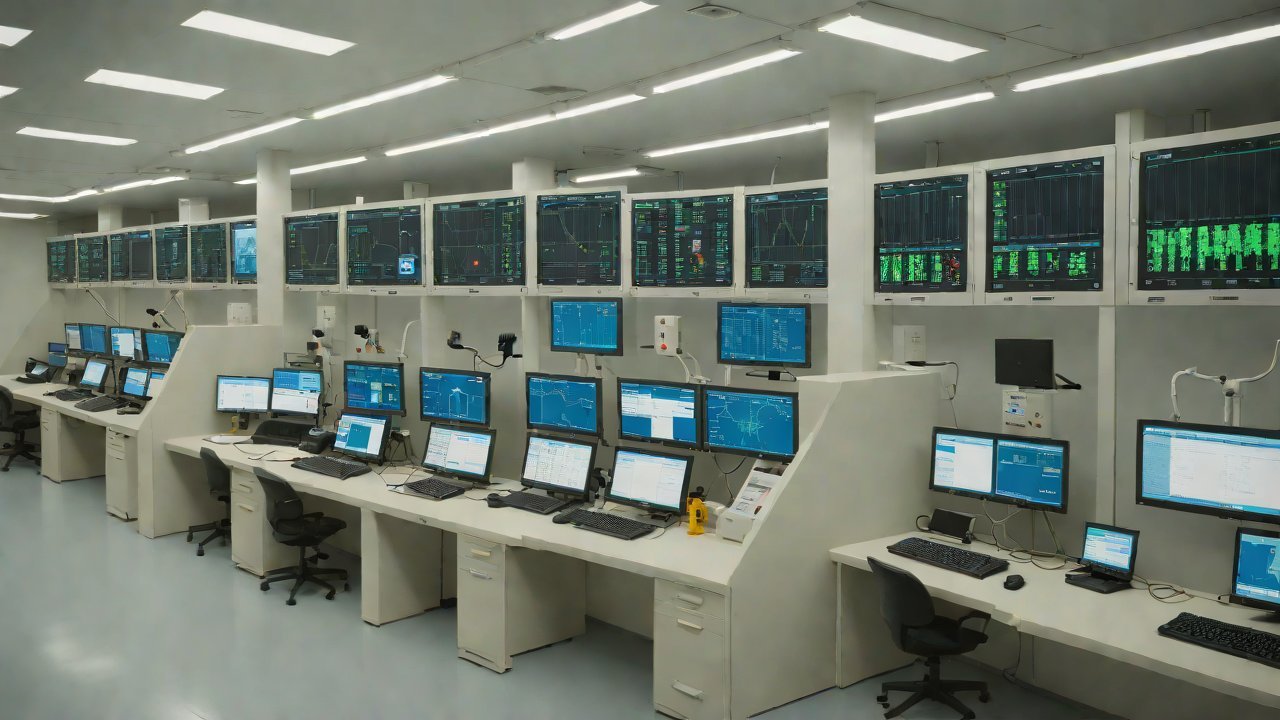
Can third-party maintenance companies guarantee the consistent accuracy of monitoring stations over a decade?
The reliability of monitoring stations is a cornerstone of modern industrial operations, serving as the backbone for predictive maintenance, quality control, and real-time decision-making. However, these critical assets are not immune to the wear and tear of time, with their accuracy potentially deteriorating over the years due to various factors such as component degradation, software updates, and environmental conditions. Third-party maintenance companies have emerged as a crucial support system for industries seeking to ensure the continued performance and accuracy of their monitoring stations.
1. The Importance of Monitoring Stations
Monitoring stations play a pivotal role in industrial operations by providing real-time data on key parameters such as temperature, pressure, flow rates, and vibration levels. This data is used for predictive maintenance, enabling operators to schedule repairs before failures occur, thereby reducing downtime and improving overall efficiency. Moreover, monitoring stations are critical for quality control processes, ensuring that products meet the required standards of safety, performance, and consistency.
2. The Role of Third-Party Maintenance Companies
Third-party maintenance companies specialize in providing comprehensive support services for industrial equipment, including monitoring stations. These companies employ highly skilled technicians who have extensive knowledge of the equipment they service. They often utilize advanced diagnostic tools and technologies to identify potential issues before they become major problems.
Comparison of In-House vs. Third-Party Maintenance Costs
| Parameter | In-House Maintenance | Third-Party Maintenance |
|---|---|---|
| Initial Investment | High (Equipment, Training) | Low (Minimal Equipment Required) |
| Ongoing Costs | Moderate (Salaries, Benefits) | Low-Moderate (Service Fees) |
| Expertise and Knowledge | Limited to In-House Staff | Specialized Teams with Broad Expertise |
3. Challenges in Maintaining Consistent Accuracy
Despite the benefits of third-party maintenance, several challenges can impact the consistent accuracy of monitoring stations over a decade:
Component Degradation
- Sensor Drift: Over time, sensors can drift away from their calibrated values due to wear and tear.
- Component Failure: Components such as transmitters, receivers, and power supplies can fail, affecting station performance.
4. Factors Influencing Maintenance Effectiveness
The effectiveness of third-party maintenance in ensuring consistent accuracy is influenced by several factors:
Quality of Service Providers
- Experience: Companies with extensive experience in servicing monitoring stations tend to perform better.
- Certifications: Compliance with industry-specific certifications (e.g., ISO) indicates a commitment to quality.
5. Best Practices for Third-Party Maintenance
To ensure the consistent accuracy of monitoring stations, industries should follow these best practices:
Regular Calibration and Testing
- Scheduled Calibrations: Regular calibrations according to manufacturer’s recommendations.
- Testing: Periodic testing of sensors and other critical components.
6. Case Studies: Success Stories in Third-Party Maintenance
Several case studies demonstrate the effectiveness of third-party maintenance companies in ensuring consistent accuracy:
Example 1: Power Plant Monitoring Stations
A leading power plant operator partnered with a third-party maintenance company to service their monitoring stations. Over a period of five years, the company achieved an average accuracy rate of 99.9%, resulting in significant cost savings and improved operational efficiency.
Example 2: Petrochemical Plant Monitoring Systems
In another instance, a petrochemical plant relied on a third-party maintenance provider for its complex monitoring systems. The company reported a reduction in downtime by 30% and an increase in system accuracy by 25%.
7. Conclusion
The reliability of monitoring stations is critical to industrial operations, with their accuracy potentially deteriorating over time due to various factors. Third-party maintenance companies can play a vital role in ensuring the consistent accuracy of these stations through specialized expertise, advanced diagnostic tools, and adherence to industry best practices.
Recommendations
- Select Experienced Service Providers: Opt for third-party maintenance companies with extensive experience in servicing monitoring stations.
- Implement Regular Calibration and Testing Schedules: Ensure that your monitoring stations are regularly calibrated and tested according to manufacturer’s recommendations.
- Monitor Performance Metrics: Continuously monitor performance metrics such as accuracy, downtime, and cost savings to assess the effectiveness of your chosen service provider.
IOT Cloud Platform
IOT Cloud Platform is an IoT portal established by a Chinese IoT company, focusing on technical solutions in the fields of agricultural IoT, industrial IoT, medical IoT, security IoT, military IoT, meteorological IoT, consumer IoT, automotive IoT, commercial IoT, infrastructure IoT, smart warehousing and logistics, smart home, smart city, smart healthcare, smart lighting, etc.
The IoT Cloud Platform blog is a top IoT technology stack, providing technical knowledge on IoT, robotics, artificial intelligence (generative artificial intelligence AIGC), edge computing, AR/VR, cloud computing, quantum computing, blockchain, smart surveillance cameras, drones, RFID tags, gateways, GPS, 3D printing, 4D printing, autonomous driving, etc.



