
Can the vibration sensor detect damage to agricultural machinery and cut off power for protection?
Agricultural machinery is a critical component of modern farming, enabling efficient production and minimizing labor costs. However, these machines are susceptible to mechanical failures, which can lead to costly downtime, equipment damage, and safety risks. Vibration sensors have emerged as a viable solution for detecting anomalies in machinery performance, potentially preventing catastrophic failures.
Agricultural machinery encompasses a broad range of equipment, including tractors, combines, planters, and sprayers. Each type has unique requirements and operating conditions. For instance, tractors are often subject to heavy loads and demanding environments, while combines are designed for high-speed operations in varying terrain.
Vibration sensors can be integrated into agricultural machinery to monitor its condition in real-time. These sensors detect changes in vibration patterns, which may indicate impending mechanical failures or other issues. Advanced algorithms can analyze the sensor data to identify specific problems, such as worn-out bearings or loose belts.
The use of vibration sensors in agricultural machinery has several benefits:
- Reduced downtime: By detecting anomalies early on, farmers can schedule maintenance and repairs during off-peak hours, minimizing the impact on productivity.
- Increased safety: Vibration sensors can alert operators to potential hazards, such as loose parts or worn-out components, reducing the risk of accidents and injuries.
- Improved efficiency: With vibration sensors providing real-time insights into machinery performance, farmers can optimize their operations and make data-driven decisions.
1. Vibration Sensor Technology
Vibration sensors employ various technologies to detect changes in mechanical vibrations. Some common types include:
| Technology | Description |
|---|---|
| Accelerometers | Measure acceleration forces in three axes (x, y, z) |
| Gyroscopes | Detect rotational motion and orientation |
| Piezoelectric Sensors | Convert mechanical energy into electrical signals |
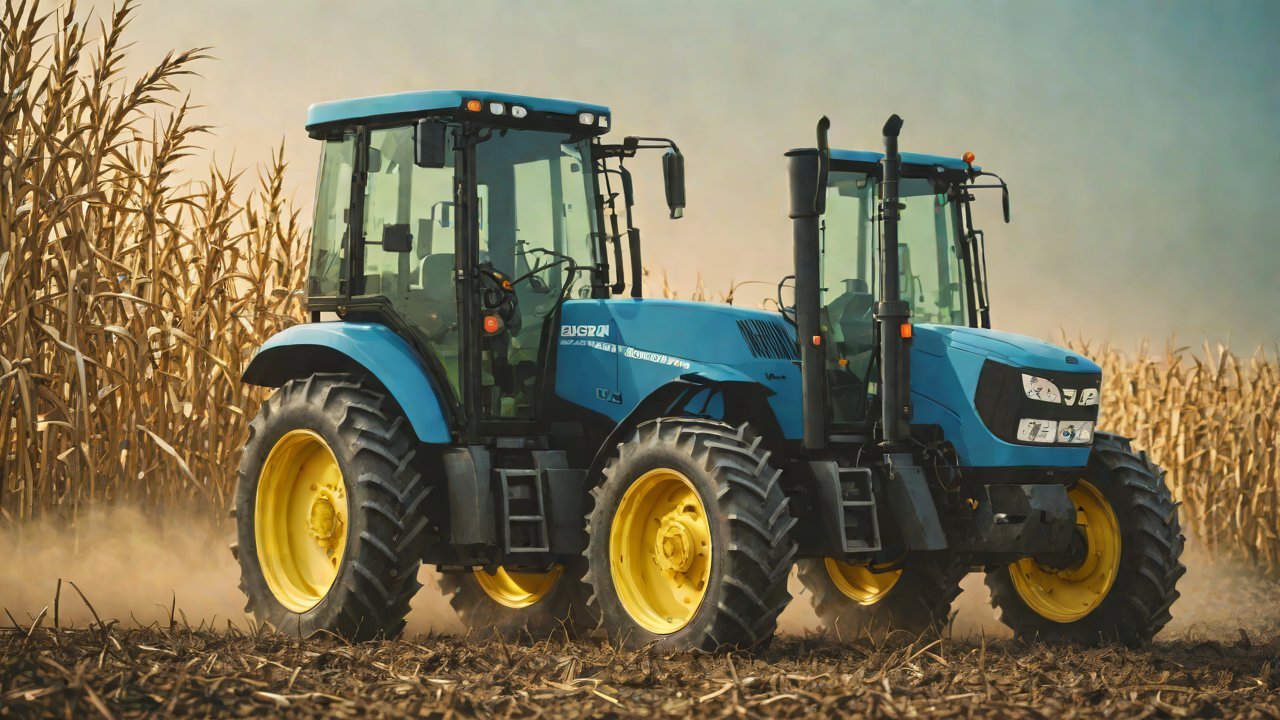
Accelerometers are widely used in vibration sensing due to their high sensitivity and accuracy. They can detect even slight changes in vibration patterns, making them ideal for monitoring machinery performance.
2. Agricultural Machinery Vibration Patterns
Agricultural machinery exhibits unique vibration patterns depending on its type, operating conditions, and load characteristics. Understanding these patterns is crucial for effective vibration sensing.
| Machinery Type | Typical Vibration Frequency (Hz) |
|---|---|
| Tractors | 20-50 Hz |
| Combines | 30-60 Hz |
| Planters | 10-30 Hz |

3. Integration with Power Control Systems
To prevent damage to agricultural machinery, vibration sensors can be integrated with power control systems to automatically shut off power in case of anomalies. This ensures operator safety and minimizes equipment damage.
AIGC Technical Perspectives
Advanced Industrial Growth Catalyst (AIGC) technical perspectives emphasize the importance of IoT integration and predictive maintenance in industrial settings. Vibration sensing is a key component of these strategies, enabling real-time monitoring and proactive decision-making.
4. Market Analysis
The agricultural machinery market is expected to grow steadily over the next decade, driven by increasing demand for food production and rising adoption of precision agriculture technologies.
| Region | Projected Growth Rate (%) |
|---|---|
| North America | 3.5% |
| Europe | 2.8% |
| Asia-Pacific | 4.2% |

5. Conclusion
Vibration sensors have the potential to revolutionize agricultural machinery maintenance by detecting anomalies and preventing catastrophic failures. By integrating these sensors with power control systems, farmers can ensure operator safety and minimize equipment damage.
Agricultural machinery manufacturers should prioritize vibration sensing technology in their product development strategies, as it offers a competitive edge in terms of efficiency, safety, and productivity. Furthermore, farmers must invest in regular maintenance and training to maximize the benefits of vibration sensing in their operations.
The use of vibration sensors is just one aspect of a broader trend toward digitalization and automation in agriculture. As technology continues to advance, we can expect even more innovative solutions for improving agricultural productivity and sustainability.
IOT Cloud Platform
IOT Cloud Platform is an IoT portal established by a Chinese IoT company, focusing on technical solutions in the fields of agricultural IoT, industrial IoT, medical IoT, security IoT, military IoT, meteorological IoT, consumer IoT, automotive IoT, commercial IoT, infrastructure IoT, smart warehousing and logistics, smart home, smart city, smart healthcare, smart lighting, etc.
The IoT Cloud Platform blog is a top IoT technology stack, providing technical knowledge on IoT, robotics, artificial intelligence (generative artificial intelligence AIGC), edge computing, AR/VR, cloud computing, quantum computing, blockchain, smart surveillance cameras, drones, RFID tags, gateways, GPS, 3D printing, 4D printing, autonomous driving, etc.



