Can the system automatically shut off irrigation valves when abnormal water leakage is detected?
Water management systems have become increasingly sophisticated, incorporating advanced technologies to optimize resource utilization and minimize waste. One critical aspect of these systems is the ability to detect anomalies in water usage patterns, allowing for swift corrective action to prevent damage or inefficiency.
As a result, there has been growing interest in developing automated irrigation control systems that can detect abnormal water leakage and shut off valves accordingly. This technology has far-reaching implications for agriculture, urban planning, and environmental conservation. In this report, we will delve into the technical feasibility of such a system, exploring its potential benefits, challenges, and practical applications.
1. Technical Feasibility
The technical feasibility of automatically shutting off irrigation valves when abnormal water leakage is detected hinges on several key factors:
- Sensor accuracy: Advanced sensors capable of detecting even slight variations in water flow rates are essential for effective anomaly detection.
- Data processing algorithms: Sophisticated algorithms that can analyze sensor data in real-time and identify patterns indicative of abnormal water leakage are required.
- Communication infrastructure: A reliable communication network is necessary to transmit data from sensors to the control system and receive commands to shut off valves.
Several technologies have been developed or proposed for implementation:
| Technology | Description |
|---|---|
| Ultrasonic flow meters | Measure water flow rates using high-frequency sound waves. |
| Acoustic sensors | Detect changes in water flow patterns through acoustic signals. |
| IoT-enabled smart controllers | Utilize real-time data from sensors and the internet to optimize irrigation schedules. |


2. Market Analysis
The market for automated irrigation control systems is rapidly expanding, driven by growing concerns about water scarcity, energy efficiency, and environmental sustainability.
- Market size: The global market for precision agriculture technologies, including automated irrigation control systems, is projected to reach $15.6 billion by 2025, growing at a CAGR of 13.4% from 2020 to 2025.
- Key players: Leading companies in the market include John Deere, Trimble, and Valmont Industries, which offer a range of solutions for precision irrigation management.
3. Challenges and Limitations
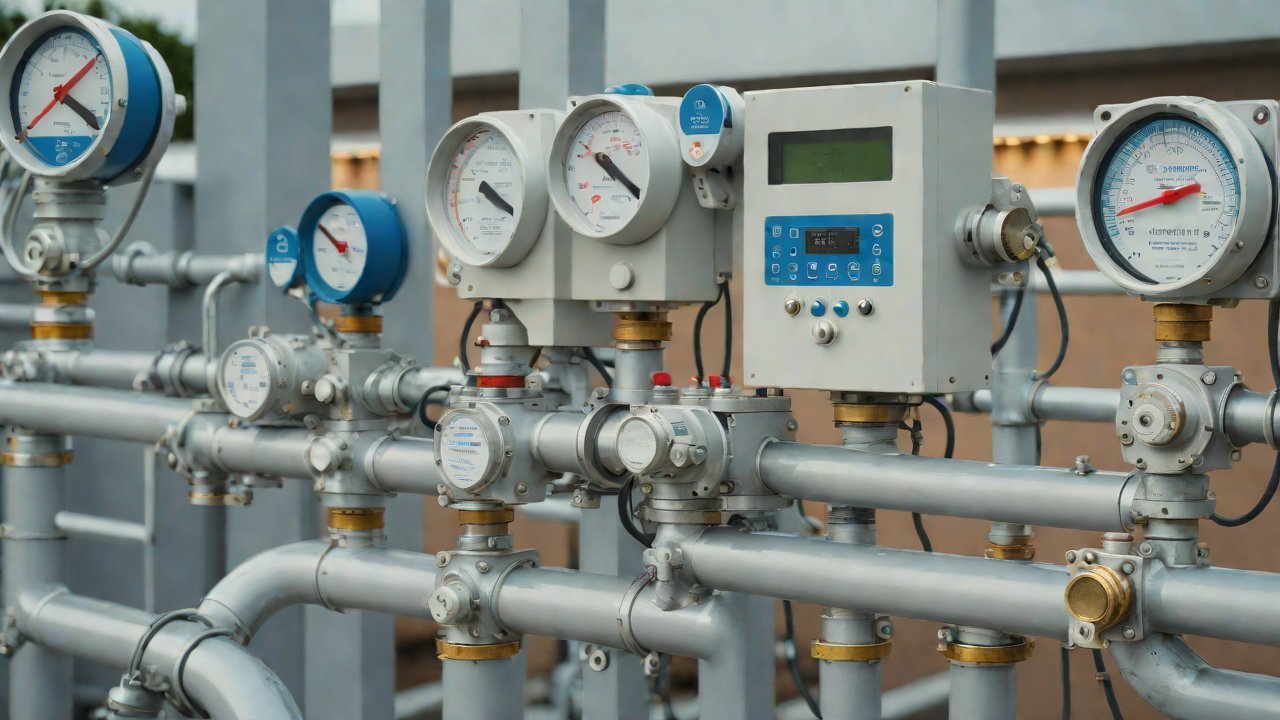
While automated irrigation control systems have significant potential benefits, several challenges and limitations must be addressed:
- Initial investment costs: Implementing advanced sensor technology and data processing infrastructure can be prohibitively expensive for small-scale farmers or municipalities.
- Data security concerns: The transmission of sensitive data between sensors, controllers, and the cloud raises concerns about data protection and cybersecurity.
- Interoperability issues: Ensuring seamless communication between different systems and technologies is crucial but often complex to achieve.
4. Practical Applications
Automated irrigation control systems have numerous practical applications across various sectors:
- Agriculture: Optimizing water usage in agriculture can significantly reduce crop losses due to drought or overwatering, increasing yields while minimizing waste.
- Urban planning: Implementing such systems in urban areas can help manage water resources more effectively, reducing the risk of flooding and improving public health.
- Environmental conservation: By detecting abnormal water leakage, these systems can help prevent pollution and protect aquatic ecosystems.
5. Conclusion
Automated irrigation control systems capable of shutting off valves when abnormal water leakage is detected have significant potential to optimize resource utilization, minimize waste, and promote environmental sustainability. While technical feasibility and market demand are strong, several challenges and limitations must be addressed through further research and development.
By addressing these concerns, we can unlock the full potential of this technology and drive transformative change in agriculture, urban planning, and environmental conservation. As a result, it is clear that the answer to our initial question is affirmative – such systems can indeed automatically shut off irrigation valves when abnormal water leakage is detected.
IOT Cloud Platform
IOT Cloud Platform is an IoT portal established by a Chinese IoT company, focusing on technical solutions in the fields of agricultural IoT, industrial IoT, medical IoT, security IoT, military IoT, meteorological IoT, consumer IoT, automotive IoT, commercial IoT, infrastructure IoT, smart warehousing and logistics, smart home, smart city, smart healthcare, smart lighting, etc.
The IoT Cloud Platform blog is a top IoT technology stack, providing technical knowledge on IoT, robotics, artificial intelligence (generative artificial intelligence AIGC), edge computing, AR/VR, cloud computing, quantum computing, blockchain, smart surveillance cameras, drones, RFID tags, gateways, GPS, 3D printing, 4D printing, autonomous driving, etc.