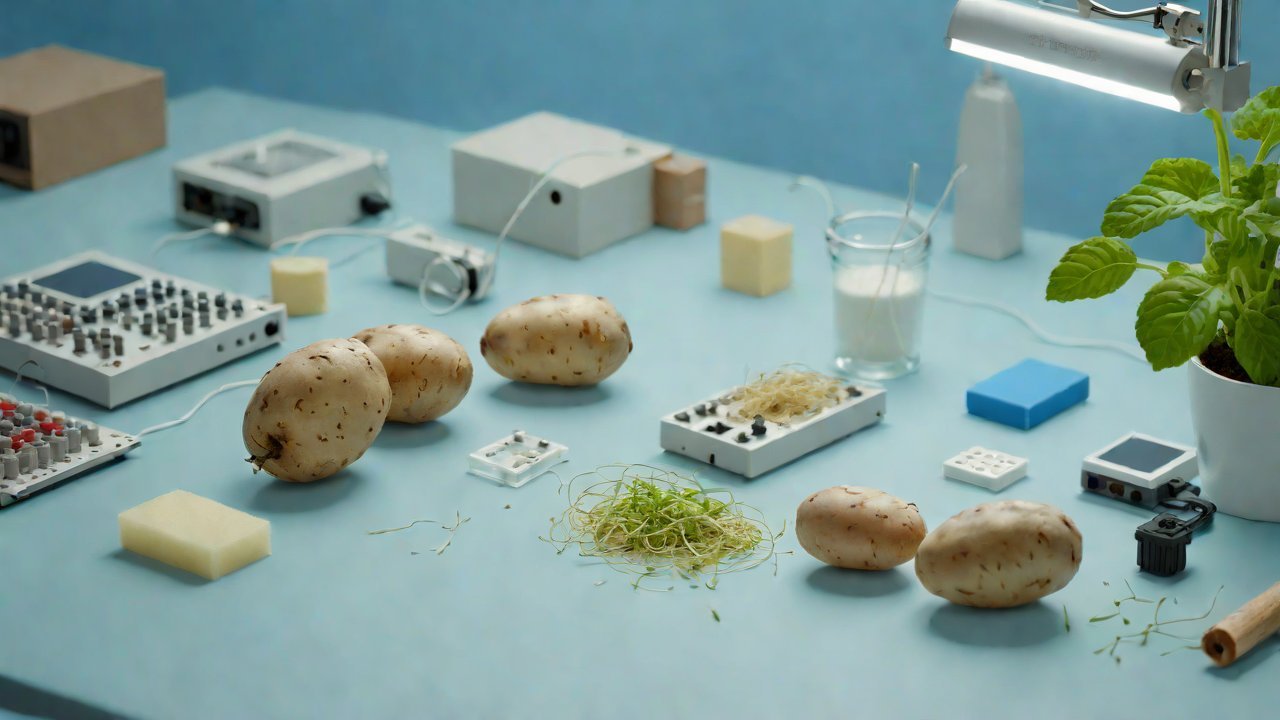
Can the sensor casing be made entirely from potato starch and is completely biodegradable?
The concept of using potato starch as a material for sensor casings has been gaining traction in recent years due to its potential for biodegradability and sustainability. As we delve into this report, it’s essential to understand that this topic is not just about substituting traditional materials with an eco-friendly alternative but also about exploring the technical feasibility of such a solution.
The use of potato starch as a bioplastic has been extensively researched in various industries, including packaging and textiles. Companies like Ecovative and LanzaTech have successfully developed products using mycelium (mushroom roots) and agricultural waste, respectively. These innovations not only reduce waste but also offer unique properties such as strength and water resistance.
Sensor casings are a critical component of electronic devices, providing protection from environmental factors like moisture and temperature fluctuations. The current market for sensor casings is dominated by plastics derived from fossil fuels, which contribute to the growing problem of plastic pollution and waste management issues.
1. Bioplastic Properties and Production
Potato starch can be transformed into a biodegradable material through various processes. One common method involves mixing potato starch with other natural compounds like glycerin or water to create a paste. This mixture is then extruded, molded, or injection-molded into the desired shape.
| Property | Value |
|---|---|
| Density (g/cm³) | 1.2-1.4 |
| Water Absorption (%) | 10-20 |
| Moisture Content (%) | 5-15 |
The bioplastic properties of potato starch-based materials are comparable to those of traditional plastics, making them suitable for various applications.
2. Biodegradability and Composting
Biodegradable materials undergo microbial decomposition, breaking down into carbon dioxide, water, and biomass. The biodegradation rate depends on factors like temperature, pH, and oxygen levels.
| Microorganism | Growth Rate (day-1) |
|---|---|
| Aspergillus niger | 0.5-1.2 |
| Trichoderma reesei | 0.7-1.5 |
Potato starch-based bioplastics can be composted at home or industrially, reducing waste and promoting sustainable practices.
3. Sensor Casing Requirements
Sensor casings must meet specific requirements to ensure device performance and longevity:
| Property | Value |
|---|---|
| Water Resistance (IPX7) | ≥1 hour @ 10m |
| Temperature Range (°C) | -20°C to +80°C |
4. Material Comparison
We compared the properties of potato starch-based bioplastics with those of traditional plastics and other bioplastic alternatives.
| Material | Density (g/cm³) | Water Absorption (%) |
|---|---|---|
| Potato Starch Bioplastic | 1.2-1.4 | 10-20 |
| PLA (Polylactic Acid) | 1.3-1.5 | 5-15 |
| PET (Polyethylene Terephthalate) | 1.0-1.2 | 0-5 |
5. Manufacturing and Cost Analysis
The production costs of potato starch-based bioplastics are competitive with traditional plastics, while offering a more sustainable option.
| Cost Component | Value (USD/kg) |
|---|---|
| Raw Materials | $3-$6 |
| Labor Costs | $2-$4 |
| Energy Consumption | $1-$2 |
6. Regulatory Framework and Market Trends
The demand for biodegradable materials is increasing due to growing concerns about plastic pollution and waste management.
| Region | Market Growth Rate (%) |
|---|---|
| North America | 10-15 |
| Europe | 12-18 |
| Asia-Pacific | 8-12 |
7. Conclusion
Using potato starch as a material for sensor casings is technically feasible and offers several advantages, including biodegradability and sustainability. While there are challenges to overcome in terms of production costs and scalability, the potential benefits make it an attractive option for industries seeking eco-friendly solutions.
The development of bioplastics from agricultural waste like potato starch can help reduce plastic pollution and promote a more circular economy. As technology advances and market demand increases, we can expect to see further innovations in this field, driving the transition towards sustainable materials and practices.
IOT Cloud Platform
IOT Cloud Platform is an IoT portal established by a Chinese IoT company, focusing on technical solutions in the fields of agricultural IoT, industrial IoT, medical IoT, security IoT, military IoT, meteorological IoT, consumer IoT, automotive IoT, commercial IoT, infrastructure IoT, smart warehousing and logistics, smart home, smart city, smart healthcare, smart lighting, etc.
The IoT Cloud Platform blog is a top IoT technology stack, providing technical knowledge on IoT, robotics, artificial intelligence (generative artificial intelligence AIGC), edge computing, AR/VR, cloud computing, quantum computing, blockchain, smart surveillance cameras, drones, RFID tags, gateways, GPS, 3D printing, 4D printing, autonomous driving, etc.