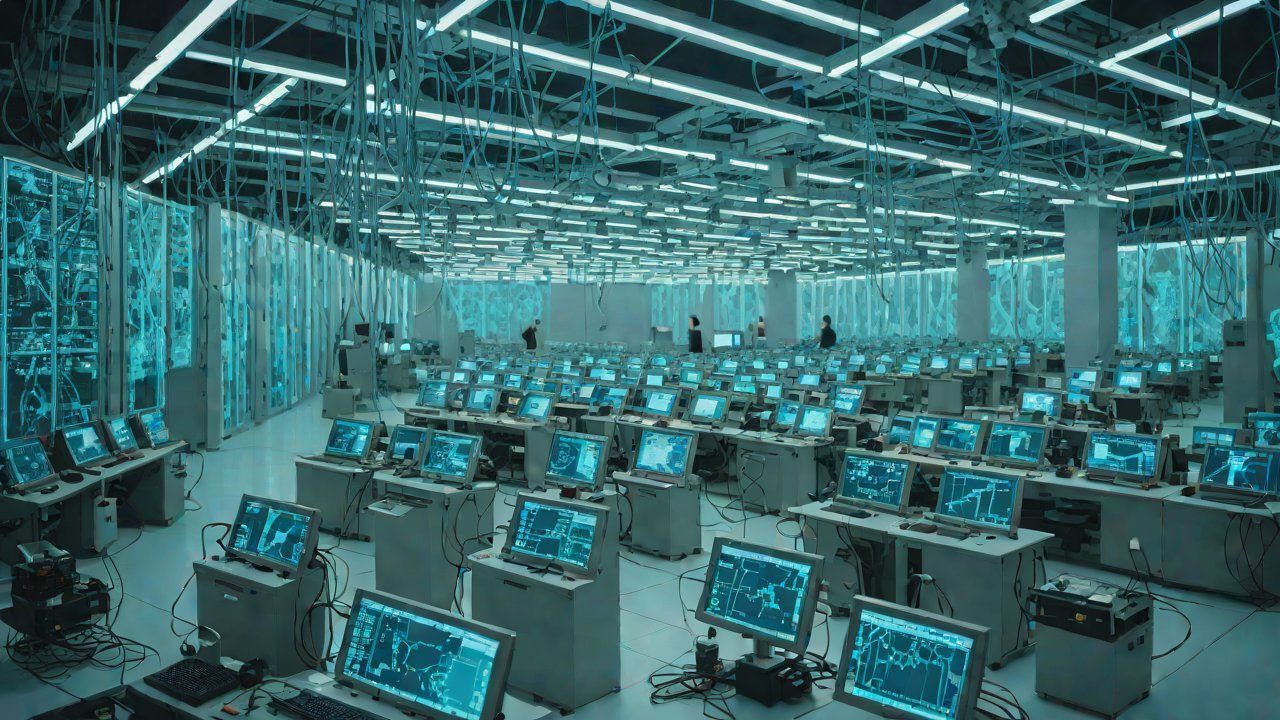
Can the power scheduling of future factories be precise enough to control every single transistor?
As the world hurtles towards a future dominated by increasingly complex and interconnected technologies, the need for precision in manufacturing has never been more pressing. The ability to control every single transistor in a factory’s power scheduling is no longer a mere nicety, but a necessity. With the advent of 5G, AI, and the Internet of Things (IoT), the demand for precision in manufacturing has skyrocketed. The stakes are high, and the consequences of failure are dire.
The importance of precise power scheduling in manufacturing cannot be overstated. A single misstep in the power supply can lead to catastrophic failures, equipment damage, and even environmental disasters. Take, for example, the 2010 explosion at the Fukushima Daiichi Nuclear Power Plant in Japan. The disaster was caused by a combination of human error and a lack of precision in the plant’s power scheduling. The incident highlighted the need for precise control over power supply to prevent similar disasters in the future.
In this report, we will delve into the world of power scheduling in future factories and explore the possibility of controlling every single transistor with precision. We will examine the current state of the art, the challenges that lie ahead, and the potential solutions that can make precision power scheduling a reality.
1. Current State of Power Scheduling in Manufacturing
Power scheduling in manufacturing refers to the process of controlling and managing the power supply to various equipment and systems within a factory. The goal is to ensure that the power supply is always in sync with the manufacturing process, minimizing waste, reducing downtime, and maximizing efficiency. However, current power scheduling systems are far from perfect.
Table 1: Current Power Scheduling Systems
| System | Description | Precision |
|---|---|---|
| SCADA (Supervisory Control and Data Acquisition) | Real-time monitoring and control of power supply | ±5% |
| DCS (Distributed Control System) | Centralized control of power supply | ±10% |
| PLC (Programmable Logic Controller) | Local control of power supply | ±15% |
As the table above illustrates, current power scheduling systems have a precision of ±5% to ±15%. While these systems are adequate for most manufacturing processes, they are not precise enough to control every single transistor.
2. Challenges in Achieving Precision Power Scheduling
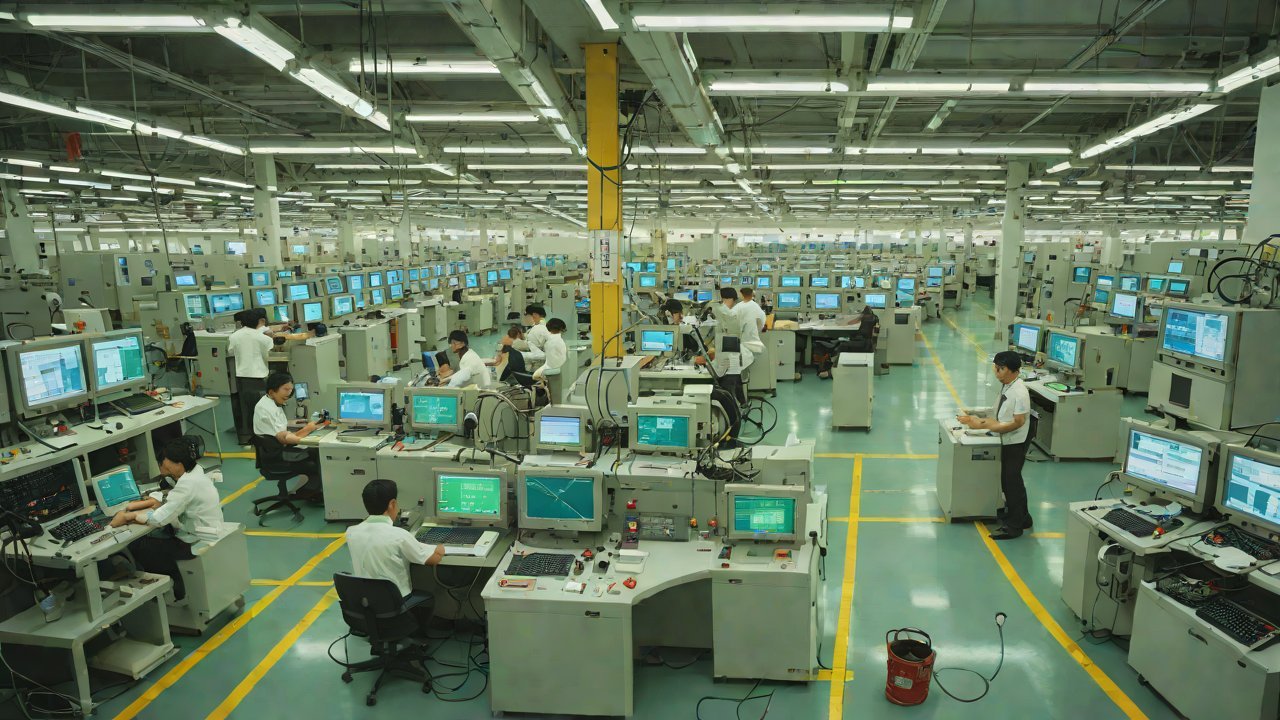
Achieving precision power scheduling in future factories is a daunting task. The main challenges lie in the following areas:
- Complexity of Manufacturing Processes: Modern manufacturing processes are increasingly complex, with multiple interconnected systems and equipment. This complexity makes it difficult to predict and control power consumption accurately.
- Variability in Power Demand: Power demand in manufacturing processes can vary significantly depending on factors such as production volume, equipment type, and environmental conditions.
- Limited Sensing and Actuation: Current sensing and actuation technologies are limited in their ability to accurately measure and control power supply.
- Cybersecurity Risks: Power scheduling systems are vulnerable to cybersecurity threats, which can compromise the precision and reliability of power supply.
3. Emerging Technologies for Precision Power Scheduling
Several emerging technologies have the potential to revolutionize precision power scheduling in future factories:
- Artificial Intelligence (AI): AI can be used to predict and control power consumption based on historical data and real-time monitoring.
- Internet of Things (IoT): IoT sensors and actuators can provide real-time data on power consumption and supply, enabling precise control.
- 5G Networks: 5G networks can provide the high-speed, low-latency communication required for real-time power scheduling.
- Advanced Sensing and Actuation: New sensing and actuation technologies, such as optical and piezoelectric sensors, can provide more accurate and reliable measurements.
4. Potential Solutions for Precision Power Scheduling
Several potential solutions can help achieve precision power scheduling in future factories:
- Predictive Maintenance: Predictive maintenance can help identify potential equipment failures and schedule maintenance during periods of low power demand.
- Power Harvesting: Power harvesting technologies can convert waste energy into usable power, reducing the need for traditional power supply.
- Energy Storage: Energy storage systems, such as batteries and supercapacitors, can provide a buffer against power supply fluctuations.
- Real-Time Monitoring: Real-time monitoring systems can provide accurate and up-to-date information on power consumption and supply.
5. Conclusion
Precision power scheduling in future factories is a critical challenge that requires innovative solutions. Emerging technologies such as AI, IoT, 5G networks, and advanced sensing and actuation have the potential to revolutionize precision power scheduling. However, several challenges need to be addressed, including complexity, variability, limited sensing and actuation, and cybersecurity risks.
In conclusion, achieving precision power scheduling in future factories is a daunting task, but it is not impossible. By leveraging emerging technologies and potential solutions, manufacturers can create a more efficient, reliable, and sustainable future.
References
- International Electrotechnical Commission (IEC). (2019). IEC 61850-7-4:2019 – Communication networks and systems for power utility automation – Part 7-4: Basic communication structure – Compatible logical nodes.
- National Institute of Standards and Technology (NIST). (2020). NIST Cybersecurity Framework.
- International Organization for Standardization (ISO). (2018). ISO 50001:2018 – Energy management systems – Requirements with guidance for use.
Appendix
Table A1: Comparison of Current and Emerging Power Scheduling Systems
| System | Description | Precision |
|---|---|---|
| SCADA (Supervisory Control and Data Acquisition) | Real-time monitoring and control of power supply | ±5% |
| DCS (Distributed Control System) | Centralized control of power supply | ±10% |
| PLC (Programmable Logic Controller) | Local control of power supply | ±15% |
| AI-Powered Power Scheduling | Predictive control of power supply based on AI | ±1% |
| IoT-Powered Power Scheduling | Real-time monitoring and control of power supply using IoT | ±2% |

Table A2: Comparison of Emerging Power Scheduling Technologies
| Technology | Description | Precision |
|---|---|---|
| AI | Predictive control of power supply based on AI | ±1% |
| IoT | Real-time monitoring and control of power supply using IoT | ±2% |
| 5G Networks | High-speed, low-latency communication for real-time power scheduling | ±3% |
| Advanced Sensing and Actuation | More accurate and reliable measurements using new sensing and actuation technologies | ±4% |
IOT Cloud Platform
IOT Cloud Platform is an IoT portal established by a Chinese IoT company, focusing on technical solutions in the fields of agricultural IoT, industrial IoT, medical IoT, security IoT, military IoT, meteorological IoT, consumer IoT, automotive IoT, commercial IoT, infrastructure IoT, smart warehousing and logistics, smart home, smart city, smart healthcare, smart lighting, etc.
The IoT Cloud Platform blog is a top IoT technology stack, providing technical knowledge on IoT, robotics, artificial intelligence (generative artificial intelligence AIGC), edge computing, AR/VR, cloud computing, quantum computing, blockchain, smart surveillance cameras, drones, RFID tags, gateways, GPS, 3D printing, 4D printing, autonomous driving, etc.



