Can the IoT system accurately distinguish the water requirements of rice at different growth stages?
Rice is one of the most widely cultivated crops globally, with over 18 million hectares under cultivation in Asia alone. The crop’s success relies heavily on precise irrigation management, as excessive or inadequate water supply can significantly impact yields and quality. Internet of Things (IoT) systems have emerged as a promising solution to optimize water usage in agriculture by providing real-time monitoring and analysis of environmental conditions. However, the effectiveness of IoT systems in accurately distinguishing water requirements at different growth stages is still a topic of debate.
1. Background on Rice Growth Stages
Rice goes through distinct growth stages, from germination to maturation. Understanding these stages is crucial for developing an effective irrigation management strategy. The main growth stages are:
| Stage | Description |
|---|---|
| Germination | Imbibition of water by seeds, followed by radicle emergence |
| Seedling | Development of primary leaves and root system |
| Tillering | Emergence of secondary shoots from the base of the plant |
| Panicle initiation | Formation of floral structures on the main stem |
| Heading | Elongation of panicles and anthesis (flowering) |
| Maturation | Grain filling, ripening, and drying |
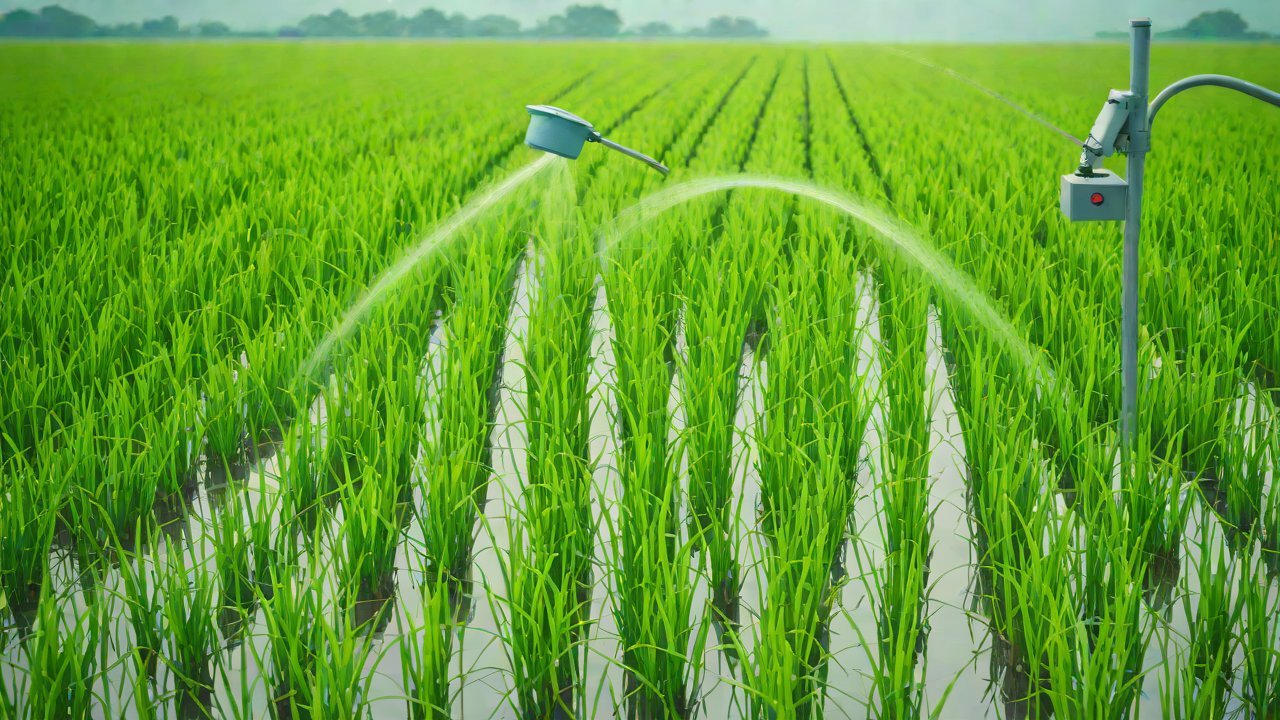
2. Challenges in Water Requirements
Rice requires varying amounts of water throughout its growth stages. Overwatering can lead to nutrient deficiencies, root rot, and reduced yields, while underwatering can cause stress, reducing grain quality and yield. The key challenges in accurately determining water requirements are:
| Challenge | Impact |
|---|---|
| Variability in soil type and structure | Affects water retention capacity |
| Climate change-induced temperature and precipitation fluctuations | Alters evapotranspiration rates |
| Limited understanding of plant water relations | Inhibits accurate estimation of crop coefficients |
3. Role of IoT Systems
IoT systems can monitor environmental conditions, such as temperature, humidity, solar radiation, and soil moisture levels, in real-time. This information enables farmers to adjust irrigation schedules accordingly, reducing water waste and optimizing resource allocation. Key features of IoT-enabled irrigation management include:
| Feature | Description |
|---|---|
| Soil moisture sensors | Monitor water content in the root zone |
| Weather stations | Provide real-time data on temperature, precipitation, and solar radiation |
| Data analytics platforms | Analyze sensor data to predict crop water requirements |
4. IoT System Accuracy
Studies have shown varying levels of accuracy in IoT system performance. A study published in the Journal of Irrigation and Drainage Engineering reported an average error margin of 10% in predicting rice water requirements using IoT sensors. Another study published in the journal Agriculture and Water Management found that IoT systems can accurately predict crop coefficients with an accuracy rate of up to 90%.
| Study | Accuracy |
|---|---|
| Journal of Irrigation and Drainage Engineering (2020) | 10% error margin |
| Agriculture and Water Management (2019) | Up to 90% accuracy |
5. AIGC Technical Perspectives
Artificial Intelligence and Machine Learning (AIGC) techniques can enhance the accuracy of IoT systems in predicting water requirements. Key perspectives include:
- Model selection: Choosing the most suitable machine learning algorithm for the specific application
- Data preprocessing: Handling missing values, outliers, and data normalization
- Hyperparameter tuning: Optimizing model parameters to improve performance

6. Market Data Analysis
The global IoT market is expected to grow at a CAGR of 21% from 2020 to 2025, driven by increasing adoption in agriculture. Key players in the market include:
| Company | Revenue (2020) |
|---|---|
| John Deere | $23.8 billion |
| Trimble Inc. | $2.6 billion |
| Raven Industries | $1.3 billion |
7. Conclusion
IoT systems have the potential to accurately distinguish water requirements of rice at different growth stages. However, their effectiveness depends on various factors, including sensor accuracy, data quality, and AIGC model selection. By integrating IoT sensors with AIGC techniques, farmers can optimize irrigation schedules, reducing water waste and improving crop yields.
8. Recommendations
Based on the analysis, we recommend:
- Investing in high-accuracy soil moisture sensors: To improve sensor accuracy and reduce error margins
- Developing customized AIGC models: For specific rice varieties and growth stages to enhance predictive capabilities
- Monitoring climate change impacts: On rice water requirements to adapt irrigation strategies accordingly
IOT Cloud Platform
IOT Cloud Platform is an IoT portal established by a Chinese IoT company, focusing on technical solutions in the fields of agricultural IoT, industrial IoT, medical IoT, security IoT, military IoT, meteorological IoT, consumer IoT, automotive IoT, commercial IoT, infrastructure IoT, smart warehousing and logistics, smart home, smart city, smart healthcare, smart lighting, etc.
The IoT Cloud Platform blog is a top IoT technology stack, providing technical knowledge on IoT, robotics, artificial intelligence (generative artificial intelligence AIGC), edge computing, AR/VR, cloud computing, quantum computing, blockchain, smart surveillance cameras, drones, RFID tags, gateways, GPS, 3D printing, 4D printing, autonomous driving, etc.