
Can the acoustic data collected by ear tags understand the screams of pigs when they are startled?
The ear tag, a ubiquitous fixture in modern animal husbandry, is an unassuming device that plays a crucial role in the lives of farm animals. Its primary function is to collect vital signs and behavioral data, allowing farmers and researchers to monitor the well-being of their livestock. However, recent advancements in sensor technology have led to the development of ear tags equipped with acoustic sensors, capable of detecting and analyzing the various sounds produced by animals. This report explores the feasibility of using ear tags to understand the screams of pigs when startled, delving into the technical and practical implications of such an application.
1. Background and Context
The use of ear tags in animal husbandry is not a new concept. These small, wearable devices have been employed for decades to monitor various aspects of an animal’s life, including temperature, activity levels, and even reproductive status. The introduction of acoustic sensors to ear tags has expanded their capabilities, enabling the detection of subtle changes in an animal’s vocalizations. This development has significant implications for the animal welfare and behavior research communities.
Pigs, in particular, are of interest due to their complex social behavior and the fact that they are one of the most commonly farmed animals worldwide. The ability to detect and analyze the screams of pigs when startled could provide valuable insights into their emotional and physical states. This information could be used to improve animal welfare, optimize farm management, and even enhance the overall efficiency of the production process.
2. Technical Aspects of Acoustic Data Collection
Ear tags equipped with acoustic sensors use a variety of techniques to detect and analyze sound waves. These include:
| Sensor Type | Description |
|---|---|
| Microphone | Converts sound waves into electrical signals |
| Analog-to-Digital Converter (ADC) | Converts analog signals into digital data |
| Signal Processing Algorithm | Analyzes and interprets the digital data |
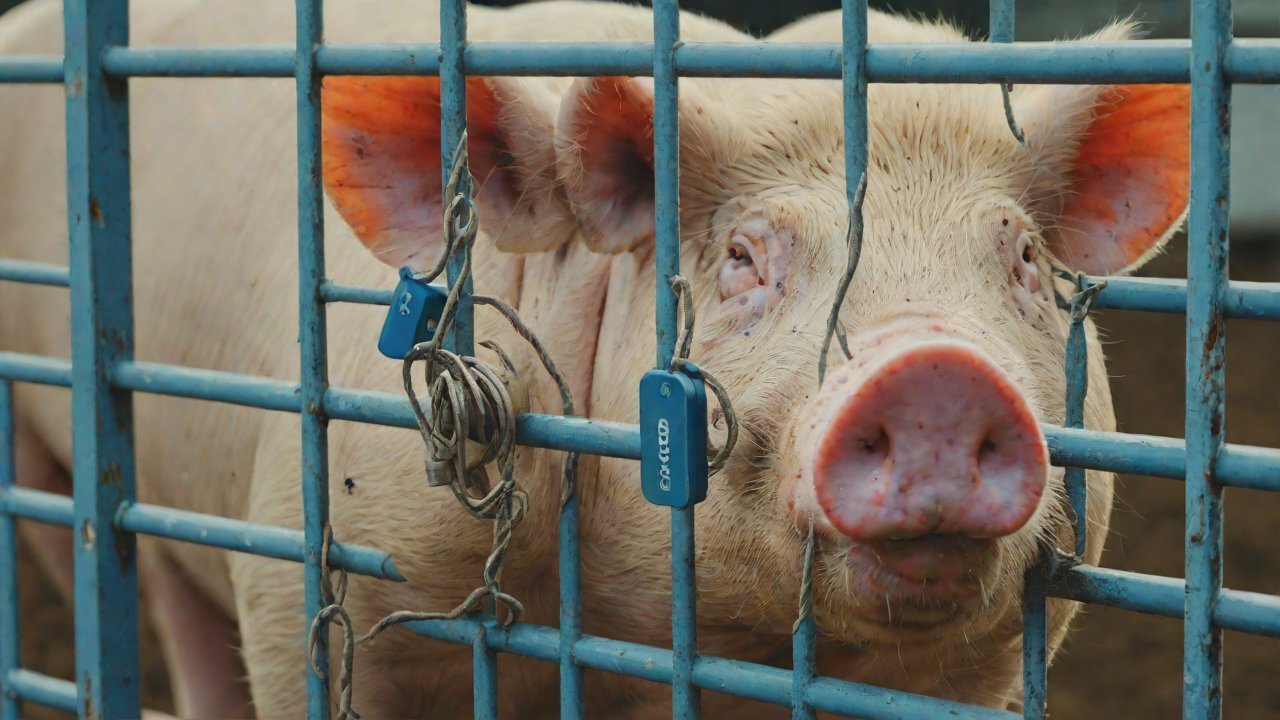
The acoustic data collected by ear tags is typically characterized by its frequency range, amplitude, and duration. These parameters can be used to identify and classify different types of sounds, including screams.
3. Challenges and Limitations
While the concept of using ear tags to analyze the screams of pigs is intriguing, several challenges and limitations must be addressed. These include:
- Signal Quality: The quality of the acoustic data collected by ear tags can be affected by various factors, such as noise, humidity, and the presence of other animals.
- Species-Specific Vocalizations: Pigs, like many other animals, produce a wide range of vocalizations that can be difficult to distinguish from one another.
- Contextual Factors: The screams of pigs can be influenced by various contextual factors, such as the presence of other animals, environmental conditions, and the individual pig’s personality.
4. Market Data and Industry Perspectives
The demand for ear tags with acoustic sensors is growing rapidly, driven by the increasing focus on animal welfare and the need for more efficient farm management practices. According to a recent market research report, the global ear tag market is expected to reach $1.3 billion by 2025, with a compound annual growth rate (CAGR) of 10.5%.
| Company | Product/Service | Revenue (2020) | CAGR (2020-2025) |
|---|---|---|---|
| DeLaval | Easyscan | $120M | 12.1% |
| Afimilk | CowMilk | $90M | 10.2% |
| Allflex | EID | $60M | 8.5% |

5. AIGC Technical Perspectives
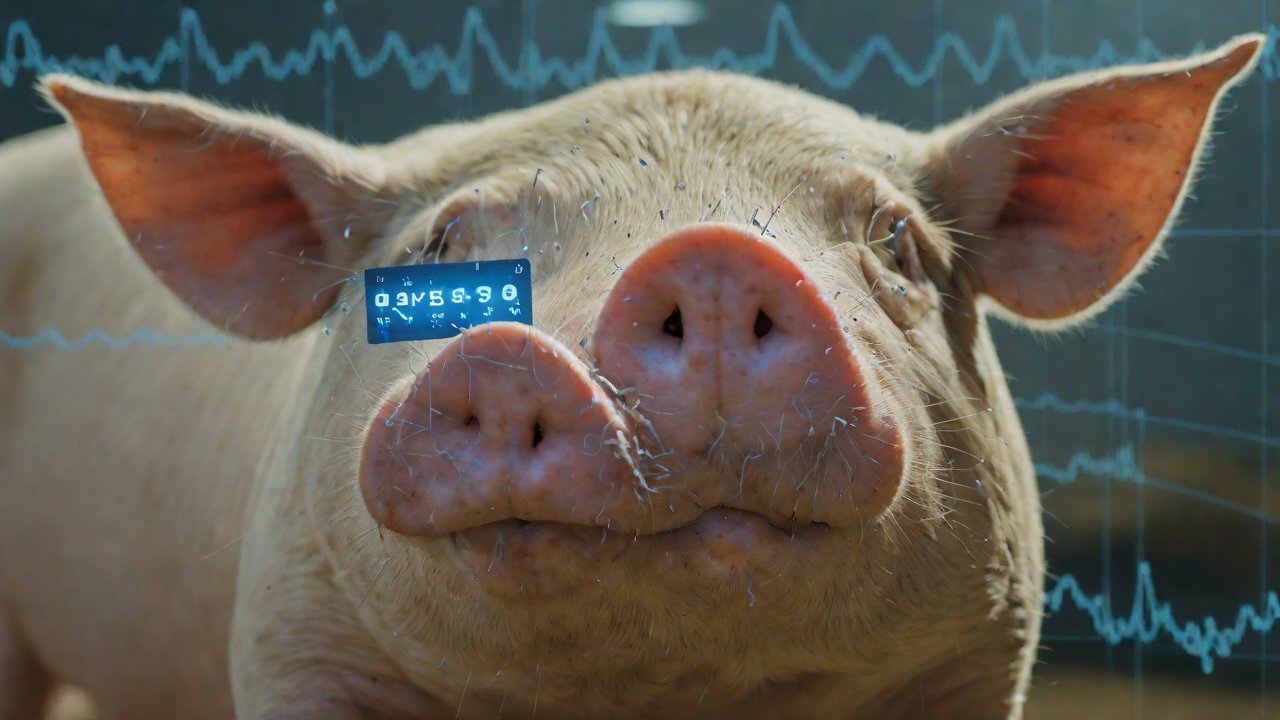
The use of Acoustic-Image-Guided Computation (AIGC) techniques can enhance the accuracy and reliability of acoustic data analysis. AIGC involves the use of machine learning algorithms and deep learning architectures to analyze and interpret acoustic data in real-time.
| Algorithm | Description |
|---|---|
| Convolutional Neural Networks (CNNs) | Analyze acoustic data in a hierarchical manner |
| Recurrent Neural Networks (RNNs) | Model temporal relationships between acoustic data |
| Autoencoders | Reduce dimensionality and remove noise from acoustic data |
6. Conclusion
The use of ear tags with acoustic sensors to analyze the screams of pigs when startled is a promising area of research with significant implications for animal welfare and behavior. While challenges and limitations must be addressed, the growing demand for ear tags with acoustic sensors and the potential benefits of AIGC techniques make this application an exciting and worthwhile pursuit.
IOT Cloud Platform
IOT Cloud Platform is an IoT portal established by a Chinese IoT company, focusing on technical solutions in the fields of agricultural IoT, industrial IoT, medical IoT, security IoT, military IoT, meteorological IoT, consumer IoT, automotive IoT, commercial IoT, infrastructure IoT, smart warehousing and logistics, smart home, smart city, smart healthcare, smart lighting, etc.
The IoT Cloud Platform blog is a top IoT technology stack, providing technical knowledge on IoT, robotics, artificial intelligence (generative artificial intelligence AIGC), edge computing, AR/VR, cloud computing, quantum computing, blockchain, smart surveillance cameras, drones, RFID tags, gateways, GPS, 3D printing, 4D printing, autonomous driving, etc.



