
Can soil moisture data be pushed to farmers in real time via SMS?
Soil moisture is a critical component of agricultural productivity, and its management plays a pivotal role in ensuring optimal crop growth and yield. However, traditional methods of monitoring soil moisture often rely on manual measurements or infrequent satellite-based observations, which can be time-consuming, expensive, and sometimes inaccurate. In recent years, the advent of advanced technologies such as IoT sensors, data analytics, and mobile communication has opened up new avenues for real-time monitoring and dissemination of soil moisture data to farmers.
The potential benefits of pushing soil moisture data in real-time via SMS to farmers are numerous. For instance, it can enable them to make informed decisions regarding irrigation scheduling, fertilizer application, and pest management, ultimately leading to increased crop yields and reduced water consumption. Moreover, this approach can facilitate the adoption of precision agriculture practices, which have been shown to enhance farm productivity while minimizing environmental impacts.
However, several challenges need to be addressed before real-time soil moisture data can be effectively disseminated via SMS to farmers. These include ensuring the accuracy and reliability of the sensor data, developing user-friendly mobile applications for data interpretation and decision-making, and establishing a robust communication infrastructure that supports seamless data transmission.
1. Soil Moisture Monitoring Technologies
Several technologies have emerged in recent years to facilitate real-time soil moisture monitoring. Some of these include:
| Technology | Description | Accuracy |
|---|---|---|
| Capacitance sensors | Measure the dielectric constant of the soil, which is related to its water content | ±5% |
| Tensiometers | Measure the soil’s water potential by determining the suction force required to extract water from the soil | ±2% |
| Soil moisture sensors (e.g., HydraProbe) | Use a combination of capacitance and tensiometer measurements to estimate soil moisture | ±3% |
These technologies have varying levels of accuracy, with capacitance sensors generally being more accurate than tensiometers. However, they often require calibration, which can be time-consuming and may introduce errors.
2. Data Analytics and Interpretation
Once the real-time soil moisture data is collected from the field using IoT sensors, it needs to be analyzed and interpreted to provide actionable insights for farmers. This involves applying data analytics techniques such as machine learning algorithms and statistical models to identify patterns and trends in the data.
| Data Analytics Technique | Description |
|---|---|
| Regression analysis | Identifies relationships between soil moisture levels and crop yields or other variables of interest |
| Time-series forecasting | Predicts future soil moisture levels based on historical trends and patterns |
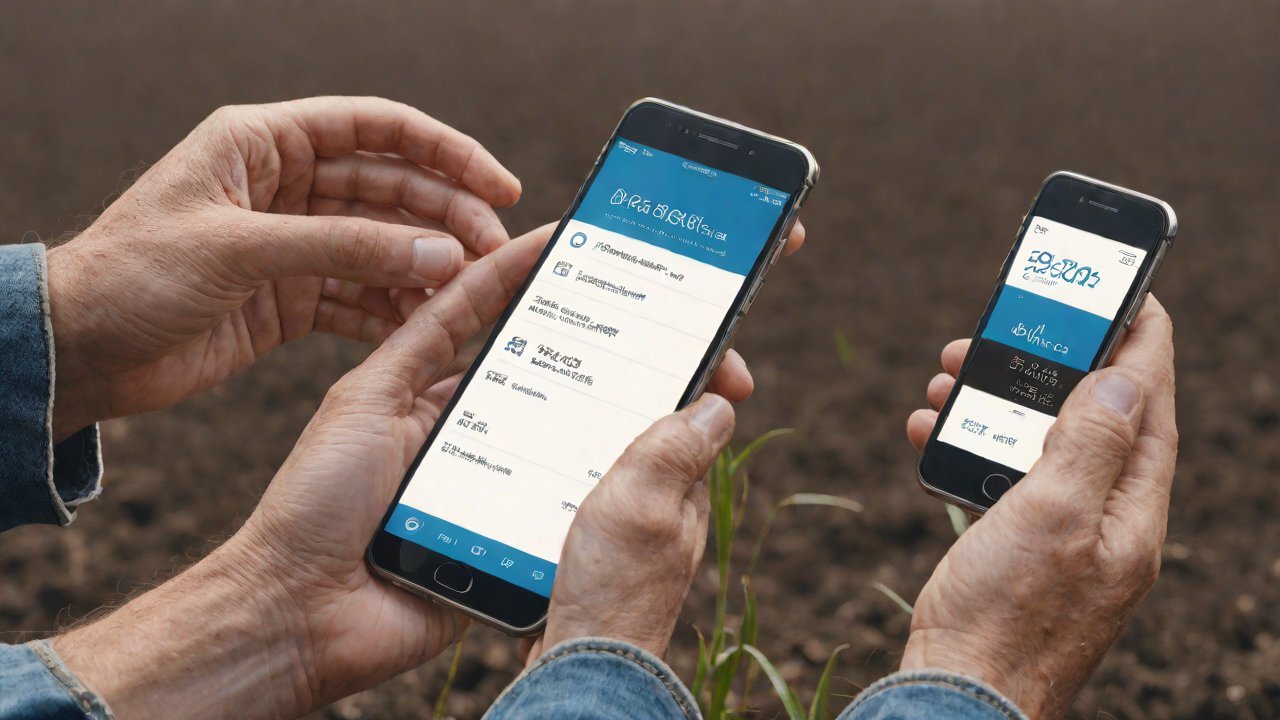
These techniques enable farmers to make informed decisions about irrigation scheduling, fertilizer application, and pest management. However, they require significant computational resources and may not be easily interpretable by non-technical farmers.
3. Mobile Application Development
To effectively disseminate real-time soil moisture data to farmers via SMS, user-friendly mobile applications need to be developed that can interpret the sensor data and provide actionable insights for decision-making. Some of the key features of these apps include:
| Feature | Description |
|---|---|
| Data visualization | Presents the real-time soil moisture data in a graphical format to facilitate easy interpretation |
| Alert system | Sends notifications to farmers when soil moisture levels exceed predetermined thresholds, indicating potential water scarcity or flooding |
These mobile applications can be developed using programming languages such as Java, Python, and Swift. However, their development requires significant resources and expertise.
4. Communication Infrastructure
Establishing a robust communication infrastructure that supports seamless data transmission between the sensor nodes, data analytics servers, and farmers’ mobile devices is critical for effective real-time soil moisture monitoring via SMS. This involves:
| Infrastructure Component | Description |
|---|---|
| Network connectivity (e.g., 2G/3G/4G) | Enables the transmission of sensor data from the field to the cloud-based server |
| Cloud-based data storage and analytics | Allows for real-time processing and analysis of sensor data, enabling timely decision-making by farmers |
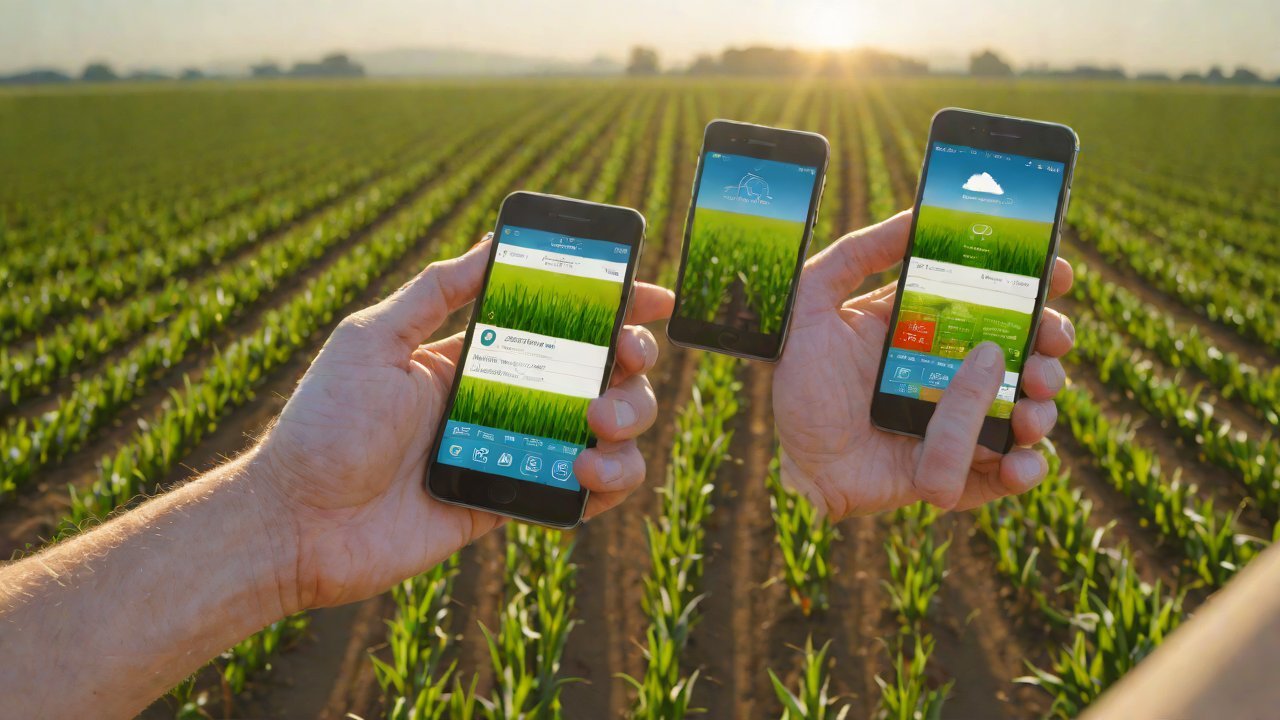
The communication infrastructure should be designed to ensure high reliability, low latency, and minimal packet loss.
5. Market Trends and Opportunities
Several market trends and opportunities are emerging in the area of soil moisture monitoring via SMS:
| Market Trend/Opportunity | Description |
|---|---|
| IoT sensor adoption | Increasing demand for IoT sensors to monitor various agricultural parameters, including soil moisture |
| Data analytics as a service (DAAS) | Growing interest in cloud-based data analytics services that can provide real-time insights for farmers |
These trends and opportunities present significant potential for companies that develop and deploy real-time soil moisture monitoring systems via SMS.
6. Technical Perspectives
From a technical perspective, several factors need to be considered when developing real-time soil moisture monitoring systems via SMS:
| Technical Factor | Description |
|---|---|
| Data accuracy and reliability | Ensuring the accuracy and reliability of sensor data is critical for effective decision-making by farmers |
| Scalability and flexibility | The system should be designed to accommodate varying farm sizes, crop types, and soil conditions |
Addressing these technical factors will require significant expertise in areas such as IoT development, data analytics, and mobile application development.
7. Business Model Perspectives

Several business models can be employed to monetize real-time soil moisture monitoring services via SMS:
| Business Model | Description |
|---|---|
| Subscription-based model | Farmers pay a recurring fee for access to real-time soil moisture data and decision-making support |
| Pay-per-use model | Farmers are charged only when they use the service, which can be based on the number of sensor readings or mobile app usage |
These business models present opportunities for companies that develop and deploy real-time soil moisture monitoring systems via SMS.
8. Regulatory Perspectives
Several regulatory factors need to be considered when developing and deploying real-time soil moisture monitoring systems via SMS:
| Regulatory Factor | Description |
|---|---|
| Data protection regulations (e.g., GDPR) | Ensuring the secure storage and transmission of sensitive farmer data is critical for compliance with regulations |
Addressing these regulatory factors will require significant expertise in areas such as data privacy and security.
9. Conclusion
Pushing real-time soil moisture data to farmers via SMS has the potential to revolutionize agricultural productivity by enabling informed decision-making on irrigation scheduling, fertilizer application, and pest management. However, several challenges need to be addressed before this approach can become widespread, including ensuring the accuracy and reliability of sensor data, developing user-friendly mobile applications for data interpretation, and establishing a robust communication infrastructure that supports seamless data transmission.
10. Recommendations
Based on our analysis, we recommend:
- Developing real-time soil moisture monitoring systems using IoT sensors and cloud-based analytics to ensure high accuracy and scalability.
- Creating user-friendly mobile applications that can interpret sensor data and provide actionable insights for decision-making by farmers.
- Establishing a robust communication infrastructure that supports seamless data transmission between the sensor nodes, data analytics servers, and farmers’ mobile devices.
By addressing these challenges and recommendations, companies can develop and deploy effective real-time soil moisture monitoring systems via SMS that enable farmers to make informed decisions and improve agricultural productivity while minimizing environmental impacts.
IOT Cloud Platform
IOT Cloud Platform is an IoT portal established by a Chinese IoT company, focusing on technical solutions in the fields of agricultural IoT, industrial IoT, medical IoT, security IoT, military IoT, meteorological IoT, consumer IoT, automotive IoT, commercial IoT, infrastructure IoT, smart warehousing and logistics, smart home, smart city, smart healthcare, smart lighting, etc.
The IoT Cloud Platform blog is a top IoT technology stack, providing technical knowledge on IoT, robotics, artificial intelligence (generative artificial intelligence AIGC), edge computing, AR/VR, cloud computing, quantum computing, blockchain, smart surveillance cameras, drones, RFID tags, gateways, GPS, 3D printing, 4D printing, autonomous driving, etc.



